THE ADVENTURE COLLECTIVE® · Independent discovery and booking for outdoor travel

Spend a day moving from Fes’s medina to the Roman mosaics of Volubilis, the pilgrimage lanes of Moulay Idriss and the imperial gates of Meknes. This private trip pairs archaeological ruins with three distinct historical towns and short drives across the Saïss plain.
Spend a day moving from Fes’s medina to the Roman mosaics of Volubilis, the pilgrimage lanes of Moulay Idriss and the imperial gates of Meknes. This private trip pairs archaeological ruins with three distinct historical towns and short drives across the Saïss plain.
Morning light lifts off the limestone roofs of Fes as the van slides out onto the Saïss plain, the air tasting faintly of olive and dust. In an hour you’ll trade the city’s alleys for the wide sweep around Volubilis: low Roman walls, stripped marble columns and mosaics that still hold the imprint of ancient hands.
Verified experiences and guided adventures in the surrounding area.
Operated by Touria Tours · Fes, Fès-Meknès
Morning light lifts off the limestone roofs of Fes as the van slides out onto the Saïss plain, the air tasting faintly of olive and dust. In an hour you’ll trade the city’s alleys for the wide sweep around Volubilis: low Roman walls, stripped marble columns and mosaics that still hold the imprint of ancient hands.
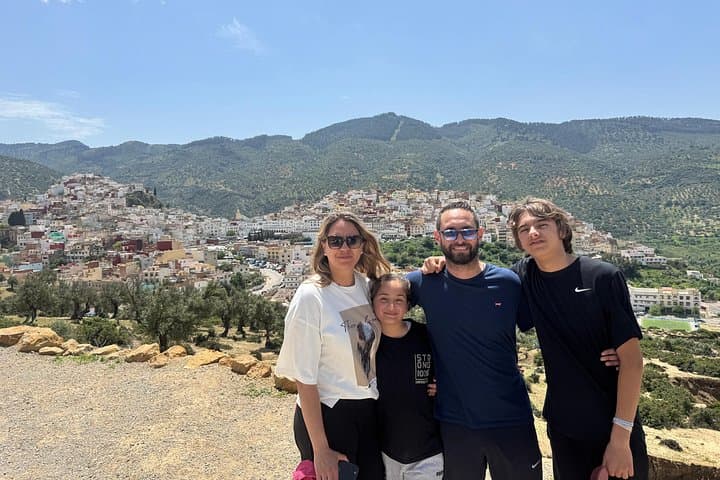
Volubilis sits on the northern edge of the plain, once the provincial capital of Mauretania Tingitana and today a UNESCO site whose carved capitals and tiled floors map centuries of empire. Across a short rise is Moulay Idriss Zerhoun, a pilgrimage town clinging to the lower slopes of Jebel Zerhoun where Idris I established the first Islamic dynasty in Morocco; its narrow streets offer elevated views over the ruins and the plain below. A final drive brings you to Meknes, the 17th‑century capital of Sultan Moulay Ismail: Bab Mansour’s monumental gate, the mausoleum courtyards and the honeyed stone of the medina make for a compact, walkable finale.
Expect uneven stone underfoot, scattered shade from olive and fig trees, and dry winds that push across the plain. The routes are short but involve steps, cobbles and sun-exposed viewpoints; allow time for photography, a slow café break in Moulay Idriss, and modest walking tours at each site. Bring sun protection, sturdy shoes and local cash for small stalls — the region’s history and landscape reward a steady pace and curious eyes.
Admission to Volubilis is usually not included unless specified—bring cash to buy site tickets and check current pricing in advance.
The drive to Volubilis from Fes is roughly 1–1.5 hours (about 80–90 km) depending on traffic; subsequent legs between sites are shorter.
Yes—walking is low to moderate but involves uneven ground and steps; travelers with limited mobility should check specific access limitations at each site.
Yes—have Moroccan dirhams for small purchases, restroom fees and optional tips; major cards may not be accepted at smaller stalls.
Touria Tours operates guided outdoor trips and adventures with an emphasis on safety, stewardship, and memorable experiences.
Morning light lifts off the limestone roofs of Fes as the van slides out onto the Saïss plain, the air tasting faintly of olive and dust. In an hour you’ll trade the city’s alleys for the wide sweep around Volubilis: low Roman walls, stripped marble columns and mosaics that still hold the imprint of ancient hands.
Morning light lifts off the limestone roofs of Fes as the van slides out onto the Saïss plain, the air tasting faintly of olive and dust. In an hour you’ll trade the city’s alleys for the wide sweep around Volubilis: low Roman walls, stripped marble columns and mosaics that still hold the imprint of ancient hands.
Volubilis sits on the northern edge of the plain, once the provincial capital of Mauretania Tingitana and today a UNESCO site whose carved capitals and tiled floors map centuries of empire. Across a short rise is Moulay Idriss Zerhoun, a pilgrimage town clinging to the lower slopes of Jebel Zerhoun where Idris I established the first Islamic dynasty in Morocco; its narrow streets offer elevated views over the ruins and the plain below. A final drive brings you to Meknes, the 17th‑century capital of Sultan Moulay Ismail: Bab Mansour’s monumental gate, the mausoleum courtyards and the honeyed stone of the medina make for a compact, walkable finale.
Expect uneven stone underfoot, scattered shade from olive and fig trees, and dry winds that push across the plain. The routes are short but involve steps, cobbles and sun-exposed viewpoints; allow time for photography, a slow café break in Moulay Idriss, and modest walking tours at each site. Bring sun protection, sturdy shoes and local cash for small stalls — the region’s history and landscape reward a steady pace and curious eyes.