THE ADVENTURE COLLECTIVE® · Independent discovery and booking for outdoor travel

Explore imperial Meknes, the Roman ruins of Volubilis and Chefchaouen’s blue alleys on a two-day private tour from Fez. Expect scenic drives, short cobbled walks and historical highlights with an English-speaking driver.
Explore imperial Meknes, the Roman ruins of Volubilis and Chefchaouen’s blue alleys on a two-day private tour from Fez. Expect scenic drives, short cobbled walks and historical highlights with an English-speaking driver.
The road pulls you out of Fez before the city fully wakes — cypress and olive groves give way to low hills, and the Rif range lifts on the horizon like a wall of blue stone. By late morning the car drops you into Meknes, where seventeenth-century ramparts and the ornate Bab Mansour gate open like pages of history.
Verified experiences and guided adventures in the surrounding area.
Operated by Morocco Explore Excursions · Chefchaouen, Tanger-Tetouan-Al Hoceima
The road pulls you out of Fez before the city fully wakes — cypress and olive groves give way to low hills, and the Rif range lifts on the horizon like a wall of blue stone. By late morning the car drops you into Meknes, where seventeenth-century ramparts and the ornate Bab Mansour gate open like pages of history.
Meknes was the imperial capital of Sultan Moulay Ismail; its granaries, mausoleum and Place El-Hedim reveal Morocco’s post-medieval consolidation of power. A short drive brings you past Moulay Idriss’s whitewashed terraces and then to Volubilis, a remarkably preserved Roman outpost whose mosaics and arches trace a slower, continental geology — the land here is folded limestone and ancient marine bedrock interrupted by volcanic intrusions feeding the Rif uplift.
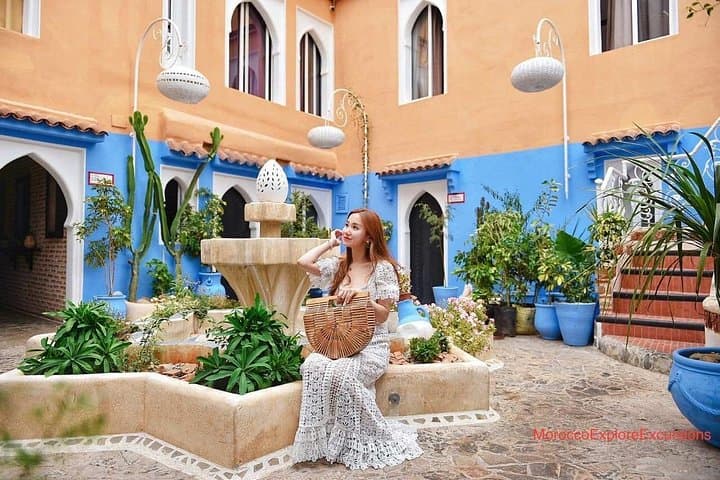
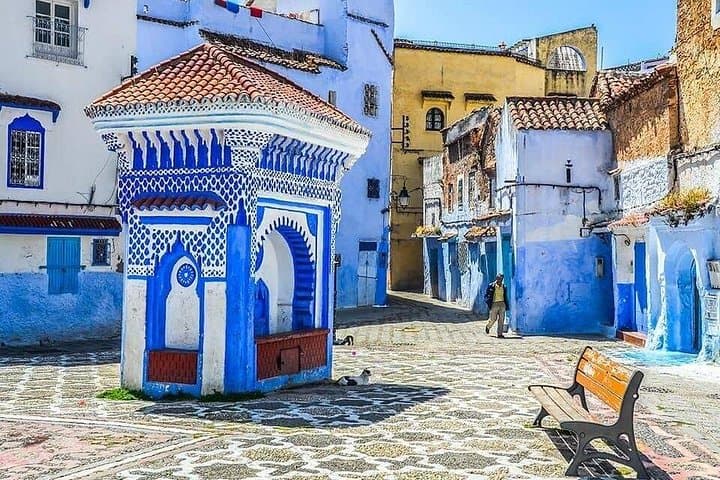
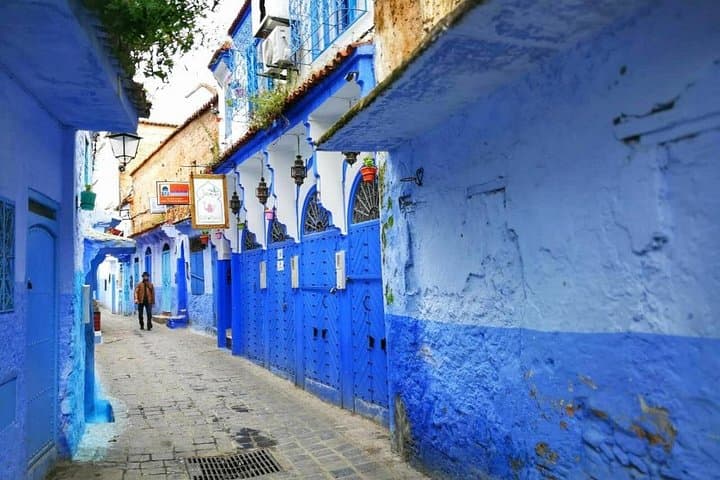
Day two softens the itinerary into Chefchaouen’s blue alleys, where local weavers still dye wool by hand and plaza cafés hum with mint tea and conversation. The town’s architecture and artisanal economy reflect Andalusi and Amazigh layers of culture.
Practical guide: plan for a lot of short walks on cobbled streets and archaeological sites; comfortable, grippy footwear and sun protection matter. Distances are driven: expect 3–4 hours of transit on day one with multiple stops, and a relaxed half-day exploring Chefchaouen on day two. Carry cash for small purchases, bring a refillable water bottle, and schedule mornings for ruins and late afternoons for the blue medina when light is best. Respect religious sites’ rules and local dress norms; archaeological sites are fragile, so stick to paths and guided routes.
Yes—private pickup from Fez riads and hotels is typically included; confirm your exact pickup point when booking.
Lunch in Meknes is usually included as part of the day; other meals are typically on your own unless specified by the operator.
The town is largely open for viewing and photo stops, but access to certain religious interiors can be restricted—follow local guidance from your driver.
Expect 1–2 hours of walking at Volubilis over uneven ground and several short walks around Chefchaouen’s medina; totals are moderate and paced.
Morocco Explore Excursions operates guided outdoor trips and adventures with an emphasis on safety, stewardship, and memorable experiences.
The road pulls you out of Fez before the city fully wakes — cypress and olive groves give way to low hills, and the Rif range lifts on the horizon like a wall of blue stone. By late morning the car drops you into Meknes, where seventeenth-century ramparts and the ornate Bab Mansour gate open like pages of history.
The road pulls you out of Fez before the city fully wakes — cypress and olive groves give way to low hills, and the Rif range lifts on the horizon like a wall of blue stone. By late morning the car drops you into Meknes, where seventeenth-century ramparts and the ornate Bab Mansour gate open like pages of history.
Meknes was the imperial capital of Sultan Moulay Ismail; its granaries, mausoleum and Place El-Hedim reveal Morocco’s post-medieval consolidation of power. A short drive brings you past Moulay Idriss’s whitewashed terraces and then to Volubilis, a remarkably preserved Roman outpost whose mosaics and arches trace a slower, continental geology — the land here is folded limestone and ancient marine bedrock interrupted by volcanic intrusions feeding the Rif uplift.
Day two softens the itinerary into Chefchaouen’s blue alleys, where local weavers still dye wool by hand and plaza cafés hum with mint tea and conversation. The town’s architecture and artisanal economy reflect Andalusi and Amazigh layers of culture.
Practical guide: plan for a lot of short walks on cobbled streets and archaeological sites; comfortable, grippy footwear and sun protection matter. Distances are driven: expect 3–4 hours of transit on day one with multiple stops, and a relaxed half-day exploring Chefchaouen on day two. Carry cash for small purchases, bring a refillable water bottle, and schedule mornings for ruins and late afternoons for the blue medina when light is best. Respect religious sites’ rules and local dress norms; archaeological sites are fragile, so stick to paths and guided routes.