THE ADVENTURE COLLECTIVE® · Independent discovery and booking for outdoor travel

A full-day road trip from Fez delivers the vivid blue lanes of Chefchaouen, a compact medina, the Ras El-Maa spring, and mountain viewpoints. This guide covers history, what you’ll see, and practical tips to make the most of a short visit.
A full-day road trip from Fez delivers the vivid blue lanes of Chefchaouen, a compact medina, the Ras El-Maa spring, and mountain viewpoints. This guide covers history, what you’ll see, and practical tips to make the most of a short visit.
You arrive as the Rif mountains open up: a ribbon of road drops from pine slopes and, suddenly, blue walls crowd the narrow streets like a color turned up on a map. The medina of Chefchaouen feels immediate and tactile—painted alleys, rooftop terraces, and the steady murmur of market trade pushing you forward.
Verified experiences and guided adventures in the surrounding area.
Operated by Planet of Morocco · Chefchaouen, Tanger-Tetouan-Al Hoceima
You arrive as the Rif mountains open up: a ribbon of road drops from pine slopes and, suddenly, blue walls crowd the narrow streets like a color turned up on a map. The medina of Chefchaouen feels immediate and tactile—painted alleys, rooftop terraces, and the steady murmur of market trade pushing you forward.
Founded in the 15th century by Moorish exiles, Chefchaouen’s blue-washed lanes reflect layered histories: Andalusian influences in its tilework, local Rif architecture, and a craft economy built around woven blankets and dyed wool. Geologically the town sits in folded limestone hills that feed the Ras El-Maa spring—an upland seep that still cools the medina and creates the small waterfall where local life spills into the open air.
Culturally, Uta el-Hammam square is the social engine—cafés, tajine steam, and the Kasbah museum where regional crafts and history come into focus. Walk toward the Spanish Mosque viewpoint for a clear panorama of the town framed by terraced slopes.
Practical guidance: this is a full-day outing from Fez (8–10 hours). You’ll have roughly three hours free in the medina—enough to move deliberately but not to linger everywhere. Wear sturdy shoes for cobbles and short stair climbs, carry water (bottled or refillable), and schedule your visit outside midday in summer to avoid the hottest hours. Cash is useful for small purchases in souks; modest dress is recommended in public spaces. The route is accessible by air-conditioned vehicle, and much of the experience is light walking and cultural exploration rather than strenuous hiking.
Driving time is roughly 3.5–4 hours each way depending on traffic and stops; the full excursion runs about 8–10 hours including free time in the medina.
You’ll have approximately three hours of unstructured time—enough to see Uta el-Hammam, the Kasbah, and a few alleys, but not to explore every shop or hike extensively outside town.
Public restrooms exist in Uta el-Hammam and cafés; bring small change and hand sanitizer as standards vary.
The transportation and many main squares are accessible, but narrow alleys and some viewpoints have steps and uneven surfaces that may limit access.
Planet of Morocco operates guided outdoor trips and adventures with an emphasis on safety, stewardship, and memorable experiences.
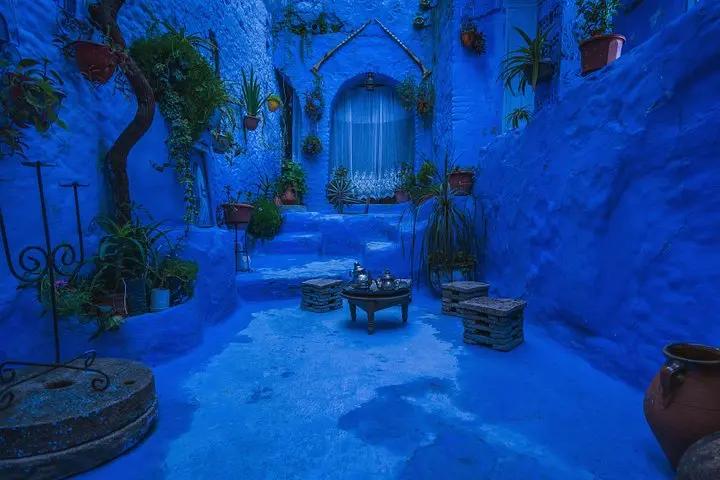
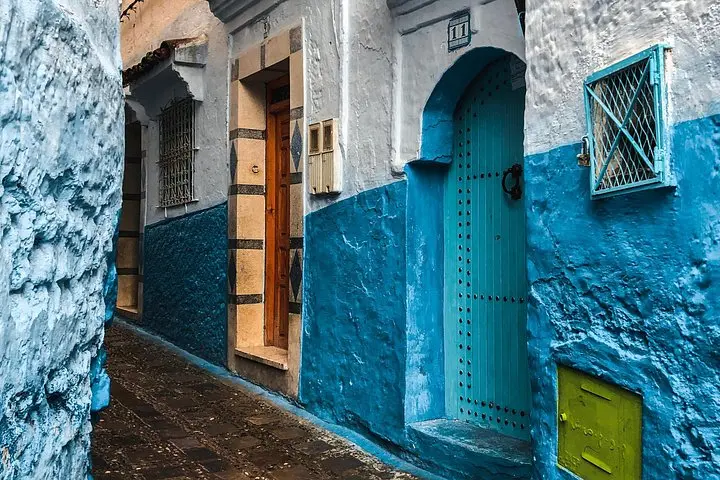
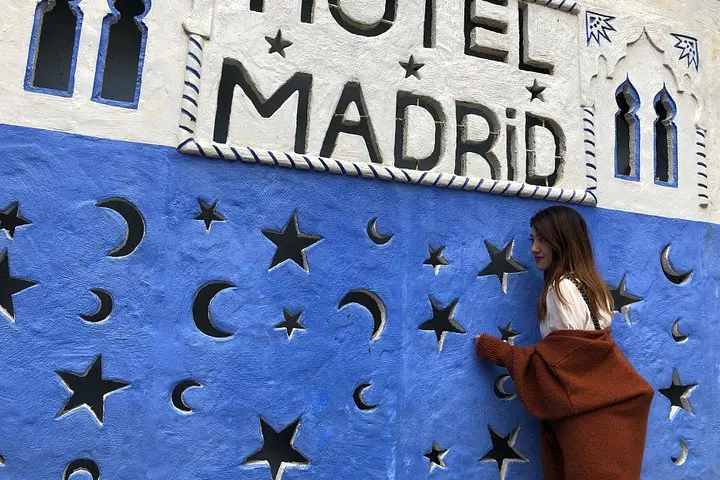
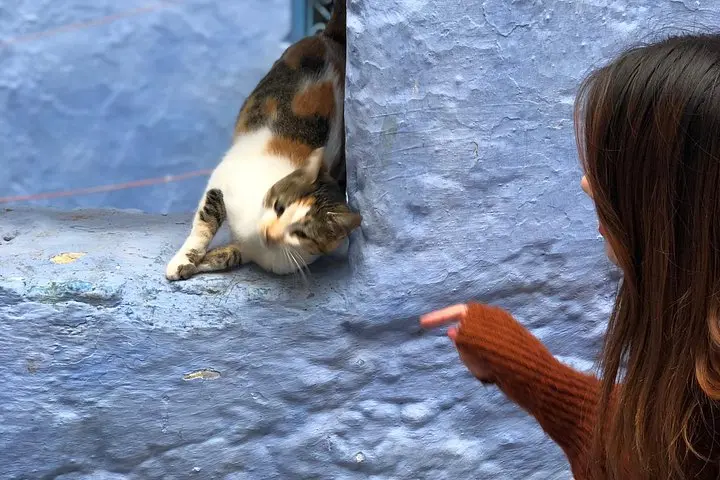
You arrive as the Rif mountains open up: a ribbon of road drops from pine slopes and, suddenly, blue walls crowd the narrow streets like a color turned up on a map. The medina of Chefchaouen feels immediate and tactile—painted alleys, rooftop terraces, and the steady murmur of market trade pushing you forward.
You arrive as the Rif mountains open up: a ribbon of road drops from pine slopes and, suddenly, blue walls crowd the narrow streets like a color turned up on a map. The medina of Chefchaouen feels immediate and tactile—painted alleys, rooftop terraces, and the steady murmur of market trade pushing you forward.
Founded in the 15th century by Moorish exiles, Chefchaouen’s blue-washed lanes reflect layered histories: Andalusian influences in its tilework, local Rif architecture, and a craft economy built around woven blankets and dyed wool. Geologically the town sits in folded limestone hills that feed the Ras El-Maa spring—an upland seep that still cools the medina and creates the small waterfall where local life spills into the open air.
Culturally, Uta el-Hammam square is the social engine—cafés, tajine steam, and the Kasbah museum where regional crafts and history come into focus. Walk toward the Spanish Mosque viewpoint for a clear panorama of the town framed by terraced slopes.
Practical guidance: this is a full-day outing from Fez (8–10 hours). You’ll have roughly three hours free in the medina—enough to move deliberately but not to linger everywhere. Wear sturdy shoes for cobbles and short stair climbs, carry water (bottled or refillable), and schedule your visit outside midday in summer to avoid the hottest hours. Cash is useful for small purchases in souks; modest dress is recommended in public spaces. The route is accessible by air-conditioned vehicle, and much of the experience is light walking and cultural exploration rather than strenuous hiking.