THE ADVENTURE COLLECTIVE® · Independent discovery and booking for outdoor travel

Take a full-day ride from Fez into the Rif Mountains to see Chefchaouen’s blue-washed medina, climb to Ras El Ma for sweeping views, and browse local handicrafts. This practical guide outlines what to expect, how to prepare, and the best time to visit.
Take a full-day ride from Fez into the Rif Mountains to see Chefchaouen’s blue-washed medina, climb to Ras El Ma for sweeping views, and browse local handicrafts. This practical guide outlines what to expect, how to prepare, and the best time to visit.
Dawn in Fez, the van pulls away and the Atlas gives way to the Rif, a series of low limestone ridges that press toward the Mediterranean. Windows frame terraced fields and olive groves until the town of Chefchaouen appears — a cluster of steep lanes washed in blues that catch the light like a painted map.
Verified experiences and guided adventures in the surrounding area.
Operated by RMT Tours · Chefchaouen, Tanger-Tetouan-Al Hoceima
Dawn in Fez, the van pulls away and the Atlas gives way to the Rif, a series of low limestone ridges that press toward the Mediterranean. Windows frame terraced fields and olive groves until the town of Chefchaouen appears — a cluster of steep lanes washed in blues that catch the light like a painted map.
Founded as a fortress in 1471, Chefchaouen grew where mountain routes met Mediterranean trade. The town sits on folded Rif geology: soft limestones and clay soils that shape its narrow streets and small springs. Architecturally, you’ll notice Moroccan-Andalusian details inherited from settlers who brought Iberian styles; the Kasbah tower and the Grand Spanish Mosque mark those threads.
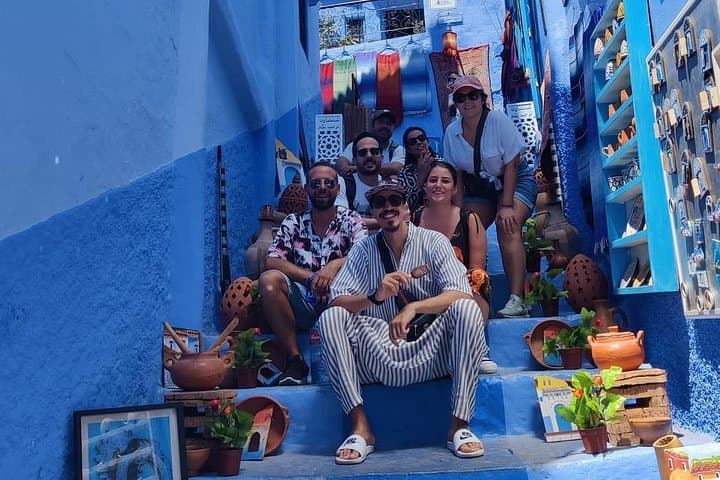
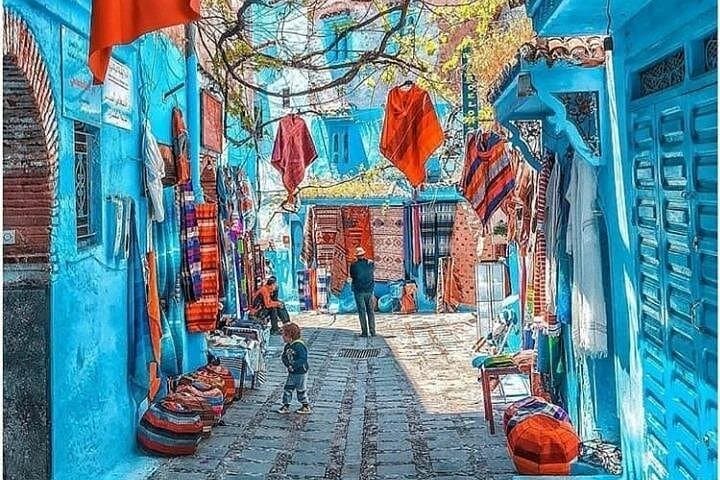
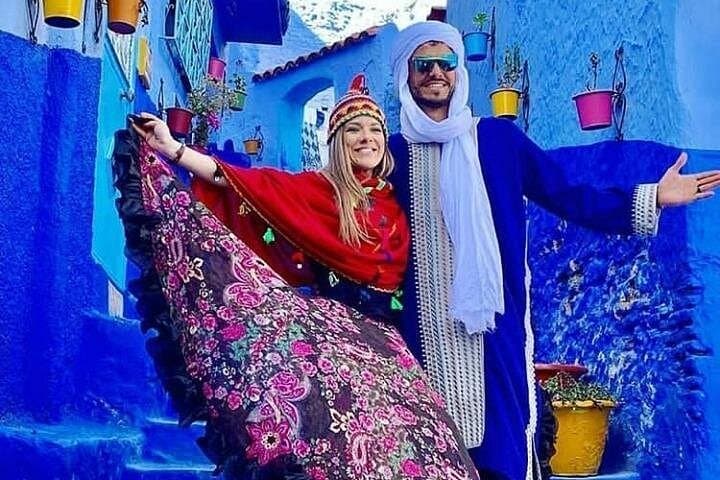
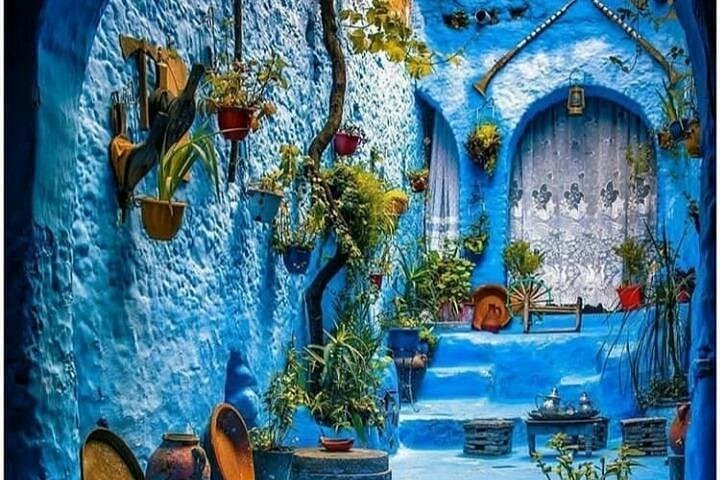
Culture is tactile here: dyers, woven shawls, and small workshops shaping goat cheese and cedar souvenirs. The town’s blue limewash, practical and aesthetic, cools walls and brightens alleys — a photographer’s dream and a local tradition.
Practical guidance: plan a 10–12 hour day from Fez with hotel pickup (included) and air-conditioned transport. Expect several hours on the road each way and 1–3 hours walking in the medina, including a steep but short climb to Ras El Ma viewpoint. Wear sturdy shoes for uneven stone, bring cash for small purchases and a refillable water bottle; shade is limited on the ascent.
Best times are spring and fall for mild weather and clearer light; summers can be hot at midday, winters cool and occasionally wet. Small-group logistics make the day flexible — ask about accessibility and dietary needs when booking to tailor the visit.
Expect roughly 3.5–4 hours each way depending on traffic and stops; the route winds through Rif foothills with several scenic pullouts.
Lunch is typically not included — guides can recommend or take you to local restaurants in Plaza Uta el-Hammam; bring cash for meal purchases.
Parts of the medina and main plazas are accessible, but many alleys and the climb to Ras El Ma involve steps and uneven surfaces; check in advance if mobility support is required.
Yes — small workshops sell woven textiles, leather goods, and goat cheese; bargaining is common but keep offers respectful.
RMT Tours operates guided outdoor trips and adventures with an emphasis on safety, stewardship, and memorable experiences.
Dawn in Fez, the van pulls away and the Atlas gives way to the Rif, a series of low limestone ridges that press toward the Mediterranean. Windows frame terraced fields and olive groves until the town of Chefchaouen appears — a cluster of steep lanes washed in blues that catch the light like a painted map.
Dawn in Fez, the van pulls away and the Atlas gives way to the Rif, a series of low limestone ridges that press toward the Mediterranean. Windows frame terraced fields and olive groves until the town of Chefchaouen appears — a cluster of steep lanes washed in blues that catch the light like a painted map.
Founded as a fortress in 1471, Chefchaouen grew where mountain routes met Mediterranean trade. The town sits on folded Rif geology: soft limestones and clay soils that shape its narrow streets and small springs. Architecturally, you’ll notice Moroccan-Andalusian details inherited from settlers who brought Iberian styles; the Kasbah tower and the Grand Spanish Mosque mark those threads.
Culture is tactile here: dyers, woven shawls, and small workshops shaping goat cheese and cedar souvenirs. The town’s blue limewash, practical and aesthetic, cools walls and brightens alleys — a photographer’s dream and a local tradition.
Practical guidance: plan a 10–12 hour day from Fez with hotel pickup (included) and air-conditioned transport. Expect several hours on the road each way and 1–3 hours walking in the medina, including a steep but short climb to Ras El Ma viewpoint. Wear sturdy shoes for uneven stone, bring cash for small purchases and a refillable water bottle; shade is limited on the ascent.
Best times are spring and fall for mild weather and clearer light; summers can be hot at midday, winters cool and occasionally wet. Small-group logistics make the day flexible — ask about accessibility and dietary needs when booking to tailor the visit.