THE ADVENTURE COLLECTIVE® · Independent discovery and booking for outdoor travel

Leave Fez before dawn and trade cedar forests and mountain passes for the towering orange ridges of Erg Chebbi. This compact 2-day, 1-night loop pairs cultural stops and fossil workshops with a camel trek and sunrise on the Sahara’s highest dunes.
Leave Fez before dawn and trade cedar forests and mountain passes for the towering orange ridges of Erg Chebbi. This compact 2-day, 1-night loop pairs cultural stops and fossil workshops with a camel trek and sunrise on the Sahara’s highest dunes.
Early morning in Fez, you push away from city alleys and climb into the cool of the Middle Atlas—pines and cedar groves passing like pages. The road rises to mountain passes, drops through sunbaked valleys, and finally opens on the orange sweep of Erg Chebbi where sand becomes landscape.
Verified experiences and guided adventures in the surrounding area.
Operated by Luxury Fes Tours · Merzouga, Drâa-Tafilalet
Early morning in Fez, you push away from city alleys and climb into the cool of the Middle Atlas—pines and cedar groves passing like pages. The road rises to mountain passes, drops through sunbaked valleys, and finally opens on the orange sweep of Erg Chebbi where sand becomes landscape.
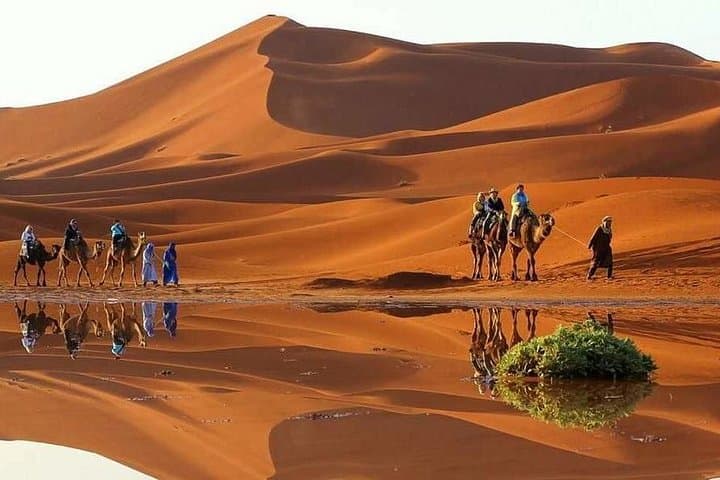
This two-day loop follows a classic Saharan corridor: Ifrane (elevation ~1,650 m) and Azrou’s cedar forest with resident Barbary macaques, then Midelt for a midday break before crossing high foothills toward Errachidia, Erfoud and the palm oases near Merzouga. Geologically, you move from limestone massif and forested plateaus into Miocene-era desert basins; the Erg Chebbi dunes can reach around 150 m in height and are composed of fine, wind-sculpted sand.
Culturally, the route threads Berber villages and workshops where fossil-stone carving and date-cultivation remain everyday crafts. Expect paved national roads for most of the drive, then short desert tracks to reach the tents and camel mounting points.
Practical guidance: the trip includes roughly 450–500 km of driving round-trip—plan for 7–9 hours of driving across day one with regular stops. Camel treks to dune crests are low-technical but require sure footing and balance; sunrise on the dunes is best reached on foot or camel before breakfast. Pack sun protection, layered clothing for large diurnal temperature swings (desert nights can be cold), at least 2–3 liters of water per person for daytime desert walks, and a small daypack. If you’re sensitive to long drives, choose a window seat and stretch at village stops—this itinerary is designed to be scenic and accessible without advanced skills.
Pickup is typically early morning from your Fez hotel or the airport; exact times depend on season and will be confirmed at booking.
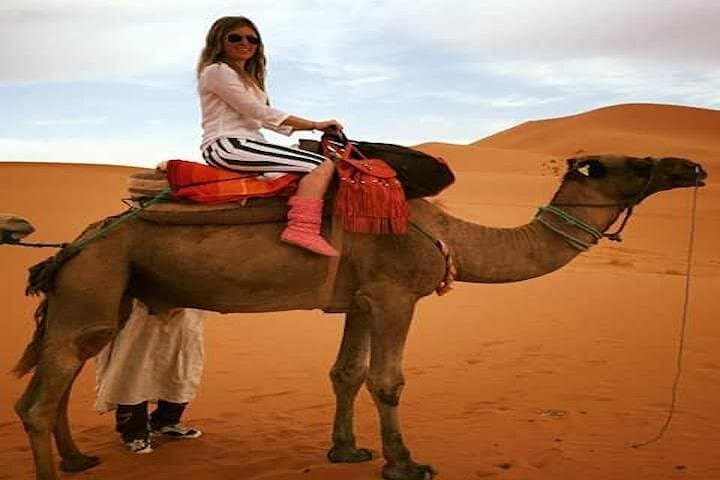
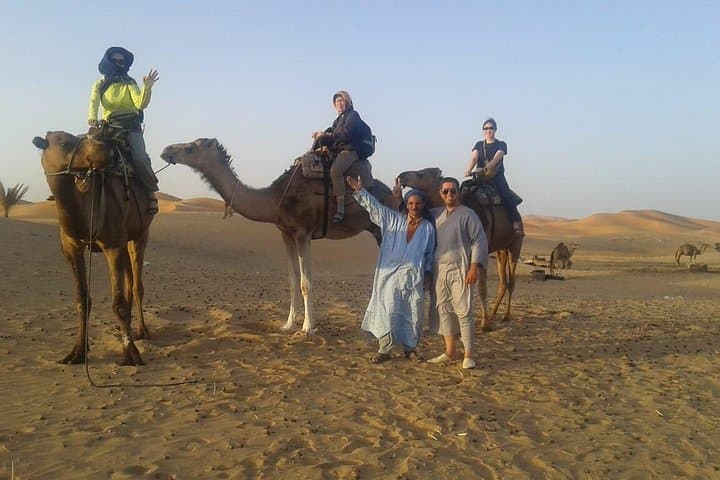
Camel rides are moderate—you’ll spend about 45–90 minutes mounted to reach dune viewpoints; handlers provide basic instruction and assistance mounting.
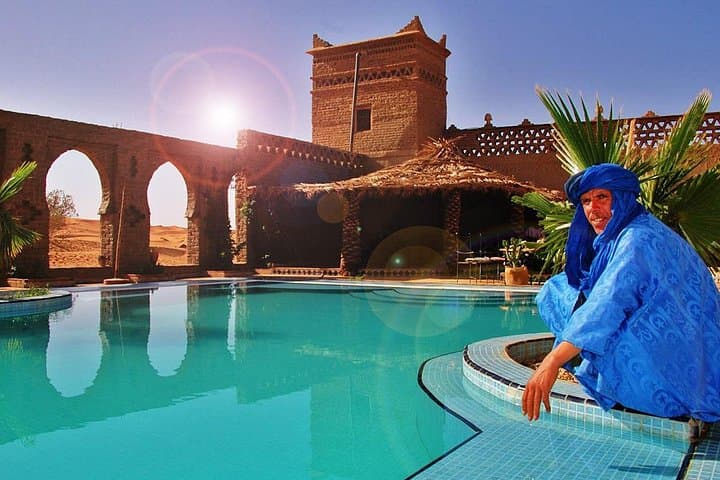
Camps use nomadic-style tents with bedding and a communal dining area; comfort is basic to mid-range—expect simple facilities and itinerant camp staff.
Children can join but should be monitored on camels; travelers with serious mobility limits may find dune walking and camel mounting challenging—discuss options with the operator.
Luxury Fes Tours operates guided outdoor trips and adventures with an emphasis on safety, stewardship, and memorable experiences.
Early morning in Fez, you push away from city alleys and climb into the cool of the Middle Atlas—pines and cedar groves passing like pages. The road rises to mountain passes, drops through sunbaked valleys, and finally opens on the orange sweep of Erg Chebbi where sand becomes landscape.
Early morning in Fez, you push away from city alleys and climb into the cool of the Middle Atlas—pines and cedar groves passing like pages. The road rises to mountain passes, drops through sunbaked valleys, and finally opens on the orange sweep of Erg Chebbi where sand becomes landscape.
This two-day loop follows a classic Saharan corridor: Ifrane (elevation ~1,650 m) and Azrou’s cedar forest with resident Barbary macaques, then Midelt for a midday break before crossing high foothills toward Errachidia, Erfoud and the palm oases near Merzouga. Geologically, you move from limestone massif and forested plateaus into Miocene-era desert basins; the Erg Chebbi dunes can reach around 150 m in height and are composed of fine, wind-sculpted sand.
Culturally, the route threads Berber villages and workshops where fossil-stone carving and date-cultivation remain everyday crafts. Expect paved national roads for most of the drive, then short desert tracks to reach the tents and camel mounting points.
Practical guidance: the trip includes roughly 450–500 km of driving round-trip—plan for 7–9 hours of driving across day one with regular stops. Camel treks to dune crests are low-technical but require sure footing and balance; sunrise on the dunes is best reached on foot or camel before breakfast. Pack sun protection, layered clothing for large diurnal temperature swings (desert nights can be cold), at least 2–3 liters of water per person for daytime desert walks, and a small daypack. If you’re sensitive to long drives, choose a window seat and stretch at village stops—this itinerary is designed to be scenic and accessible without advanced skills.