THE ADVENTURE COLLECTIVE® · Independent discovery and booking for outdoor travel

Two days from Fes take you through cedar forests, Ziz Gorge and the wind-carved Erg Chebbi dunes at Merzouga. Ride camels to a desert camp for sunset and sunrise views, with brief treks and cultural stops along the way.
Two days from Fes take you through cedar forests, Ziz Gorge and the wind-carved Erg Chebbi dunes at Merzouga. Ride camels to a desert camp for sunset and sunrise views, with brief treks and cultural stops along the way.
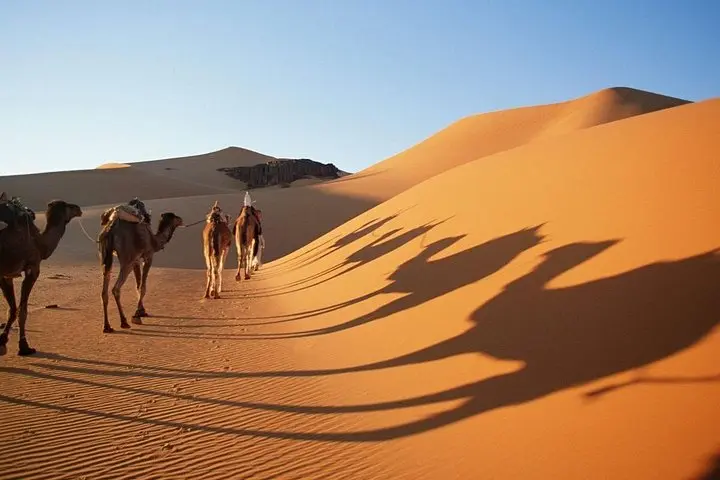
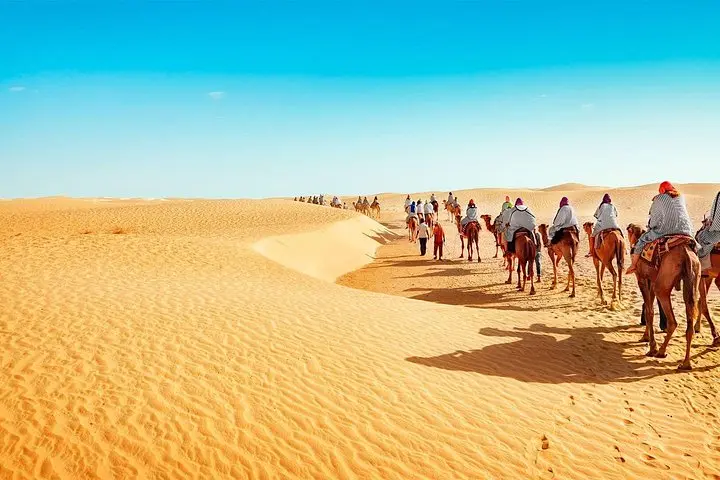
A low, ochre horizon unfolds as you leave Fes; the road climbs through cedar-scented air and the Middle Atlas folds into distant ridgelines. By late afternoon the pale curves of Erg Chebbi rise like a moving wall of sand—your camp tucked on the lee side where camels wait to carry you up the highest dunes in time for sunset.
Verified experiences and guided adventures in the surrounding area.
Operated by Peaceful Morocco Travel · Merzouga, Drâa-Tafilalet
A low, ochre horizon unfolds as you leave Fes; the road climbs through cedar-scented air and the Middle Atlas folds into distant ridgelines. By late afternoon the pale curves of Erg Chebbi rise like a moving wall of sand—your camp tucked on the lee side where camels wait to carry you up the highest dunes in time for sunset.
This two-day itinerary tracks a classic Moroccan corridor: Ifrane’s alpine-style town and cedar forests, Azrou and Midelt’s high valleylands, the Ziz Gorge carved through limestone, then the vast sand sea at Merzouga. Geologically, Erg Chebbi is wind-sculpted Quaternary sand riding an impermeable bed; culturally, you move through territories shaped by Berber nomadic routes and modern kasbah settlements that served historic caravan traffic.
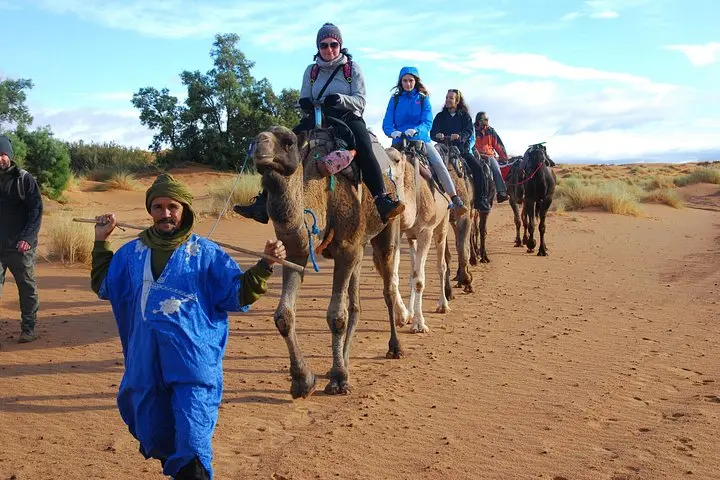
Expect an eight-hour drive with stops for photos and short walks; the camel trek to camp takes roughly 45–60 minutes at a walking pace. Camps are typically equipped with blankets and basic sleeping arrangements and offer communal meals and tea. Sunrise and sunset on the dunes change temperature quickly—day heat gives way to cold nights.
Practical edge: pack sun protection and warm layers, carry cash for small purchases and tips, and prepare for dust and shifting sand underfoot. If you’re prone to motion sickness, plan medication for long mountain roads. The experience balances easy physical demands—camel riding and short dune scrambling—with long transit time, making it accessible for most but still properly adventurous.
Yes; the standard itinerary includes a camel trek from Merzouga village to the desert camp for sunset and the return after sunrise.
Expect roughly 7–8 hours of driving with stops; schedule allows photo breaks and short walks through the Middle Atlas and Ziz Gorge.
Camps are basic but well-equipped with cushions, blankets, and communal toilets; some operators offer private tents on request—check in advance.
The tour is generally family-friendly but camel mounts and uneven sand require mobility; infants may ride on laps during the camel trek—confirm specifics with the operator.
Peaceful Morocco Travel operates guided outdoor trips and adventures with an emphasis on safety, stewardship, and memorable experiences.
A low, ochre horizon unfolds as you leave Fes; the road climbs through cedar-scented air and the Middle Atlas folds into distant ridgelines. By late afternoon the pale curves of Erg Chebbi rise like a moving wall of sand—your camp tucked on the lee side where camels wait to carry you up the highest dunes in time for sunset.
A low, ochre horizon unfolds as you leave Fes; the road climbs through cedar-scented air and the Middle Atlas folds into distant ridgelines. By late afternoon the pale curves of Erg Chebbi rise like a moving wall of sand—your camp tucked on the lee side where camels wait to carry you up the highest dunes in time for sunset.
This two-day itinerary tracks a classic Moroccan corridor: Ifrane’s alpine-style town and cedar forests, Azrou and Midelt’s high valleylands, the Ziz Gorge carved through limestone, then the vast sand sea at Merzouga. Geologically, Erg Chebbi is wind-sculpted Quaternary sand riding an impermeable bed; culturally, you move through territories shaped by Berber nomadic routes and modern kasbah settlements that served historic caravan traffic.
Expect an eight-hour drive with stops for photos and short walks; the camel trek to camp takes roughly 45–60 minutes at a walking pace. Camps are typically equipped with blankets and basic sleeping arrangements and offer communal meals and tea. Sunrise and sunset on the dunes change temperature quickly—day heat gives way to cold nights.
Practical edge: pack sun protection and warm layers, carry cash for small purchases and tips, and prepare for dust and shifting sand underfoot. If you’re prone to motion sickness, plan medication for long mountain roads. The experience balances easy physical demands—camel riding and short dune scrambling—with long transit time, making it accessible for most but still properly adventurous.