THE ADVENTURE COLLECTIVE® · Independent discovery and booking for outdoor travel

Cross the Middle Atlas to reach Erg Chebbi in a compact two-day itinerary that combines long drives with a sunset camel trek and an optional camp night under the stars. Practical route notes, local history, and desert-ready tips to help you prepare.
Cross the Middle Atlas to reach Erg Chebbi in a compact two-day itinerary that combines long drives with a sunset camel trek and an optional camp night under the stars. Practical route notes, local history, and desert-ready tips to help you prepare.
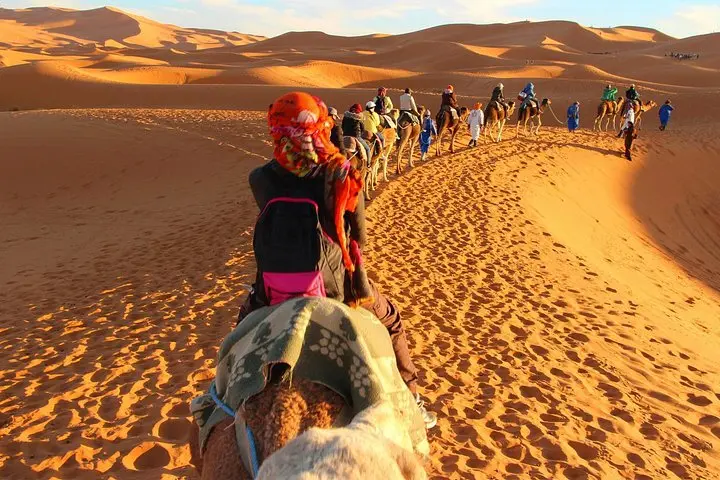
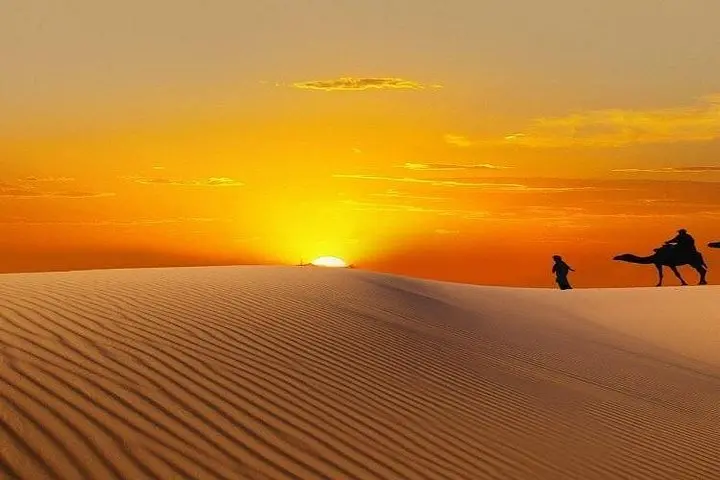
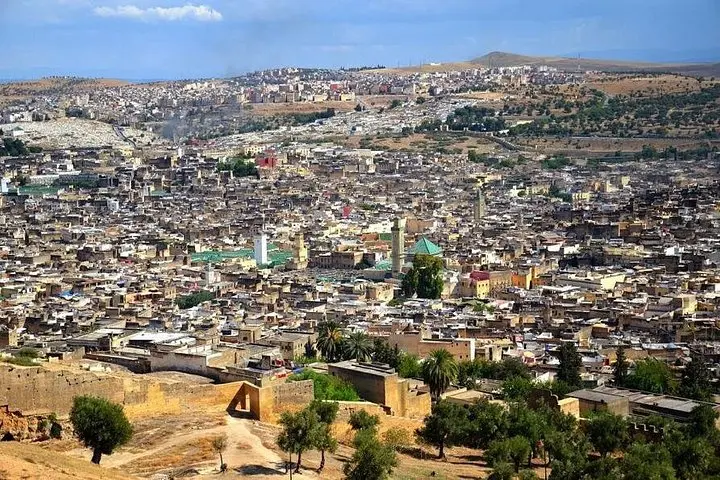
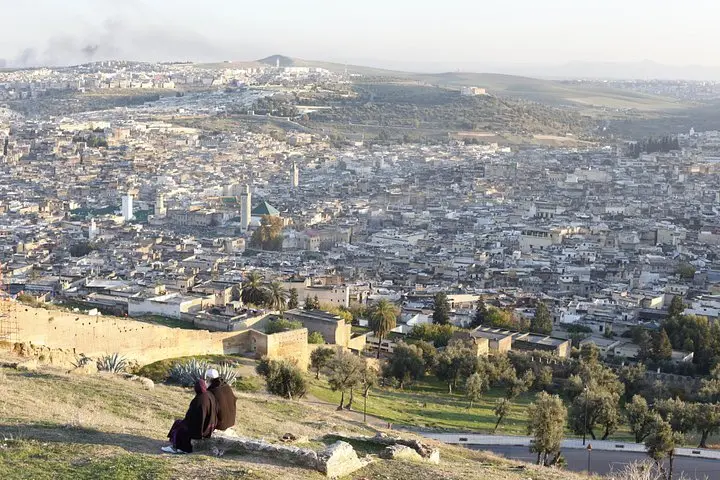
The van slides out of Fez before dawn and the road climbs into the Middle Atlas, where cedar forests and the scattered roofs of Berber villages give way to a widening plain. By late afternoon, the horizon softens into piles of gold — the Erg Chebbi dunes push and shift like a living ridge, daring you to climb them for a sunset that paints the sand in copper and blue.
Verified experiences and guided adventures in the surrounding area.
Operated by Ahmed Meski · Merzouga, Drâa-Tafilalet
The van slides out of Fez before dawn and the road climbs into the Middle Atlas, where cedar forests and the scattered roofs of Berber villages give way to a widening plain. By late afternoon, the horizon softens into piles of gold — the Erg Chebbi dunes push and shift like a living ridge, daring you to climb them for a sunset that paints the sand in copper and blue.
This two-day loop follows a classic Saharan corridor: Ifrane’s alpine-style town and Azrou’s cedar groves (home to relaxed Barbary macaques), then across Midelt and the fossil-rich plateaus around Erfoud before the desert opens at Merzouga. Geologically, Erg Chebbi is a wind-built dune sea formed from ancient river silts and Saharan sands; culturally, the area remains shaped by nomadic routes and Gnawa music villages such as Khamlia.
Expect roughly two days of travel with a long day of driving and an evening camel trek of about an hour onto the dunes. Nights can be spent in a desert camp under clear stars or in modest guesthouse comfort; mornings reward early risers with sunrise that spills into the Algerian border ridge.
Practical edge: carry water, sun protection, and sturdy footwear for shifting sand; layered clothing handles wide diurnal swings; and book a tour with local guides who minimize vehicle impact on dune faces. Respect Bedouin camp etiquette, avoid driving on bare dunes, and bring cash for small village purchases. This trip is less a sprint than a measured crossing — sensory, straightforward, and anchored in place and history.
Typical camel treks included in this itinerary last about an hour at sunset and a short return ride at sunrise the next morning.
Yes — most operators offer the choice of a desert camp (shared or private tents) or basic desert hotels/guesthouses in Merzouga.
Expect several hours on paved and rural roads across the Atlas with stops; the van is air-conditioned but transfers are the longest portion of the itinerary.
Spring and fall offer milder daytime temperatures and comfortable nights; summer is hot, and winter nights can be very cold.
Ahmed Meski operates guided outdoor trips and adventures with an emphasis on safety, stewardship, and memorable experiences.
The van slides out of Fez before dawn and the road climbs into the Middle Atlas, where cedar forests and the scattered roofs of Berber villages give way to a widening plain. By late afternoon, the horizon softens into piles of gold — the Erg Chebbi dunes push and shift like a living ridge, daring you to climb them for a sunset that paints the sand in copper and blue.
The van slides out of Fez before dawn and the road climbs into the Middle Atlas, where cedar forests and the scattered roofs of Berber villages give way to a widening plain. By late afternoon, the horizon softens into piles of gold — the Erg Chebbi dunes push and shift like a living ridge, daring you to climb them for a sunset that paints the sand in copper and blue.
This two-day loop follows a classic Saharan corridor: Ifrane’s alpine-style town and Azrou’s cedar groves (home to relaxed Barbary macaques), then across Midelt and the fossil-rich plateaus around Erfoud before the desert opens at Merzouga. Geologically, Erg Chebbi is a wind-built dune sea formed from ancient river silts and Saharan sands; culturally, the area remains shaped by nomadic routes and Gnawa music villages such as Khamlia.
Expect roughly two days of travel with a long day of driving and an evening camel trek of about an hour onto the dunes. Nights can be spent in a desert camp under clear stars or in modest guesthouse comfort; mornings reward early risers with sunrise that spills into the Algerian border ridge.
Practical edge: carry water, sun protection, and sturdy footwear for shifting sand; layered clothing handles wide diurnal swings; and book a tour with local guides who minimize vehicle impact on dune faces. Respect Bedouin camp etiquette, avoid driving on bare dunes, and bring cash for small village purchases. This trip is less a sprint than a measured crossing — sensory, straightforward, and anchored in place and history.