THE ADVENTURE COLLECTIVE® · Independent discovery and booking for outdoor travel

A compact two-day loop from Fez to the Erg Chebbi dunes that pairs scenic Middle Atlas drives with a sunset camel trek and an overnight desert camp. Expect long road hours balanced by quiet dune time, Berber hospitality, and star-filled nights.
A compact two-day loop from Fez to the Erg Chebbi dunes that pairs scenic Middle Atlas drives with a sunset camel trek and an overnight desert camp. Expect long road hours balanced by quiet dune time, Berber hospitality, and star-filled nights.
A dawn convoy leaves Fez and the Middle Atlas unspools beneath the tires: cedar forests give way to stony passes and then, on the horizon, the warm orange of Erg Chebbi rises like a moving wall. On day one the road is the narrative—Ifrane’s cool pines, Azrou’s sculpted rock and the Ziz Gorges’ palm-lined canyon—until camels wait at Merzouga and the dunes begin to breathe with wind and sand.
Verified experiences and guided adventures in the surrounding area.
Operated by Peaceful Morocco Travel · Merzouga, Drâa-Tafilalet
A dawn convoy leaves Fez and the Middle Atlas unspools beneath the tires: cedar forests give way to stony passes and then, on the horizon, the warm orange of Erg Chebbi rises like a moving wall. On day one the road is the narrative—Ifrane’s cool pines, Azrou’s sculpted rock and the Ziz Gorges’ palm-lined canyon—until camels wait at Merzouga and the dunes begin to breathe with wind and sand.
This route follows historic caravan arteries across central Morocco; the dunes themselves are products of Saharan wind deposition over millennia, shifting ridgelines of coarse sand that hold ancient trade histories and Berber camp traditions. Local culture centers on nomadic hospitality: music from small Gnawa ensembles, mint tea rituals, and tents pitched with practical comfort rather than ornament.
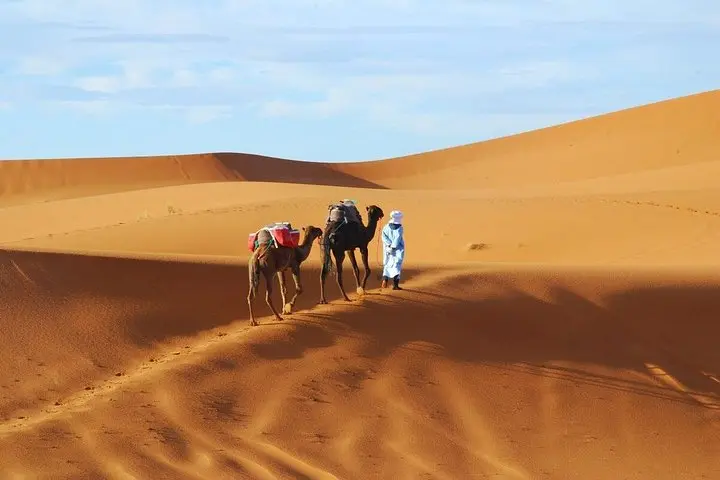
Expect a mix of driving and gentle outdoor activity. The camel trek to the camp climbs several moderate dunes to a sunset ridge, offering broad sky, serrated dune shadows and a desert silence that actively shapes your pace. Nights are cool and crisp; the camp is basic but warm with communal dinner and starlight.
Practical guidance: plan for long stretches in the vehicle—bring layered clothing for hot days and cold nights, sun protection, and a reliable water bottle. Footwear should be supportive for sandy slopes and rocky stops. Time travel segments to avoid midday heat; sunrise and sunset atop the dunes deliver the clearest light and coolest walking conditions. Respect local guides, pack out waste, and give yourself an hour at the high dunes to acclimate and watch the light change—this is where the desert reveals itself.
The camel trek is gentle and short—typically 45–90 minutes to reach the high dunes—suitable for first-time riders; guides assist mounting and the camels move at a slow, steady pace.
An overnight stay is in a desert camp with basic private or shared tents, communal meals, and sleeping mats; expect functional facilities rather than luxury amenities.
Carry some Moroccan dirhams for incidental purchases and small tips; tipping guides and camp staff is customary and appreciated.
Short camel rides and campsite access are generally manageable for older children and those with limited mobility, but the long vehicle transfers and sandy terrain can be challenging—check with the operator about specific needs.
Peaceful Morocco Travel operates guided outdoor trips and adventures with an emphasis on safety, stewardship, and memorable experiences.
A dawn convoy leaves Fez and the Middle Atlas unspools beneath the tires: cedar forests give way to stony passes and then, on the horizon, the warm orange of Erg Chebbi rises like a moving wall. On day one the road is the narrative—Ifrane’s cool pines, Azrou’s sculpted rock and the Ziz Gorges’ palm-lined canyon—until camels wait at Merzouga and the dunes begin to breathe with wind and sand.
A dawn convoy leaves Fez and the Middle Atlas unspools beneath the tires: cedar forests give way to stony passes and then, on the horizon, the warm orange of Erg Chebbi rises like a moving wall. On day one the road is the narrative—Ifrane’s cool pines, Azrou’s sculpted rock and the Ziz Gorges’ palm-lined canyon—until camels wait at Merzouga and the dunes begin to breathe with wind and sand.
This route follows historic caravan arteries across central Morocco; the dunes themselves are products of Saharan wind deposition over millennia, shifting ridgelines of coarse sand that hold ancient trade histories and Berber camp traditions. Local culture centers on nomadic hospitality: music from small Gnawa ensembles, mint tea rituals, and tents pitched with practical comfort rather than ornament.
Expect a mix of driving and gentle outdoor activity. The camel trek to the camp climbs several moderate dunes to a sunset ridge, offering broad sky, serrated dune shadows and a desert silence that actively shapes your pace. Nights are cool and crisp; the camp is basic but warm with communal dinner and starlight.
Practical guidance: plan for long stretches in the vehicle—bring layered clothing for hot days and cold nights, sun protection, and a reliable water bottle. Footwear should be supportive for sandy slopes and rocky stops. Time travel segments to avoid midday heat; sunrise and sunset atop the dunes deliver the clearest light and coolest walking conditions. Respect local guides, pack out waste, and give yourself an hour at the high dunes to acclimate and watch the light change—this is where the desert reveals itself.