THE ADVENTURE COLLECTIVE® · Independent discovery and booking for outdoor travel

A compact half-day escape from Rhodes Town that pairs Filerimos Hill’s panoramic viewpoints and historic monastery with the cool, shaded corridors of Butterfly Valley. Ideal for nature lovers and families seeking easy walking, wildlife viewing, and local history.
A compact half-day escape from Rhodes Town that pairs Filerimos Hill’s panoramic viewpoints and historic monastery with the cool, shaded corridors of Butterfly Valley. Ideal for nature lovers and families seeking easy walking, wildlife viewing, and local history.
You step off the mini-coach at a low, wind-swept ridge and the Aegean opens to the west — light sliding across tile-roofed villages, the sea daring you to look farther. Filerimos Hill is immediate: a broad spine of limestone punctuated by an enormous cross, scattered peacocks that fan and preen, and stone paths that lead past monastery walls and ruin-strewn terraces.
Verified experiences and guided adventures in the surrounding area.
Operated by Sigma Travel · Ialysos, South Aegean
You step off the mini-coach at a low, wind-swept ridge and the Aegean opens to the west — light sliding across tile-roofed villages, the sea daring you to look farther. Filerimos Hill is immediate: a broad spine of limestone punctuated by an enormous cross, scattered peacocks that fan and preen, and stone paths that lead past monastery walls and ruin-strewn terraces.
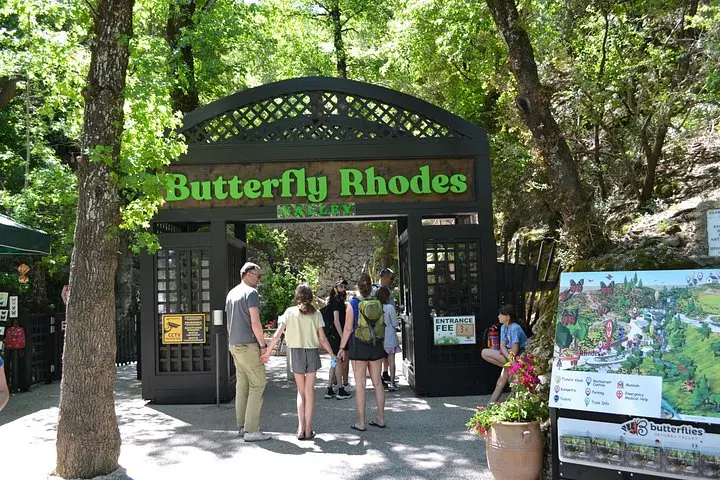
A short drive drops you into Butterfly Valley (Petaloudes), where dense plane and oriental sweetgum trees cool the air and springs thread the floor. In July and August the trees can be draped in Panaxia quadripunctaria moths; the valley hums like a living curtain as they settle on trunks and leaves.
History sits compact here — Greek, Roman and medieval footprints overlap. Filerimos hosted an ancient acropolis and later a Byzantine and then a Crusader presence; the monastery on the hill was rebuilt and reworked through eras of Venetian and Ottoman control. Geologically, both sites reflect Rhodes’ limestone bedrock and spring-fed microclimates that shape vegetation and wildlife.
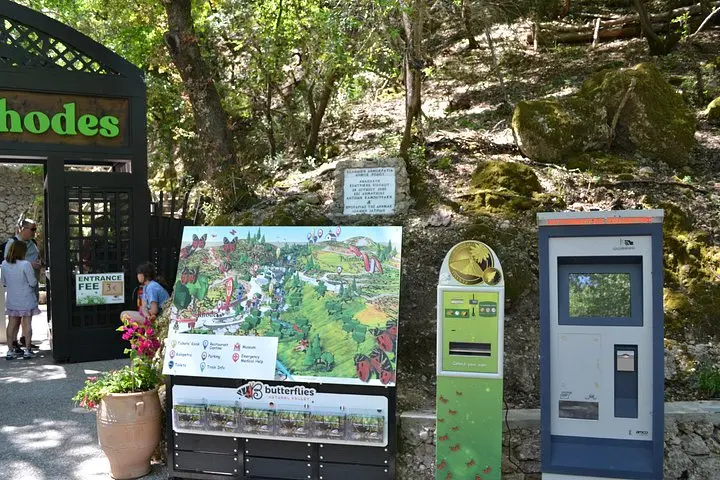
Practical guidance: the tour runs 3–4 hours and suits casual walkers. Wear sturdy shoes for uneven stone and short slopes, bring water and sun protection, and expect shaded trails in the valley but exposed viewpoints on the hill. The butterfly reserve charges a small on-site fee; the best observation windows are early morning or late afternoon when the insects are most active.
Respect signage in the reserve — avoid touching the butterflies and keep voices low so the microclimate stays intact. The route rewards photographers and families alike: panoramic viewpoints, friendly peacocks and a rare seasonal spectacle in the valley.
No — the main butterfly reserve requires a small entrance fee that is paid on-site; free-access walking areas exist outside the main reserve.
Expect short walks (up to a few kilometers total) with some uneven ground and modest elevation on Filerimos; the tour is classed as easy.
Yes — the tour notes stroller accessibility for infants, but some paths in the reserve and on the hill can be uneven and stepped.
Yes — the operator may cancel for adverse weather or insufficient travelers; full refunds are offered if canceled at least 24 hours prior.
Sigma Travel operates guided outdoor trips and adventures with an emphasis on safety, stewardship, and memorable experiences.
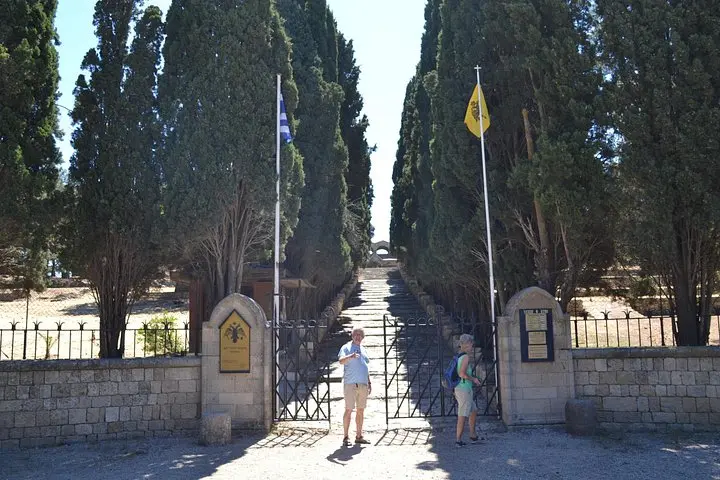
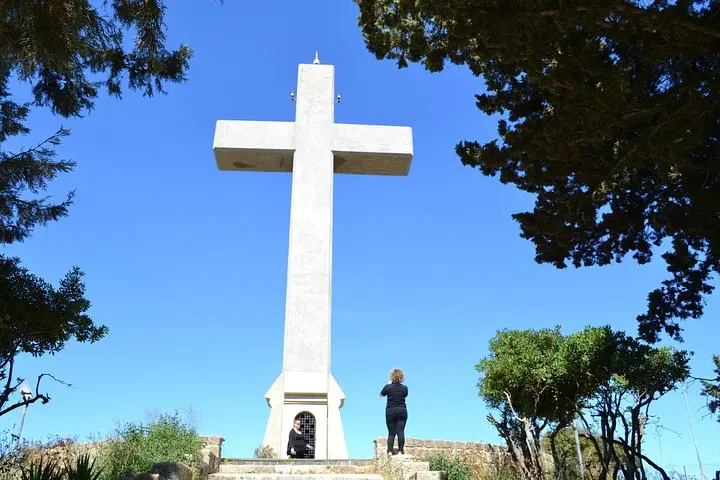
You step off the mini-coach at a low, wind-swept ridge and the Aegean opens to the west — light sliding across tile-roofed villages, the sea daring you to look farther. Filerimos Hill is immediate: a broad spine of limestone punctuated by an enormous cross, scattered peacocks that fan and preen, and stone paths that lead past monastery walls and ruin-strewn terraces.
You step off the mini-coach at a low, wind-swept ridge and the Aegean opens to the west — light sliding across tile-roofed villages, the sea daring you to look farther. Filerimos Hill is immediate: a broad spine of limestone punctuated by an enormous cross, scattered peacocks that fan and preen, and stone paths that lead past monastery walls and ruin-strewn terraces.
A short drive drops you into Butterfly Valley (Petaloudes), where dense plane and oriental sweetgum trees cool the air and springs thread the floor. In July and August the trees can be draped in Panaxia quadripunctaria moths; the valley hums like a living curtain as they settle on trunks and leaves.
History sits compact here — Greek, Roman and medieval footprints overlap. Filerimos hosted an ancient acropolis and later a Byzantine and then a Crusader presence; the monastery on the hill was rebuilt and reworked through eras of Venetian and Ottoman control. Geologically, both sites reflect Rhodes’ limestone bedrock and spring-fed microclimates that shape vegetation and wildlife.
Practical guidance: the tour runs 3–4 hours and suits casual walkers. Wear sturdy shoes for uneven stone and short slopes, bring water and sun protection, and expect shaded trails in the valley but exposed viewpoints on the hill. The butterfly reserve charges a small on-site fee; the best observation windows are early morning or late afternoon when the insects are most active.
Respect signage in the reserve — avoid touching the butterflies and keep voices low so the microclimate stays intact. The route rewards photographers and families alike: panoramic viewpoints, friendly peacocks and a rare seasonal spectacle in the valley.