THE ADVENTURE COLLECTIVE® · Independent discovery and booking for outdoor travel

A compact five-day circuit from Tirana through Albania into Greece: explore Gjirokastra’s Ottoman streets, Ioannina’s multicultural core, the soaring Meteora monasteries, and Korça’s café-lined avenues. Ideal for travelers who want heritage and dramatic mountain scenery without long independent planning.
A compact five-day circuit from Tirana through Albania into Greece: explore Gjirokastra’s Ottoman streets, Ioannina’s multicultural core, the soaring Meteora monasteries, and Korça’s café-lined avenues. Ideal for travelers who want heritage and dramatic mountain scenery without long independent planning.
Morning light at Tirana Airport feels purposeful — a group gathers, luggage tucks into an air-conditioned minivan, and the road climbs toward southern Albania’s folded mountains. Over the next five days the route alternates between Ottoman stone streets, rocky Greek heels, and monastery pinnacles that seem to hang from the sky.
Verified experiences and guided adventures in the surrounding area.
Operated by Albania Express Travel · Tirana, Tirana
Morning light at Tirana Airport feels purposeful — a group gathers, luggage tucks into an air-conditioned minivan, and the road climbs toward southern Albania’s folded mountains. Over the next five days the route alternates between Ottoman stone streets, rocky Greek heels, and monastery pinnacles that seem to hang from the sky.
The tour moves through Gjirokastra, the UNESCO “stone city” with 18th-century houses and a hilltop castle; across to Ioannina, a multicultural port on Lake Pamvotida; then into the Pindus range and the Meteora pinnacles where Byzantine monasteries perch hundreds of meters above the plain. Korça’s boulevard and café culture round out the return to Tirana. Geology here is dramatic: limestone strata in Epirus and Meteora were uplifted and eroded into steep pillars, while southern Albania’s folded ranges shelter Ottoman-era valley towns.
Culturally the route stitches Albanian, Greek and Ottoman histories — bazaars, mosques, Orthodox monasteries, and Cold War-era urban memory in Tirana. Locals still practice traditional crafts in Gjirokastra and Korça’s musical heritage is prominent.
Practical guidance: pack layered clothing for mountain mornings and sunlit afternoons, comfortable walking shoes for cobbled streets and monastery approaches, and a small daypack for water and camera. Expect daily drives of two to four hours between stops; entrances to some Meteora monasteries require modest dress and a short stair climb. The tour is suitable for most fitness levels, includes 4 breakfasts and hotel transfers, and runs as a private, guided circuit — an efficient way to combine heritage, alpine scenery, and roadside village life in five compact days.
Yes — the itinerary crosses at Kapshtica; bring a valid passport and any required visas for your nationality.
Daily walking is light to moderate: short city walks and stair climbs at monasteries, with most time spent sightseeing from a minivan.
Admissions are generally paid on site; the tour description lists visits but not included entrance fees, so bring local currency or card as advised by the guide.
Guides are typically English-speaking; confirm language preference at booking if you require another language.
Albania Express Travel operates guided outdoor trips and adventures with an emphasis on safety, stewardship, and memorable experiences.



Morning light at Tirana Airport feels purposeful — a group gathers, luggage tucks into an air-conditioned minivan, and the road climbs toward southern Albania’s folded mountains. Over the next five days the route alternates between Ottoman stone streets, rocky Greek heels, and monastery pinnacles that seem to hang from the sky.
Morning light at Tirana Airport feels purposeful — a group gathers, luggage tucks into an air-conditioned minivan, and the road climbs toward southern Albania’s folded mountains. Over the next five days the route alternates between Ottoman stone streets, rocky Greek heels, and monastery pinnacles that seem to hang from the sky.
The tour moves through Gjirokastra, the UNESCO “stone city” with 18th-century houses and a hilltop castle; across to Ioannina, a multicultural port on Lake Pamvotida; then into the Pindus range and the Meteora pinnacles where Byzantine monasteries perch hundreds of meters above the plain. Korça’s boulevard and café culture round out the return to Tirana. Geology here is dramatic: limestone strata in Epirus and Meteora were uplifted and eroded into steep pillars, while southern Albania’s folded ranges shelter Ottoman-era valley towns.
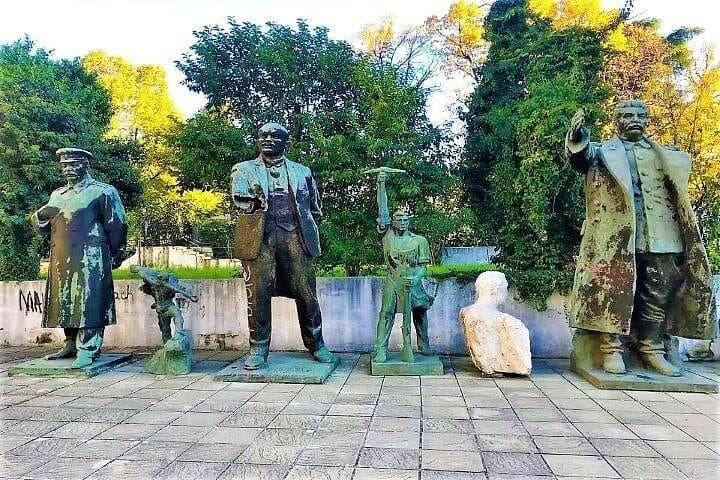
Culturally the route stitches Albanian, Greek and Ottoman histories — bazaars, mosques, Orthodox monasteries, and Cold War-era urban memory in Tirana. Locals still practice traditional crafts in Gjirokastra and Korça’s musical heritage is prominent.
Practical guidance: pack layered clothing for mountain mornings and sunlit afternoons, comfortable walking shoes for cobbled streets and monastery approaches, and a small daypack for water and camera. Expect daily drives of two to four hours between stops; entrances to some Meteora monasteries require modest dress and a short stair climb. The tour is suitable for most fitness levels, includes 4 breakfasts and hotel transfers, and runs as a private, guided circuit — an efficient way to combine heritage, alpine scenery, and roadside village life in five compact days.