THE ADVENTURE COLLECTIVE® · Independent discovery and booking for outdoor travel

Follow the Nile from Luxor to Aswan on a five-day, four-night cruise that combines major temples, tombs, and on-the-water moments. Expect full-board cabins, guided shore excursions, felucca sails, and short transfers between sites.
Follow the Nile from Luxor to Aswan on a five-day, four-night cruise that combines major temples, tombs, and on-the-water moments. Expect full-board cabins, guided shore excursions, felucca sails, and short transfers between sites.
You step onto the narrow gangway as the river breathes warm air over teak decks — the Nile pulls you south with a gentle, constant current. Date palms and low mudbrick villages slide past; the desert escarpment keeps a watchful, sunbaked distance.
Verified experiences and guided adventures in the surrounding area.
Operated by Go Discovery travel · Luxor, Luxor Governorate
You step onto the narrow gangway as the river breathes warm air over teak decks — the Nile pulls you south with a gentle, constant current. Date palms and low mudbrick villages slide past; the desert escarpment keeps a watchful, sunbaked distance.
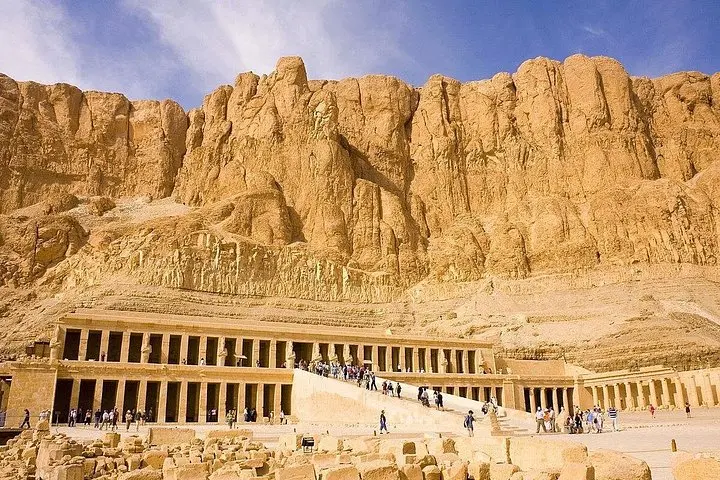
Over five days and four nights the cruise stitches together Egypt’s ancient spine: morning visits to Karnak and Luxor’s colonnades, descent into the Valley of the Kings, the funerary terraces of Hatshepsut, then the clipped stone lines of Edfu and Kom Ombo, finishing at Philae and the granite quarries of Aswan. Geology here is readable — Nile-borne silt meets Precambrian granite islands, and the river has carved its own corridor through millennia of human settlement.
Culturally, the trip is as much about ritual and labor — temple reliefs, felucca captains who read breeze and current, and Nubian communities with distinct crafts and songs — as it is about monuments. Guides contextualize dynasties and the seasonal rhythms that shaped irrigation and worship.
Practically: cabins are full-board; expect guided shore excursions, short drives by air-conditioned minivan, and walking on uneven stone surfaces and steps. Bring a sunhat, sturdy closed shoes for tombs, and a reusable water bottle. Carry local currency for small purchases and tips; dress respectfully at religious sites; keep morning and late-afternoon windows for photography when light is soft and heat is lower.
This cruise is low-effort physically but rich in sensory detail — the Nile nudges you onward, temples demand slow looking, and small moments on deck between ports become the trip’s quiet highlights.
Most nationalities require an Egyptian entry visa obtained before or on arrival — this covers travel within the country; check your embassy guidance for specifics.
Yes — this itinerary specifies full-board (breakfast, lunch, dinner) on the cruise; verify special meal requests like vegetarian options at booking.
Expect short to moderate walks (15–60 minutes) at most temples and the Valley of the Kings; some tombs include low ceilings and steps.
Tipping is customary for guides, drivers and crew; plan small notes of local currency for daily tips and service.
Go Discovery travel operates guided outdoor trips and adventures with an emphasis on safety, stewardship, and memorable experiences.
You step onto the narrow gangway as the river breathes warm air over teak decks — the Nile pulls you south with a gentle, constant current. Date palms and low mudbrick villages slide past; the desert escarpment keeps a watchful, sunbaked distance.
You step onto the narrow gangway as the river breathes warm air over teak decks — the Nile pulls you south with a gentle, constant current. Date palms and low mudbrick villages slide past; the desert escarpment keeps a watchful, sunbaked distance.
Over five days and four nights the cruise stitches together Egypt’s ancient spine: morning visits to Karnak and Luxor’s colonnades, descent into the Valley of the Kings, the funerary terraces of Hatshepsut, then the clipped stone lines of Edfu and Kom Ombo, finishing at Philae and the granite quarries of Aswan. Geology here is readable — Nile-borne silt meets Precambrian granite islands, and the river has carved its own corridor through millennia of human settlement.
Culturally, the trip is as much about ritual and labor — temple reliefs, felucca captains who read breeze and current, and Nubian communities with distinct crafts and songs — as it is about monuments. Guides contextualize dynasties and the seasonal rhythms that shaped irrigation and worship.
Practically: cabins are full-board; expect guided shore excursions, short drives by air-conditioned minivan, and walking on uneven stone surfaces and steps. Bring a sunhat, sturdy closed shoes for tombs, and a reusable water bottle. Carry local currency for small purchases and tips; dress respectfully at religious sites; keep morning and late-afternoon windows for photography when light is soft and heat is lower.
This cruise is low-effort physically but rich in sensory detail — the Nile nudges you onward, temples demand slow looking, and small moments on deck between ports become the trip’s quiet highlights.