THE ADVENTURE COLLECTIVE® · Independent discovery and booking for outdoor travel

Coastlines, Bronze Age citadels and soaring monasteries—this private five-day loop from Athens moves from Argolis and Olympia to Zakynthos, Delphi and the sky-piercing pillars of Meteora. Expect long drives, short hikes and high-history moments.
Coastlines, Bronze Age citadels and soaring monasteries—this private five-day loop from Athens moves from Argolis and Olympia to Zakynthos, Delphi and the sky-piercing pillars of Meteora. Expect long drives, short hikes and high-history moments.
A morning bus eases out of Athens and the Aegean light sharpens the limestone spines of the Peloponnese. You cross the narrow ribbon of the Corinth Canal—6.4 km of human-made cut in a living isthmus—then follow terraced olive groves toward ruined stone and coastal wind. Over five days the landscape shifts: low coastal towns, Bronze Age citadels, a ferry’s turquoise arc to Zakynthos, and the vertical secrets of Meteora that seem to challenge gravity itself.
Verified experiences and guided adventures in the surrounding area.
Operated by H.P.Tours - Hellenic Private Tours · Athens, Attica
A morning bus eases out of Athens and the Aegean light sharpens the limestone spines of the Peloponnese. You cross the narrow ribbon of the Corinth Canal—6.4 km of human-made cut in a living isthmus—then follow terraced olive groves toward ruined stone and coastal wind. Over five days the landscape shifts: low coastal towns, Bronze Age citadels, a ferry’s turquoise arc to Zakynthos, and the vertical secrets of Meteora that seem to challenge gravity itself.
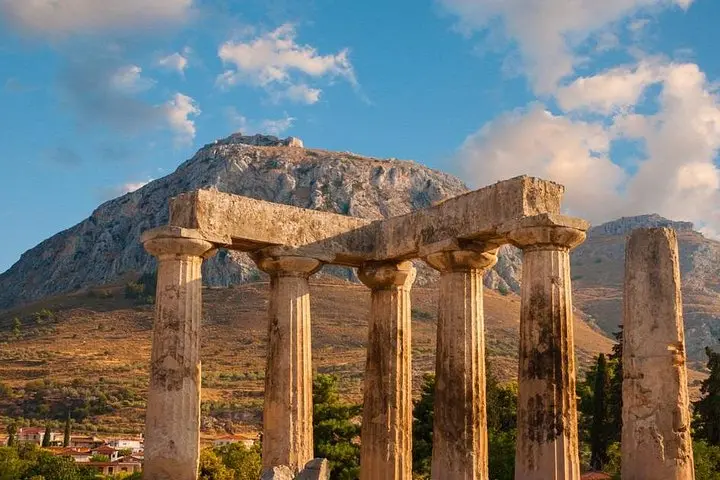
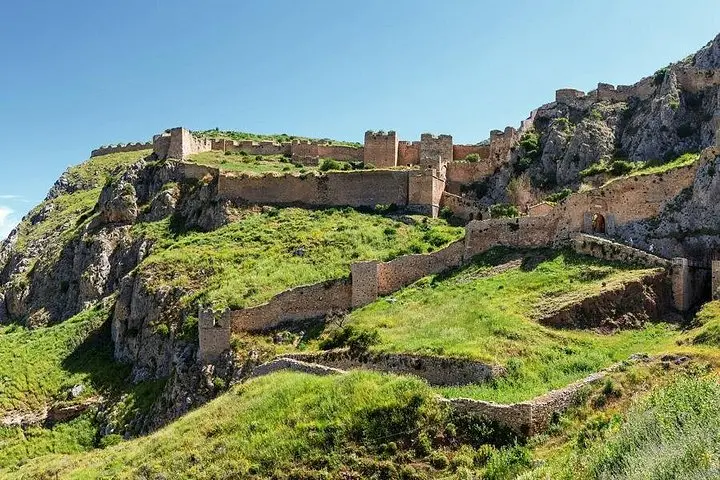
This route threads major chapters of Greek history. Mycenae’s Cyclopean walls and the Lion Gate date to the Late Bronze Age; Epidaurus preserves a 3rd-century BC theater famed for its acoustics; Olympia holds the altis where the Olympic flame was kindled and the stadium tracks back to 776 BC. Delphi sits on Mount Parnassus with chthonic myths and oracle stones; Meteora’s sandstone pillars, carved by millennia of erosion, host 11th–16th-century monasteries now on the UNESCO list.
Practical edge: expect long drives—several legs of two to four hours—and one 75-minute ferry between Kyllini and Zakynthos. Many sites require short climbs or uneven surfaces (Mycenae’s ascent and Delphi’s terraces); Meteora involves steep stone steps. Dress modestly for monasteries, pack layered clothing for mountain wind and coastal sun, and bring reusable water—bottled water is often provided but daytime heat demands more than a sip. Start early to avoid midday crowds and to see theatres and temples in low light. The private-vehicle format reduces time in queues and gives flexibility for brief detours to seaside cafés and hilltop viewpoints.
Most site admissions are not included by default—confirm with the operator what’s covered when you book, especially for museums and specific monuments.
Yes—transport is by private, air-conditioned vehicle and the itinerary notes the tour as physically easy in booking info, though some walking and stairs are required.
The tour description notes flexibility; contact the operator ahead of time to arrange different pickup points, pacing or to request fewer sites.
Bring valid ID or passport details as requested during booking—ferry lines and hotels may require identification.
H.P.Tours - Hellenic Private Tours operates guided outdoor trips and adventures with an emphasis on safety, stewardship, and memorable experiences.
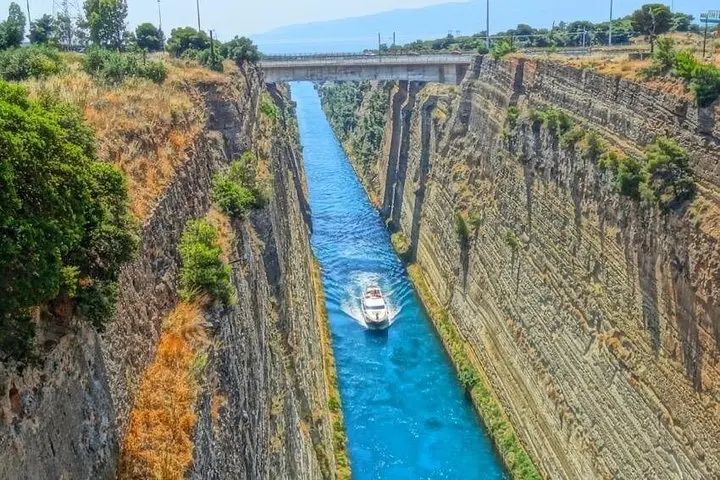
A morning bus eases out of Athens and the Aegean light sharpens the limestone spines of the Peloponnese. You cross the narrow ribbon of the Corinth Canal—6.4 km of human-made cut in a living isthmus—then follow terraced olive groves toward ruined stone and coastal wind. Over five days the landscape shifts: low coastal towns, Bronze Age citadels, a ferry’s turquoise arc to Zakynthos, and the vertical secrets of Meteora that seem to challenge gravity itself.
A morning bus eases out of Athens and the Aegean light sharpens the limestone spines of the Peloponnese. You cross the narrow ribbon of the Corinth Canal—6.4 km of human-made cut in a living isthmus—then follow terraced olive groves toward ruined stone and coastal wind. Over five days the landscape shifts: low coastal towns, Bronze Age citadels, a ferry’s turquoise arc to Zakynthos, and the vertical secrets of Meteora that seem to challenge gravity itself.
This route threads major chapters of Greek history. Mycenae’s Cyclopean walls and the Lion Gate date to the Late Bronze Age; Epidaurus preserves a 3rd-century BC theater famed for its acoustics; Olympia holds the altis where the Olympic flame was kindled and the stadium tracks back to 776 BC. Delphi sits on Mount Parnassus with chthonic myths and oracle stones; Meteora’s sandstone pillars, carved by millennia of erosion, host 11th–16th-century monasteries now on the UNESCO list.
Practical edge: expect long drives—several legs of two to four hours—and one 75-minute ferry between Kyllini and Zakynthos. Many sites require short climbs or uneven surfaces (Mycenae’s ascent and Delphi’s terraces); Meteora involves steep stone steps. Dress modestly for monasteries, pack layered clothing for mountain wind and coastal sun, and bring reusable water—bottled water is often provided but daytime heat demands more than a sip. Start early to avoid midday crowds and to see theatres and temples in low light. The private-vehicle format reduces time in queues and gives flexibility for brief detours to seaside cafés and hilltop viewpoints.