THE ADVENTURE COLLECTIVE® · Independent discovery and booking for outdoor travel

A five-day private circuit that pairs dawn at Angkor Wat with remote sites like Beng Mealea and Phnom Kulen. Perfect for travelers who want a paced, guided exploration of Angkor’s temples, waterfalls and floating villages.
A five-day private circuit that pairs dawn at Angkor Wat with remote sites like Beng Mealea and Phnom Kulen. Perfect for travelers who want a paced, guided exploration of Angkor’s temples, waterfalls and floating villages.
Before dawn on Day Five you’ll stand among columns and carved corbels as Angkor Wat’s silhouette slices the pale sky. The air is humid; vendors’ lanterns wink along the causeway while a guide points out bas-reliefs that have watched over the plains for centuries.
Verified experiences and guided adventures in the surrounding area.
Operated by Angkor Wat Private Day Tours · Siem Reap, Siem Reap Province
Before dawn on Day Five you’ll stand among columns and carved corbels as Angkor Wat’s silhouette slices the pale sky. The air is humid; vendors’ lanterns wink along the causeway while a guide points out bas-reliefs that have watched over the plains for centuries.
This five-day private loop moves beyond the central Angkor complex to Phnom Kulen (about 50 km north of Siem Reap), Beng Mealea (a sprawling, 65 km drive into the jungle and more than a square kilometer of crumbling walls), and the pink-sandstone carvings of Banteay Srei (roughly 37 km from the main site). Phnom Kulen is the ceremonial birthplace of the Khmer Empire—King Jayavarman II declared royal authority there in 802 AD—and its upland quarries supplied much of the sandstone used across Angkor.
Expect mixed terrain: level stone causeways, packed-earth village tracks, and short stair climbs at temple platforms. Tonle Sap’s Kampong Phluk offers a slow-motion counterpoint—stilt houses and flooded forests that seem to float with the seasons.
Practicalities matter: purchase your temple pass (this itinerary advises a 3-day pass), cover shoulders and knees at sacred sites, and budget early starts to avoid midday heat. Carry refillable water, sunscreen, and a lightweight rain layer in monsoon months. Your private vehicle and English-speaking guide handle logistics and local introductions, but bring comfortable shoes for uneven ground and patience—many highlights reward slow exploration rather than a checklist pace.
Yes. The itinerary assumes you purchase a 3-day temple pass (available at the official ticket center); the guide will advise when and where to buy it.
Generally yes—activities are low-impact walking with vehicle transfers, but people with serious mobility, heart, or spinal issues should consult the operator first.
Admissions are handled separately from the temple pass for some sites; confirm with the operator which specific fees are included when you book.
Yes—daily stops at local restaurants are part of the plan; the guide will suggest options and accommodate dietary needs when possible.
Angkor Wat Private Day Tours operates guided outdoor trips and adventures with an emphasis on safety, stewardship, and memorable experiences.
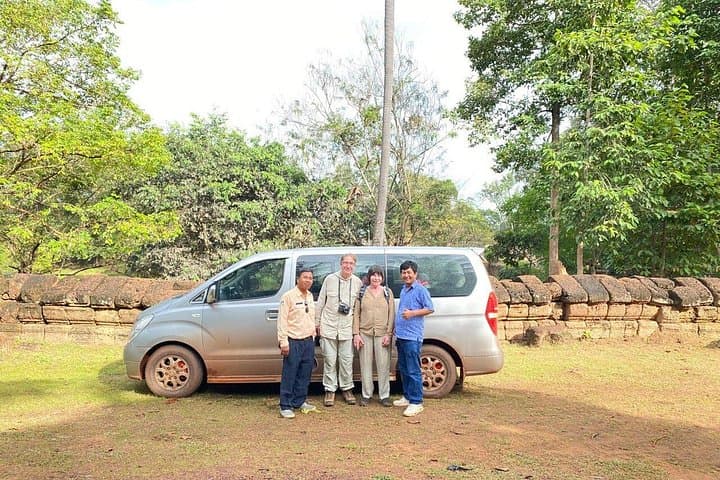
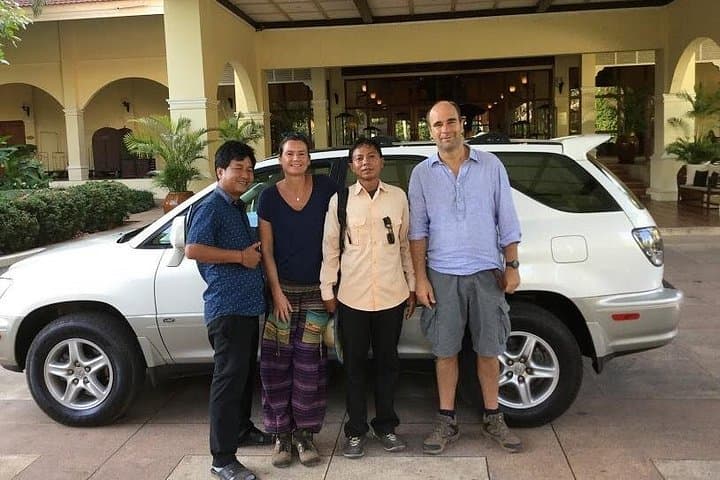
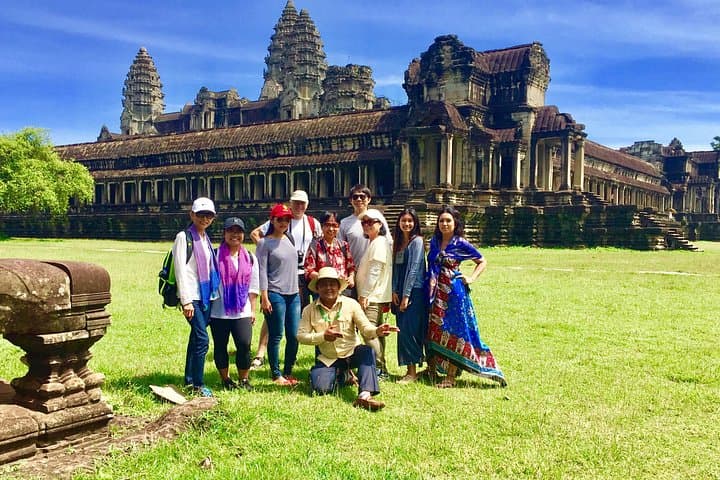
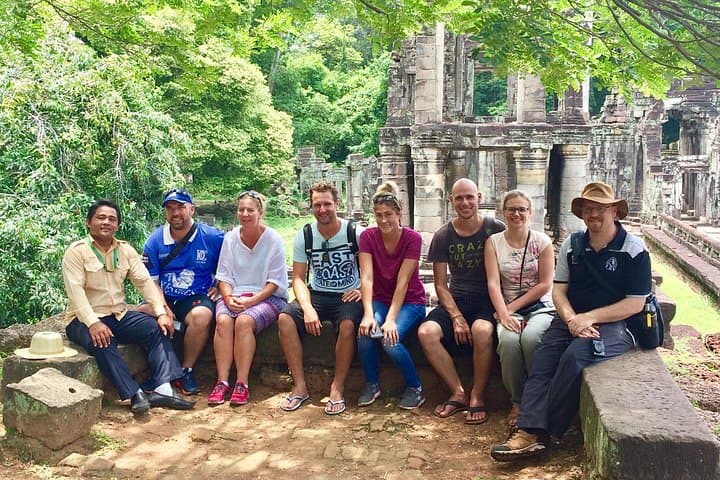
Before dawn on Day Five you’ll stand among columns and carved corbels as Angkor Wat’s silhouette slices the pale sky. The air is humid; vendors’ lanterns wink along the causeway while a guide points out bas-reliefs that have watched over the plains for centuries.
Before dawn on Day Five you’ll stand among columns and carved corbels as Angkor Wat’s silhouette slices the pale sky. The air is humid; vendors’ lanterns wink along the causeway while a guide points out bas-reliefs that have watched over the plains for centuries.
This five-day private loop moves beyond the central Angkor complex to Phnom Kulen (about 50 km north of Siem Reap), Beng Mealea (a sprawling, 65 km drive into the jungle and more than a square kilometer of crumbling walls), and the pink-sandstone carvings of Banteay Srei (roughly 37 km from the main site). Phnom Kulen is the ceremonial birthplace of the Khmer Empire—King Jayavarman II declared royal authority there in 802 AD—and its upland quarries supplied much of the sandstone used across Angkor.
Expect mixed terrain: level stone causeways, packed-earth village tracks, and short stair climbs at temple platforms. Tonle Sap’s Kampong Phluk offers a slow-motion counterpoint—stilt houses and flooded forests that seem to float with the seasons.
Practicalities matter: purchase your temple pass (this itinerary advises a 3-day pass), cover shoulders and knees at sacred sites, and budget early starts to avoid midday heat. Carry refillable water, sunscreen, and a lightweight rain layer in monsoon months. Your private vehicle and English-speaking guide handle logistics and local introductions, but bring comfortable shoes for uneven ground and patience—many highlights reward slow exploration rather than a checklist pace.