THE ADVENTURE COLLECTIVE® · Independent discovery and booking for outdoor travel

Drift through one of Brazil’s clearest rivers on an 1,800-meter guided float and snorkel. Small groups, provided neoprene and a support boat make this an accessible immersion in Bonito’s spring-fed waterways.
Drift through one of Brazil’s clearest rivers on an 1,800-meter guided float and snorkel. Small groups, provided neoprene and a support boat make this an accessible immersion in Bonito’s spring-fed waterways.
The water takes the first impression. You step off a low wooden dock and the current, impossibly clear, seems to lift you rather than rush—a cool hand guiding you down an 1,800-meter slice of river that has been polishing limestone for millennia.
Verified experiences and guided adventures in the surrounding area.
Operated by Gray Line Brazil · Bonito, Mato Grosso do Sul
The water takes the first impression. You step off a low wooden dock and the current, impossibly clear, seems to lift you rather than rush—a cool hand guiding you down an 1,800-meter slice of river that has been polishing limestone for millennia.
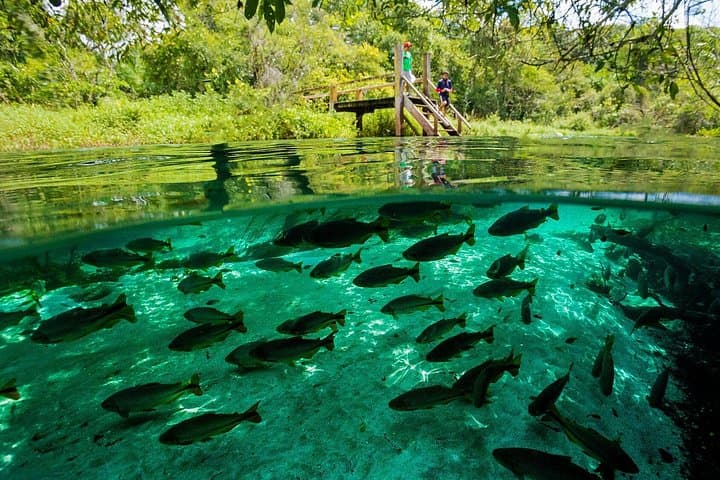
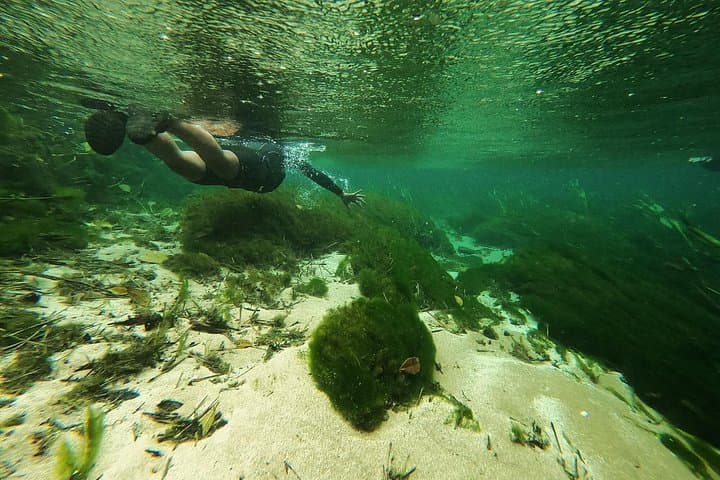
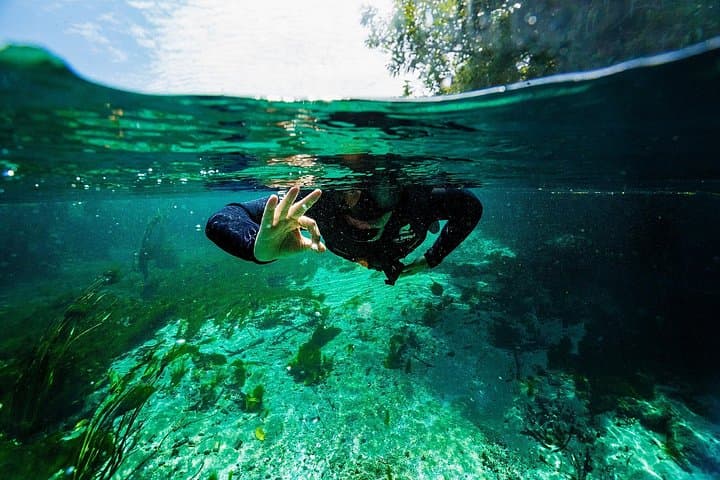
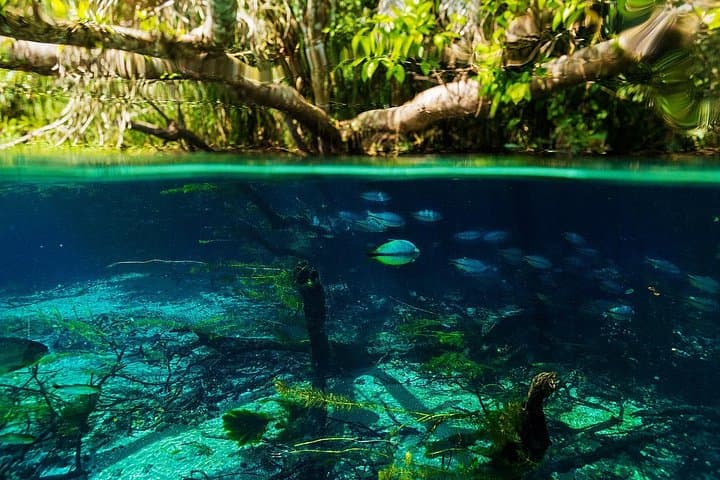
A short, 500-meter walk through riparian forest opens to the Sucuri’s spring: pins of sunlight hit the water and reveal the riverbed in startling detail. Schools of piraputangas and curimbas hover above beds of green algae and submerged roots, unbothered by the snorkelers drifting above. Guides flank the group in a support boat; conversations drop to whispers so the river can keep speaking in clicks and the muffled swish of fins.
Bonito, in Mato Grosso do Sul, sits on a karst landscape where groundwater carves caverns and raises springs with clarity rarely seen elsewhere. The Sucuri River, a private-farm attraction, is part of a regional shift toward low-impact tourism that began in the 1990s—an economy built on protecting what made the place remarkable. The geological story is simple: soluble limestone and abundant aquifers produce springs that filter water to near-perfection. Locals retooled cattle ranching and logging into hospitality and guided nature experiences, and the result is a system of access, limits, and rules intended to keep the springs blue.
Practicalities arrive with the same precision as the guides. The experience runs about two hours total; the water section covers roughly 1.8 km and groups are kept small—maximum nine people per floating period—to reduce disturbance. Neoprene suits, masks, snorkels and boots are provided. Note the firm rules that protect the environment: no sunscreen or insect repellent (your guide will remind you), and children under six are not permitted. There’s a reception area on the farm with lockers, restrooms, a bar and hammocks where you can compare underwater photos and cool down after the float.
To get the most out of it, arrive hydrated and with lightweight clothes for the walk. Don’t expect warm tropical swimming—the water is spring-fed and brisk, so the neoprene helps. If you plan photography, use a waterproof camera or housing; ask your guide where flashes are allowed. The farmhouse restaurant is a pleasant place to linger afterward; the river keeps its lesson even when you’re ashore: clarity takes time and careful stewardship.
This is less a thrill ride than a slow, tactile education. The Sucuri dares you to slow down, to read the river’s color and the fish’s patterns, and to leave it, afterward, as undisturbed as you found it.
The water route is approximately 1,800 meters; total activity time is about two hours including the 500m walkway and preparation.
Yes—neoprene suits, boots, masks and snorkels are included in the tour price.
No—both are prohibited to protect the river’s delicate ecosystem. Use UPF clothing and avoid peak sun exposure instead.
Children under 6 are not allowed. Pregnant women over 20 weeks should not participate; check medical advice for earlier stages.
The springs are cool year-round because they are groundwater-fed; the provided neoprene keeps most guests comfortable.
Yes—waterproof cameras are allowed; ask the guide about flash/strobe use and where to safely shoot without disturbing wildlife.
Gray Line Brazil operates guided outdoor trips and adventures with an emphasis on safety, stewardship, and memorable experiences.
The water takes the first impression. You step off a low wooden dock and the current, impossibly clear, seems to lift you rather than rush—a cool hand guiding you down an 1,800-meter slice of river that has been polishing limestone for millennia.
The water takes the first impression. You step off a low wooden dock and the current, impossibly clear, seems to lift you rather than rush—a cool hand guiding you down an 1,800-meter slice of river that has been polishing limestone for millennia.
A short, 500-meter walk through riparian forest opens to the Sucuri’s spring: pins of sunlight hit the water and reveal the riverbed in startling detail. Schools of piraputangas and curimbas hover above beds of green algae and submerged roots, unbothered by the snorkelers drifting above. Guides flank the group in a support boat; conversations drop to whispers so the river can keep speaking in clicks and the muffled swish of fins.
Bonito, in Mato Grosso do Sul, sits on a karst landscape where groundwater carves caverns and raises springs with clarity rarely seen elsewhere. The Sucuri River, a private-farm attraction, is part of a regional shift toward low-impact tourism that began in the 1990s—an economy built on protecting what made the place remarkable. The geological story is simple: soluble limestone and abundant aquifers produce springs that filter water to near-perfection. Locals retooled cattle ranching and logging into hospitality and guided nature experiences, and the result is a system of access, limits, and rules intended to keep the springs blue.
Practicalities arrive with the same precision as the guides. The experience runs about two hours total; the water section covers roughly 1.8 km and groups are kept small—maximum nine people per floating period—to reduce disturbance. Neoprene suits, masks, snorkels and boots are provided. Note the firm rules that protect the environment: no sunscreen or insect repellent (your guide will remind you), and children under six are not permitted. There’s a reception area on the farm with lockers, restrooms, a bar and hammocks where you can compare underwater photos and cool down after the float.
To get the most out of it, arrive hydrated and with lightweight clothes for the walk. Don’t expect warm tropical swimming—the water is spring-fed and brisk, so the neoprene helps. If you plan photography, use a waterproof camera or housing; ask your guide where flashes are allowed. The farmhouse restaurant is a pleasant place to linger afterward; the river keeps its lesson even when you’re ashore: clarity takes time and careful stewardship.
This is less a thrill ride than a slow, tactile education. The Sucuri dares you to slow down, to read the river’s color and the fish’s patterns, and to leave it, afterward, as undisturbed as you found it.