THE ADVENTURE COLLECTIVE® · Independent discovery and booking for outdoor travel

A guided walk through Flushing’s Main Street and Roosevelt Avenue exposes you to some of NYC’s richest Asian culinary diversity — from mall food courts to hole-in-the-wall bakeries. Learn local history and taste regional specialties on a 5–6 hour stroll through Queens’ largest Chinatown.
A guided walk through Flushing’s Main Street and Roosevelt Avenue exposes you to some of NYC’s richest Asian culinary diversity — from mall food courts to hole-in-the-wall bakeries. Learn local history and taste regional specialties on a 5–6 hour stroll through Queens’ largest Chinatown.
You step out of the 7 train into a corridor of smells — soy and sesame, scallion pancakes frying, steamed buns exhaling warmth — and the city seems to reorient around flavor. This walk moves along Roosevelt Avenue and Main Street, a dense artery where vendors, mall food courts and storefront kitchens press shoulder-to-shoulder, each window offering a different regional voice from across Asia.
Verified experiences and guided adventures in the surrounding area.
Operated by Culinary Backstreets Walks · Flushing, NY
You step out of the 7 train into a corridor of smells — soy and sesame, scallion pancakes frying, steamed buns exhaling warmth — and the city seems to reorient around flavor. This walk moves along Roosevelt Avenue and Main Street, a dense artery where vendors, mall food courts and storefront kitchens press shoulder-to-shoulder, each window offering a different regional voice from across Asia.
Flushing’s story spans centuries: a 17th-century Dutch settlement, an early Quaker meeting house from 1694, then waves of 20th- and 21st-century immigrants who made the neighborhood a culinary magnet. Geographically the neighborhood sits near the Flushing River and the lower-lying floodplain toward Flushing Bay — a working urban edge shaped by tides and reclamation more than dramatic geology.
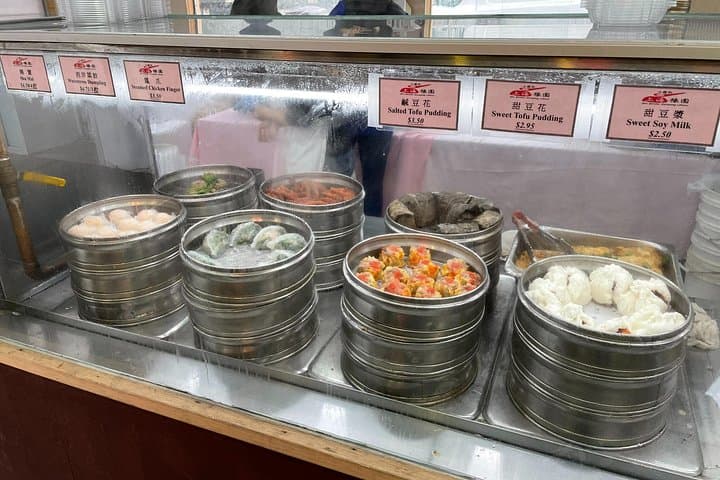
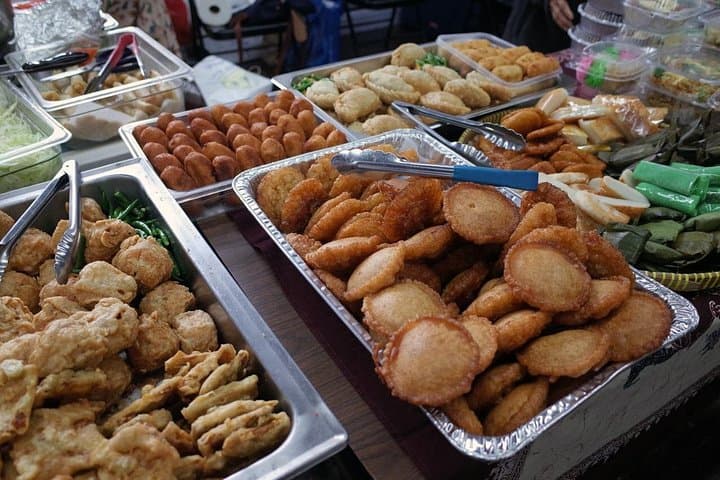
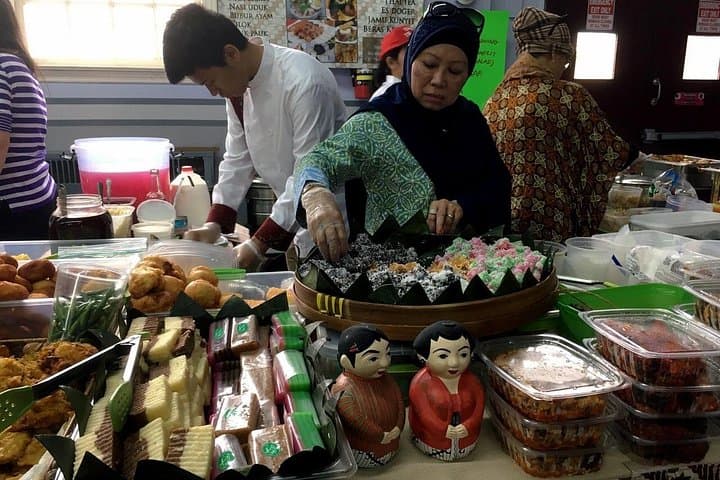
Expect to sample Hong Kong–style dim sum, Korean pastries with French technique, hand-pulled noodles, and house-made kimchi while guides point out cultural markers like a storefront Daoist temple and the historic meeting house. The pace is deliberate: frequent stops, short walks between samplings, and visits to indoor mall food courts that locals prize for variety and value.
Practical note: this is a mostly flat, urban strolling tour lasting about five to six hours; bring comfortable shoes, a refillable water bottle, and a transit card or OMNY for easy return trips. Cash helps at some stalls. Plan for crowds on weekends and bring a light jacket in cooler months — the neighborhood’s microclimates shift quickly between sunlit streets and air-conditioned food halls.
The tour runs about 5–6 hours with frequent stops; walking is on flat, urban sidewalks between food stalls and indoor food courts.
Most tastings are included as part of the tour; check the booking details but expect a mix of included bites and optional purchases at some vendors.
Guides can often accommodate common restrictions if notified in advance; state allergies or dietary needs when booking so alternatives can be arranged.
Meet outside the Duane Reade at 136-02 Roosevelt Ave (Main St & Roosevelt Ave), directly accessible from the Flushing–Main St 7 train terminal.
Culinary Backstreets Walks operates guided outdoor trips and adventures with an emphasis on safety, stewardship, and memorable experiences.
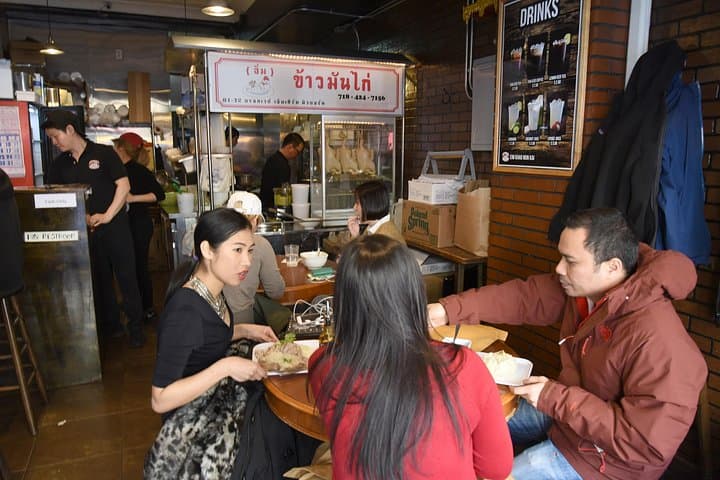
You step out of the 7 train into a corridor of smells — soy and sesame, scallion pancakes frying, steamed buns exhaling warmth — and the city seems to reorient around flavor. This walk moves along Roosevelt Avenue and Main Street, a dense artery where vendors, mall food courts and storefront kitchens press shoulder-to-shoulder, each window offering a different regional voice from across Asia.
You step out of the 7 train into a corridor of smells — soy and sesame, scallion pancakes frying, steamed buns exhaling warmth — and the city seems to reorient around flavor. This walk moves along Roosevelt Avenue and Main Street, a dense artery where vendors, mall food courts and storefront kitchens press shoulder-to-shoulder, each window offering a different regional voice from across Asia.
Flushing’s story spans centuries: a 17th-century Dutch settlement, an early Quaker meeting house from 1694, then waves of 20th- and 21st-century immigrants who made the neighborhood a culinary magnet. Geographically the neighborhood sits near the Flushing River and the lower-lying floodplain toward Flushing Bay — a working urban edge shaped by tides and reclamation more than dramatic geology.
Expect to sample Hong Kong–style dim sum, Korean pastries with French technique, hand-pulled noodles, and house-made kimchi while guides point out cultural markers like a storefront Daoist temple and the historic meeting house. The pace is deliberate: frequent stops, short walks between samplings, and visits to indoor mall food courts that locals prize for variety and value.
Practical note: this is a mostly flat, urban strolling tour lasting about five to six hours; bring comfortable shoes, a refillable water bottle, and a transit card or OMNY for easy return trips. Cash helps at some stalls. Plan for crowds on weekends and bring a light jacket in cooler months — the neighborhood’s microclimates shift quickly between sunlit streets and air-conditioned food halls.