THE ADVENTURE COLLECTIVE® · Independent discovery and booking for outdoor travel

See the Nazca and Palpa geoglyphs from a small plane, taste Ica’s wines, then race dunes in Huacachina — a 12–14 hour cultural-and-adrenaline loop from Lima. Expect long drives, an aerial perspective, and a late-afternoon dune finale.
See the Nazca and Palpa geoglyphs from a small plane, taste Ica’s wines, then race dunes in Huacachina — a 12–14 hour cultural-and-adrenaline loop from Lima. Expect long drives, an aerial perspective, and a late-afternoon dune finale.
You lift off from Pisco and the desert immediately takes the measure of you — broad, arid flats giving way to lines cut into the earth as if someone had taken a compass and drawn stories at scale. From the small plane, the famous geoglyphs resolve into clear shapes: the hummingbird, the spider, the astronaut. Wind and sun shape the contours below, and the pilot's narration edges the flight with local lore and archaeological context.
Verified experiences and guided adventures in the surrounding area.
Operated by AMERICAN TRAVEL PERU · Nazca, Ica Region
You lift off from Pisco and the desert immediately takes the measure of you — broad, arid flats giving way to lines cut into the earth as if someone had taken a compass and drawn stories at scale. From the small plane, the famous geoglyphs resolve into clear shapes: the hummingbird, the spider, the astronaut. Wind and sun shape the contours below, and the pilot's narration edges the flight with local lore and archaeological context.
The Nazca and Palpa lines date from roughly 500 BCE to 500 CE; built by pre-Inca cultures, they sit on compacted, iron-rich soil that resists erosion and preserves the high-contrast figures. Nearby Ica and Huacachina grew from agricultural and oasis cultures — vineyards and pisco production are rooted in 19th-century colonial agriculture. The Huacachina dunes are living sand systems, constantly moving and re-sculpting the oasis rim.
Practical guidance: this is a long, full-day loop from Lima (roughly 12–14 hours). Expect three hours each way to Pisco by road, a roughly 1 hour 40 minute aerial tour, a vineyard visit with tasting, and a dune buggy plus sandboarding session at Huacachina. Motion-sickness is common on small flights; choose a window seat and consider medication. Sun protection, durable shoes for climbing dunes, and a light wind layer are useful. Timing matters — mornings have calmer air for flying; late afternoon is best for dune light and sunset photos.
The day layers culture, geology and adrenaline: it’s as much about looking down and asking questions as it is about racing sand slopes and tasting local pisco.
The panoramic flight portion lasts about 1 hour 40 minutes, with commentary from the bilingual pilot.
No — small aircraft flight and dune activity are not recommended for pregnant travelers.
Yes — the tour includes a flight certificate upon completion of the aerial segment.
Pick-up and drop-off from hotels in Miraflores, San Isidro and central Lima are included in the tour.
AMERICAN TRAVEL PERU operates guided outdoor trips and adventures with an emphasis on safety, stewardship, and memorable experiences.
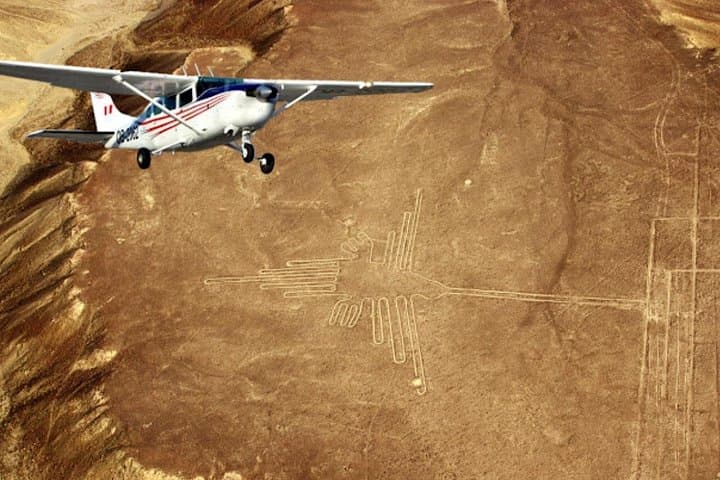
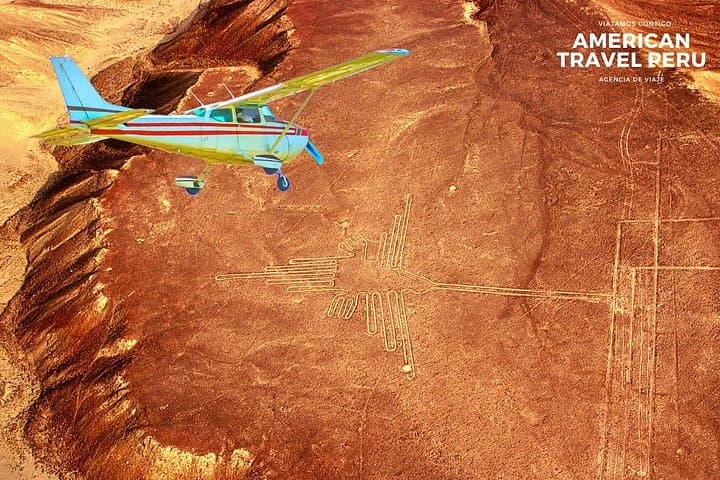
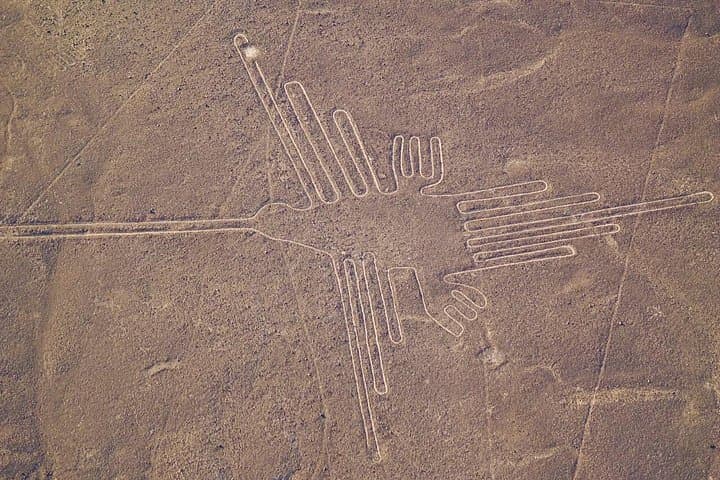
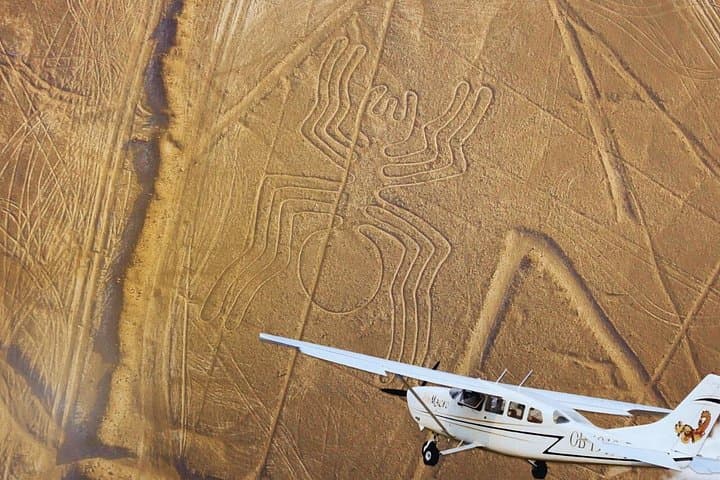
You lift off from Pisco and the desert immediately takes the measure of you — broad, arid flats giving way to lines cut into the earth as if someone had taken a compass and drawn stories at scale. From the small plane, the famous geoglyphs resolve into clear shapes: the hummingbird, the spider, the astronaut. Wind and sun shape the contours below, and the pilot's narration edges the flight with local lore and archaeological context.
You lift off from Pisco and the desert immediately takes the measure of you — broad, arid flats giving way to lines cut into the earth as if someone had taken a compass and drawn stories at scale. From the small plane, the famous geoglyphs resolve into clear shapes: the hummingbird, the spider, the astronaut. Wind and sun shape the contours below, and the pilot's narration edges the flight with local lore and archaeological context.
The Nazca and Palpa lines date from roughly 500 BCE to 500 CE; built by pre-Inca cultures, they sit on compacted, iron-rich soil that resists erosion and preserves the high-contrast figures. Nearby Ica and Huacachina grew from agricultural and oasis cultures — vineyards and pisco production are rooted in 19th-century colonial agriculture. The Huacachina dunes are living sand systems, constantly moving and re-sculpting the oasis rim.
Practical guidance: this is a long, full-day loop from Lima (roughly 12–14 hours). Expect three hours each way to Pisco by road, a roughly 1 hour 40 minute aerial tour, a vineyard visit with tasting, and a dune buggy plus sandboarding session at Huacachina. Motion-sickness is common on small flights; choose a window seat and consider medication. Sun protection, durable shoes for climbing dunes, and a light wind layer are useful. Timing matters — mornings have calmer air for flying; late afternoon is best for dune light and sunset photos.
The day layers culture, geology and adrenaline: it’s as much about looking down and asking questions as it is about racing sand slopes and tasting local pisco.