THE ADVENTURE COLLECTIVE® · Independent discovery and booking for outdoor travel

Escape Paris for a concentrated hit of French history and landscape on a five-hour half-day tour to Château de Fontainebleau. Expect Renaissance halls, Napoleonic echoes and a brush with the forest and painters’ villages that shaped modern landscape art.
Escape Paris for a concentrated hit of French history and landscape on a five-hour half-day tour to Château de Fontainebleau. Expect Renaissance halls, Napoleonic echoes and a brush with the forest and painters’ villages that shaped modern landscape art.
You step off the minivan and the chatter of Paris falls behind you. The façade of Château de Fontainebleau lifts its limestone face into the autumn light, windows like watchful eyes over courtyards where horses once paced. For a half-day excursion from Paris this palace feels unexpectedly human: rooms warmed by centuries of use, stairwells that still remember the creak of royal boots, and gardens where clipped hedges pull the landscape into neat perspective.
Verified experiences and guided adventures in the surrounding area.
Operated by Come and Go · Fontainebleau, Île-de-France
You step off the minivan and the chatter of Paris falls behind you. The façade of Château de Fontainebleau lifts its limestone face into the autumn light, windows like watchful eyes over courtyards where horses once paced. For a half-day excursion from Paris this palace feels unexpectedly human: rooms warmed by centuries of use, stairwells that still remember the creak of royal boots, and gardens where clipped hedges pull the landscape into neat perspective.
Fontainebleau’s significance is stitched across French history. The site began as a medieval hunting lodge and grew into one of the longest-occupied royal residences—home to Renaissance patrons, Bourbon monarchs and Napoleon, who signed his first abdication here in 1814. Architecturally, it’s a palimpsest: late-medieval foundations, 16th-century Italianate wings, and later classical façades layered like pages in a ledger.
Geology makes itself felt too. The château sits on the southern edge of the Seine basin where soft limestone allowed grand vaults and carved façades; nearby the forest of Fontainebleau—razor-edged boulders and sandstone bluffs—offers an abrupt shift from cultivated geometry to wind-roughened rock. Painters from the Barbizon school saw that rocky forest as a counterpoint to formal gardens; they set up easels in villages a short drive from the château, capturing light and the honest clutter of rural life.
Local culture here moves at a different pace than Paris. Cafés in the town of Fontainebleau serve fortified omelettes and strong coffee; artisans sell prints of Barbizon landscapes; and on market days the square hums with regional cheese and apples. If you have time, a quick stroll through the market gives a snapshot of life beyond the capital.
Practical guidance: the half-day tour runs about five hours including pickup and return to Paris, with roughly three hours inside the estate. Comfortable walking shoes are recommended—there’s polished stone underfoot in state rooms and gravel in the gardens. Bring an ID for ticketing and arrive slightly early for hotel pickup. The tour includes entrance fees and bottled water, and groups are typically capped at small sizes.
Timing matters: visit in the morning to avoid late-afternoon coach arrivals and to catch interior rooms before they warm with crowds. Photography indoors may be restricted—ask your guide. Finally, treat the site thoughtfully: this is living history, not just a backdrop. Close the heavy doors behind you, keep voices low in galleries, and let the courtyard stones keep their long, cool silence for the next visitor.
The full experience, including pickup and return, lasts about five hours; expect roughly three hours at the château and surrounding areas.
Yes — pickup and drop-off from central Paris hotels or provided pickup points are included in the tour price.
Yes — entrance fees to Château de Fontainebleau are included in the tour price as specified in the listing.
Photography rules vary by room; natural-light areas often allow photos but flash and tripods are typically prohibited — check with your guide.
The tour is family-friendly but not recommended for travelers with serious mobility issues due to stairs and some uneven surfaces; infants must sit on laps per policy.
Transport is provided by air-conditioned car or minivan, depending on group size, with small-group limits for a more personal experience.
Come and Go operates guided outdoor trips and adventures with an emphasis on safety, stewardship, and memorable experiences.
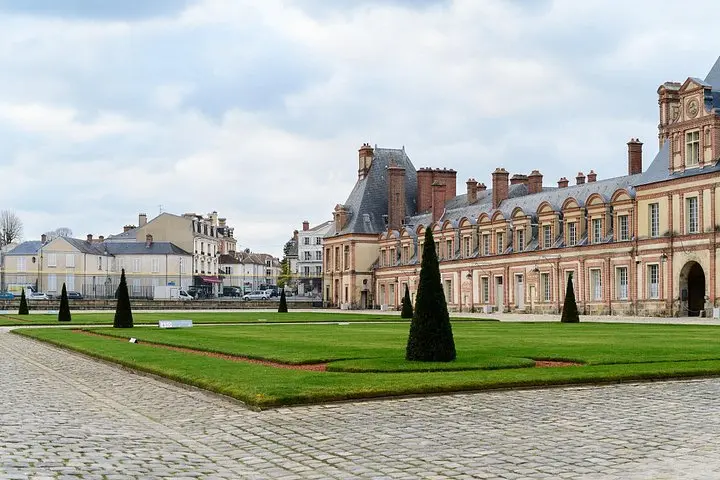
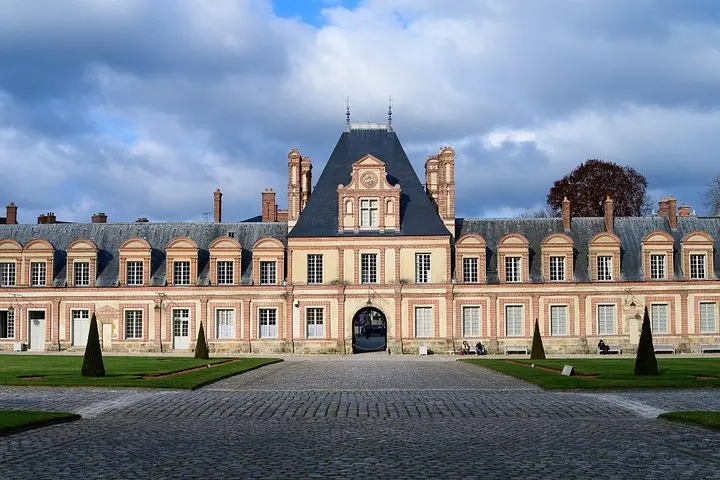
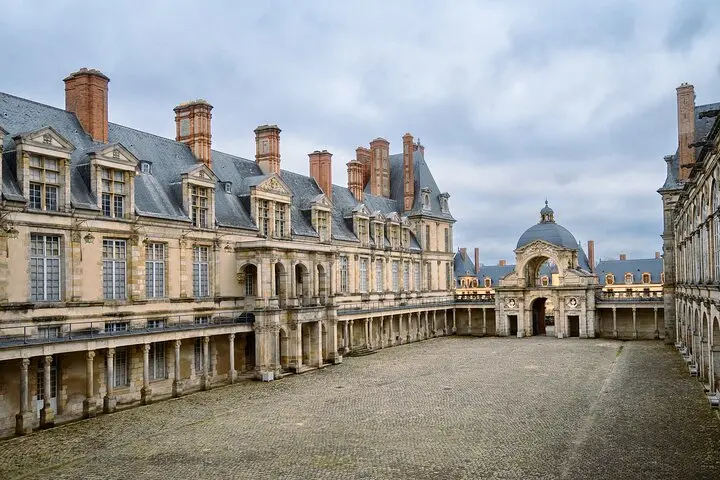
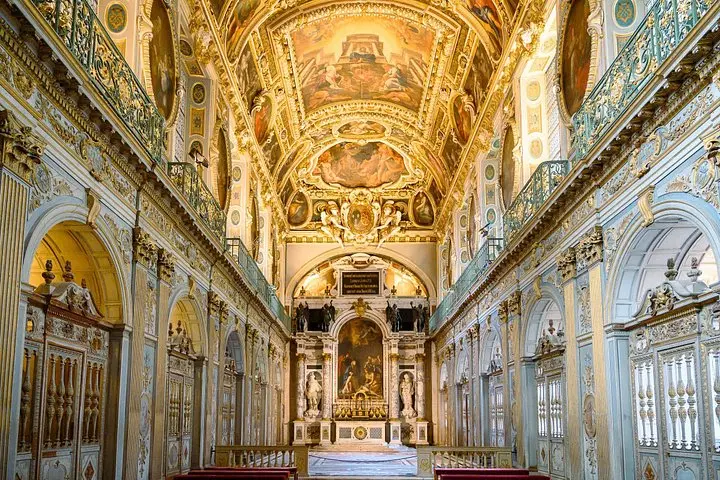
You step off the minivan and the chatter of Paris falls behind you. The façade of Château de Fontainebleau lifts its limestone face into the autumn light, windows like watchful eyes over courtyards where horses once paced. For a half-day excursion from Paris this palace feels unexpectedly human: rooms warmed by centuries of use, stairwells that still remember the creak of royal boots, and gardens where clipped hedges pull the landscape into neat perspective.
You step off the minivan and the chatter of Paris falls behind you. The façade of Château de Fontainebleau lifts its limestone face into the autumn light, windows like watchful eyes over courtyards where horses once paced. For a half-day excursion from Paris this palace feels unexpectedly human: rooms warmed by centuries of use, stairwells that still remember the creak of royal boots, and gardens where clipped hedges pull the landscape into neat perspective.
Fontainebleau’s significance is stitched across French history. The site began as a medieval hunting lodge and grew into one of the longest-occupied royal residences—home to Renaissance patrons, Bourbon monarchs and Napoleon, who signed his first abdication here in 1814. Architecturally, it’s a palimpsest: late-medieval foundations, 16th-century Italianate wings, and later classical façades layered like pages in a ledger.
Geology makes itself felt too. The château sits on the southern edge of the Seine basin where soft limestone allowed grand vaults and carved façades; nearby the forest of Fontainebleau—razor-edged boulders and sandstone bluffs—offers an abrupt shift from cultivated geometry to wind-roughened rock. Painters from the Barbizon school saw that rocky forest as a counterpoint to formal gardens; they set up easels in villages a short drive from the château, capturing light and the honest clutter of rural life.
Local culture here moves at a different pace than Paris. Cafés in the town of Fontainebleau serve fortified omelettes and strong coffee; artisans sell prints of Barbizon landscapes; and on market days the square hums with regional cheese and apples. If you have time, a quick stroll through the market gives a snapshot of life beyond the capital.
Practical guidance: the half-day tour runs about five hours including pickup and return to Paris, with roughly three hours inside the estate. Comfortable walking shoes are recommended—there’s polished stone underfoot in state rooms and gravel in the gardens. Bring an ID for ticketing and arrive slightly early for hotel pickup. The tour includes entrance fees and bottled water, and groups are typically capped at small sizes.
Timing matters: visit in the morning to avoid late-afternoon coach arrivals and to catch interior rooms before they warm with crowds. Photography indoors may be restricted—ask your guide. Finally, treat the site thoughtfully: this is living history, not just a backdrop. Close the heavy doors behind you, keep voices low in galleries, and let the courtyard stones keep their long, cool silence for the next visitor.