THE ADVENTURE COLLECTIVE® · Independent discovery and booking for outdoor travel

Step through the East Gate and into four centuries of imperial ceremony. This four-hour walking tour of the Forbidden City finishes on Jingshan Hill for a rooftop view of Beijing’s greatest palace complex.
Step through the East Gate and into four centuries of imperial ceremony. This four-hour walking tour of the Forbidden City finishes on Jingshan Hill for a rooftop view of Beijing’s greatest palace complex.
The morning starts at the East Gate, where a guide waits with the pale sweep of morning light catching the red walls and golden roofs. You step through a succession of courtyards—broad stone plazas, carved marble balustrades, and timber halls that still feel charged with protocol—while the city hums quietly beyond the palace walls.
Verified experiences and guided adventures in the surrounding area.
Operated by Greatwall Trekclub · Beijing, Beijing
The morning starts at the East Gate, where a guide waits with the pale sweep of morning light catching the red walls and golden roofs. You step through a succession of courtyards—broad stone plazas, carved marble balustrades, and timber halls that still feel charged with protocol—while the city hums quietly beyond the palace walls.
Built during the Ming and Qing dynasties, the Forbidden City was the ceremonial and political center of imperial China for over 500 years. The complex sits on the flat North China Plain; its monumental wooden structures and glazed-tile roofs rest on raised marble platforms carved from locally quarried stone. Jingshan Hill, the modest rise behind the palace, is an artificial mound made from soil removed to build the palace moat; it now offers a full-roof panorama of the entire complex.
Culturally, the site follows strict axial symmetry and feng shui principles—expect processional routes and throne halls aligned to emphasize imperial authority. Locals favor early visits for softer light and thinner crowds; photographers prize the rooflines at mid-morning. Practicalities matter: plan for roughly 3–4 km of walking across paved plazas and sections of uneven stone steps, with about 40–50 m of elevation gain to the Jingshan summit.
Bring sturdy shoes, sun protection, and a refillable bottle; the tour includes entrance tickets and runs about four hours. Be prepared for stairs and crowds—this is a walking tour with cultural depth, not a sit-down experience—and finish on the hill where the city’s tiled roofs seem to breathe beneath you.
Yes — the tour listing states that entrance tickets to the Forbidden City are included.
The meeting point is the East Gate of the Forbidden City at 09:00 as listed on the tour.
Infants must sit on an adult’s lap and infant seats are available, but the tour involves many steps and uneven surfaces and is not recommended for those with significant mobility limitations or serious cardiovascular issues.
Crowds peak mid-day; visiting early with the 09:00 start reduces congestion, though the site remains popular year-round.
Greatwall Trekclub operates guided outdoor trips and adventures with an emphasis on safety, stewardship, and memorable experiences.
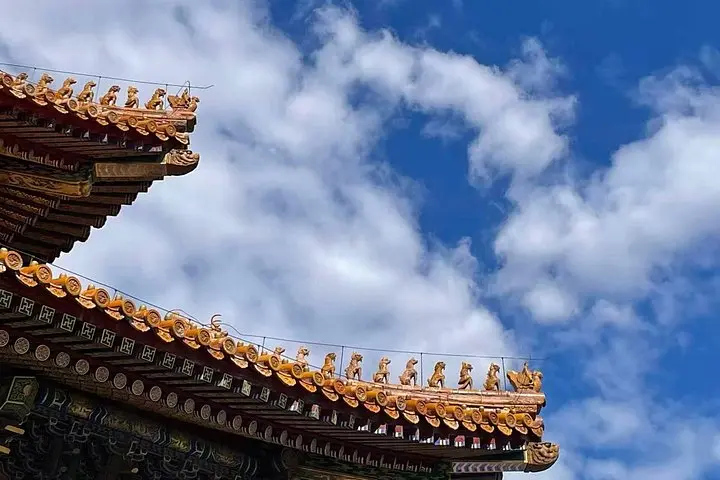
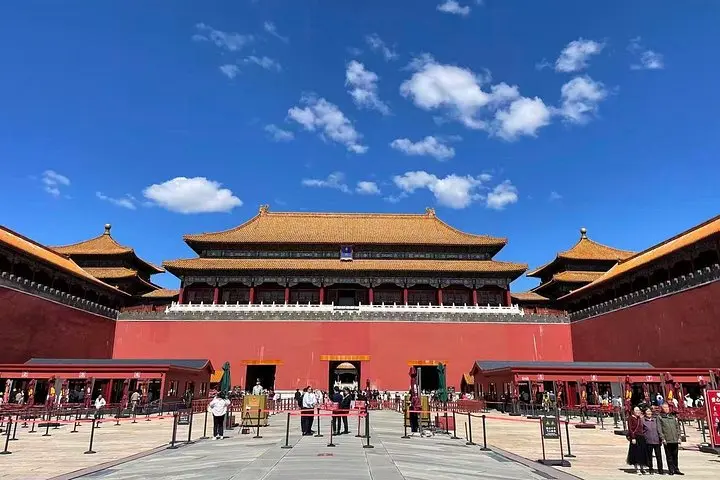
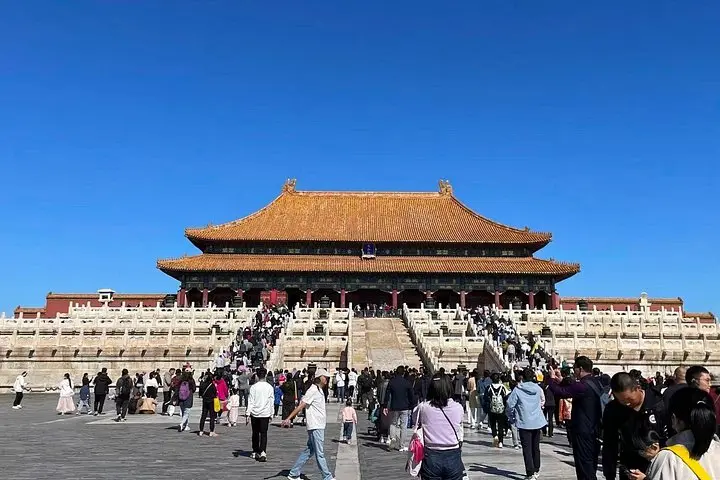
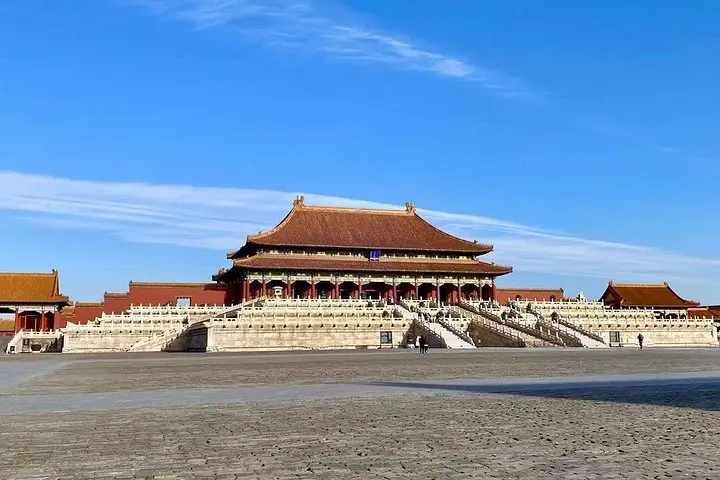
The morning starts at the East Gate, where a guide waits with the pale sweep of morning light catching the red walls and golden roofs. You step through a succession of courtyards—broad stone plazas, carved marble balustrades, and timber halls that still feel charged with protocol—while the city hums quietly beyond the palace walls.
The morning starts at the East Gate, where a guide waits with the pale sweep of morning light catching the red walls and golden roofs. You step through a succession of courtyards—broad stone plazas, carved marble balustrades, and timber halls that still feel charged with protocol—while the city hums quietly beyond the palace walls.
Built during the Ming and Qing dynasties, the Forbidden City was the ceremonial and political center of imperial China for over 500 years. The complex sits on the flat North China Plain; its monumental wooden structures and glazed-tile roofs rest on raised marble platforms carved from locally quarried stone. Jingshan Hill, the modest rise behind the palace, is an artificial mound made from soil removed to build the palace moat; it now offers a full-roof panorama of the entire complex.
Culturally, the site follows strict axial symmetry and feng shui principles—expect processional routes and throne halls aligned to emphasize imperial authority. Locals favor early visits for softer light and thinner crowds; photographers prize the rooflines at mid-morning. Practicalities matter: plan for roughly 3–4 km of walking across paved plazas and sections of uneven stone steps, with about 40–50 m of elevation gain to the Jingshan summit.
Bring sturdy shoes, sun protection, and a refillable bottle; the tour includes entrance tickets and runs about four hours. Be prepared for stairs and crowds—this is a walking tour with cultural depth, not a sit-down experience—and finish on the hill where the city’s tiled roofs seem to breathe beneath you.