THE ADVENTURE COLLECTIVE® · Independent discovery and booking for outdoor travel

Ride a guided van through sites that shaped early Fort Collins — river crossings, Army encampments, and surviving pioneer cabins — led by a costumed interpreter who brings frontier military history to life.
Ride a guided van through sites that shaped early Fort Collins — river crossings, Army encampments, and surviving pioneer cabins — led by a costumed interpreter who brings frontier military history to life.
A late-morning van pulls up beside the Cache la Poudre, the river pushing a steady, audible current beneath the bridge. Mark Serour steps down in period coat and hat, the fabric and voice doing more than tell — they invite you to walk the 1860s borderlands in a way a textbook cannot. The tour moves between easy roadside stops and short walks, the riverbanks, old fort sites, and Library Park’s weathered cabins framing the story.
Verified experiences and guided adventures in the surrounding area.
Operated by Traces of the Past History Tours · Fort Collins, Colorado
A late-morning van pulls up beside the Cache la Poudre, the river pushing a steady, audible current beneath the bridge. Mark Serour steps down in period coat and hat, the fabric and voice doing more than tell — they invite you to walk the 1860s borderlands in a way a textbook cannot. The tour moves between easy roadside stops and short walks, the riverbanks, old fort sites, and Library Park’s weathered cabins framing the story.
History here is practical: Camp Collins was a small Army post established during Civil War–era western expansion to protect mail routes and settlers. Geology shapes the narrative too — the Poudre carved a fertile valley against the eastern foothills of the Rockies, its alluvial soils and braided channels dictating where forts and farms took root. Cultural threads surface in unexpected places: military logistics, Plains Indian presence, fur trade routes, and the later emergence of Fort Collins as an agricultural hub.
Local insights come from objects and anecdotes — personalized stagecoach tickets, reproduced artifacts, and a guide who interprets landscape and record with equal care. The pace is conversational; stops last long enough to picture camp layout or cabin life without becoming a museum lecture.
Practical guidance: tours start at Watson Lake State Wildlife Area parking, run about two hours, and include light walking on packed dirt and paved paths. Dress in layers, bring sun protection and water, and expect short roadside stops where shade can be limited. Ideal for history fans, families with older children, and anyone who prefers stories tied to real terrain rather than plaques.
The tour meets at the Watson Lake State Wildlife Area parking lot near the bridge on Rist Canyon Road (closest address 4900 Rist Canyon Rd., Laporte), and returns there at the end.
Yes — the content is family-friendly and walking is light, though very young children should be prepared to sit in the van or on laps during driving segments.
Walking consists of short, mostly flat walks at each stop, typically under 15–20 minutes per segment; the tour is designed for easy mobility.
The guide provides some historic object viewing and handling of reproductions; follow the guide’s instructions to protect original artifacts and sensitive sites.
Traces of the Past History Tours operates guided outdoor trips and adventures with an emphasis on safety, stewardship, and memorable experiences.
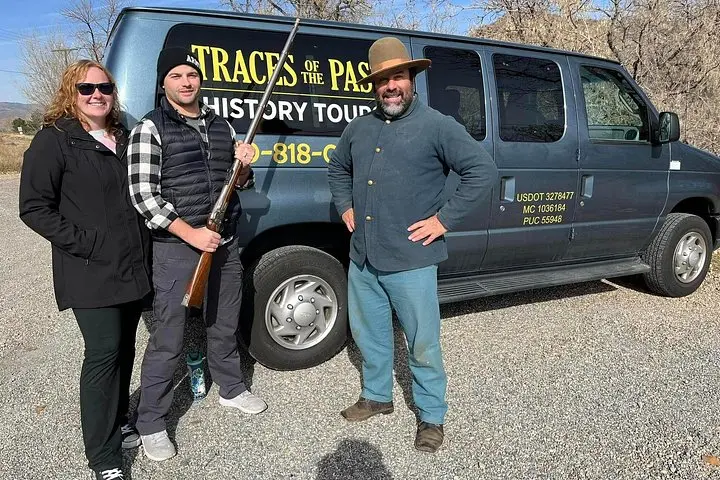
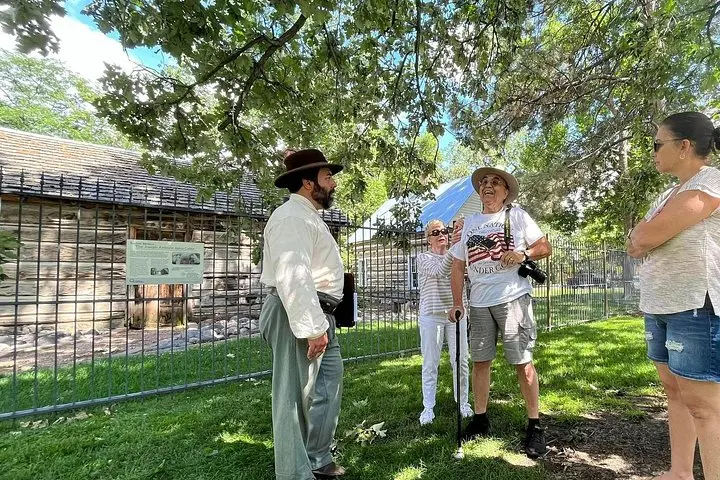
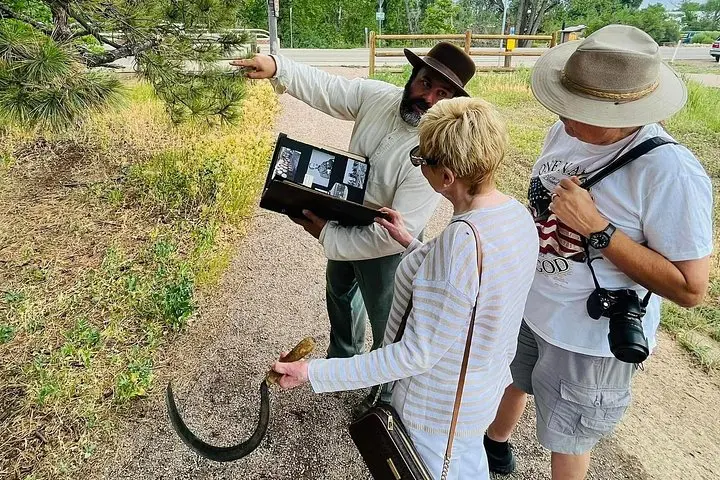
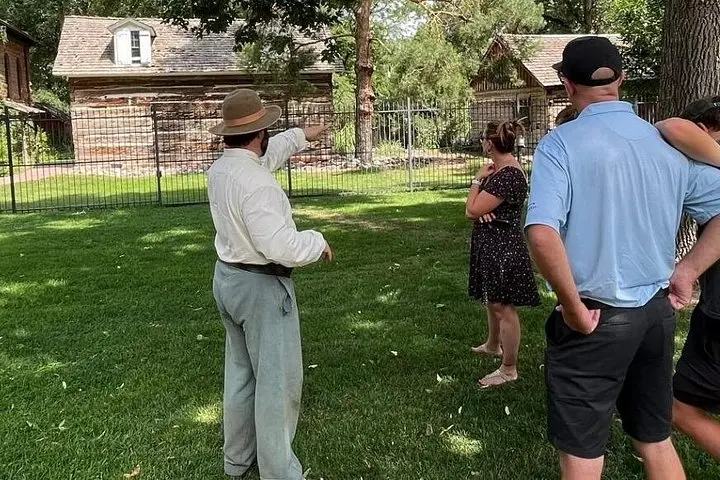
A late-morning van pulls up beside the Cache la Poudre, the river pushing a steady, audible current beneath the bridge. Mark Serour steps down in period coat and hat, the fabric and voice doing more than tell — they invite you to walk the 1860s borderlands in a way a textbook cannot. The tour moves between easy roadside stops and short walks, the riverbanks, old fort sites, and Library Park’s weathered cabins framing the story.
A late-morning van pulls up beside the Cache la Poudre, the river pushing a steady, audible current beneath the bridge. Mark Serour steps down in period coat and hat, the fabric and voice doing more than tell — they invite you to walk the 1860s borderlands in a way a textbook cannot. The tour moves between easy roadside stops and short walks, the riverbanks, old fort sites, and Library Park’s weathered cabins framing the story.
History here is practical: Camp Collins was a small Army post established during Civil War–era western expansion to protect mail routes and settlers. Geology shapes the narrative too — the Poudre carved a fertile valley against the eastern foothills of the Rockies, its alluvial soils and braided channels dictating where forts and farms took root. Cultural threads surface in unexpected places: military logistics, Plains Indian presence, fur trade routes, and the later emergence of Fort Collins as an agricultural hub.
Local insights come from objects and anecdotes — personalized stagecoach tickets, reproduced artifacts, and a guide who interprets landscape and record with equal care. The pace is conversational; stops last long enough to picture camp layout or cabin life without becoming a museum lecture.
Practical guidance: tours start at Watson Lake State Wildlife Area parking, run about two hours, and include light walking on packed dirt and paved paths. Dress in layers, bring sun protection and water, and expect short roadside stops where shade can be limited. Ideal for history fans, families with older children, and anyone who prefers stories tied to real terrain rather than plaques.