THE ADVENTURE COLLECTIVE® · Independent discovery and booking for outdoor travel

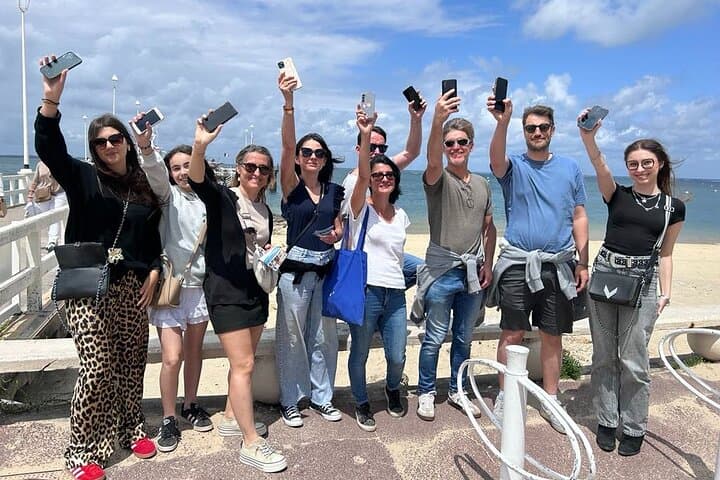
Explore Fort-de-France on a self-guided smartphone treasure hunt that mixes local history, short videos and light puzzles. Ideal for families and cruise passengers, the 90-minute urban game helps you discover monuments and hidden alleys at your own pace.
Explore Fort-de-France on a self-guided smartphone treasure hunt that mixes local history, short videos and light puzzles. Ideal for families and cruise passengers, the 90-minute urban game helps you discover monuments and hidden alleys at your own pace.
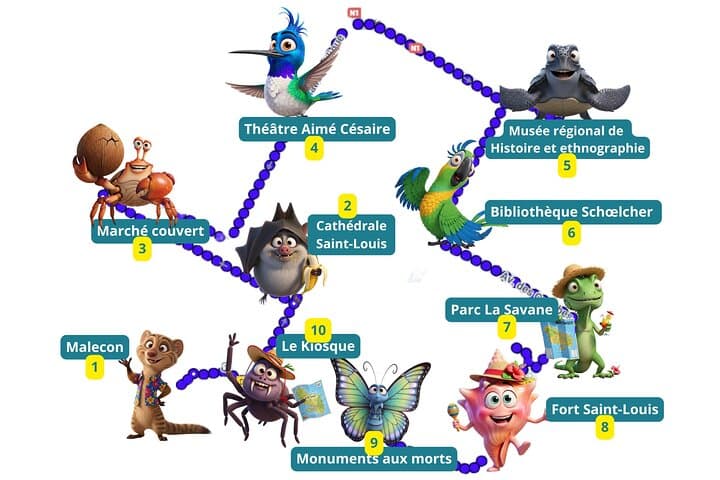
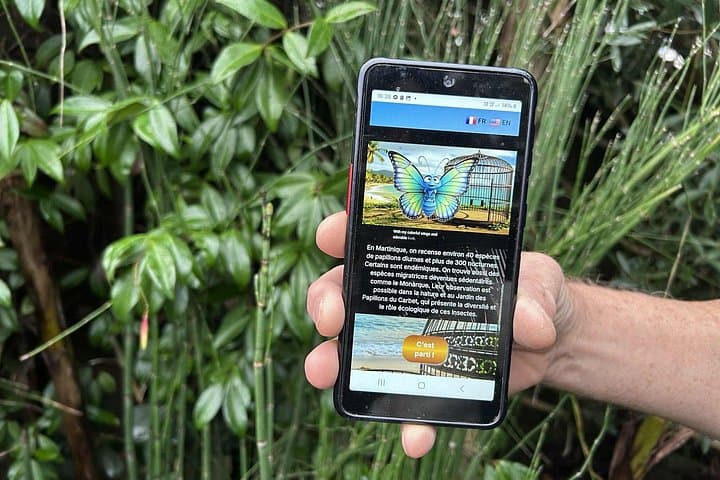
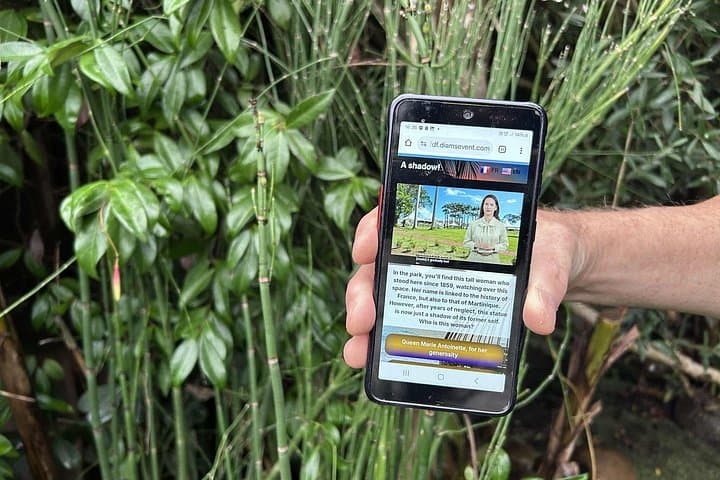
You step off the cruise shuttle and the port’s heat hustles around you—bougainvillea flashes at street corners, the rumble of scooters threads through the market. With a smartphone in hand this self-guided track game turns Fort-de-France into a playful puzzle: ten keys hidden in ten civic landmarks, each unlocked by a short video, an observation challenge, and a logic puzzle that frees an endangered animal in the story.
Verified experiences and guided adventures in the surrounding area.
Operated by City Game sur la Dune du Pilat · Fort-de-France, Martinique
You step off the cruise shuttle and the port’s heat hustles around you—bougainvillea flashes at street corners, the rumble of scooters threads through the market. With a smartphone in hand this self-guided track game turns Fort-de-France into a playful puzzle: ten keys hidden in ten civic landmarks, each unlocked by a short video, an observation challenge, and a logic puzzle that frees an endangered animal in the story.
Fort-de-France is a working port city with layered history: mapped by colonial trade, reshaped after 19th-century fires and modern renovations that left a grid of wide boulevards and tucked-away alleys. The city’s volcanic geology—part of Martinique’s island arc—gives the harbor its curved bay and the hills that frame views toward Mount Pelée.
Culturally the game highlights Creole anecdotes and civic architecture: the Schoelcher Library, the cathedral’s bell tower, market stalls selling spices and accra. Local tips point to quiet pedestrian lanes and a café or two where you can pause and watch daily life.
Practically: the experience is 90 minutes at your own pace, fully autonomous and accessible—no guide required. You’ll cover roughly 1–3 miles depending on detours, mostly flat pavement with occasional cobbles. Bring charged phone battery, protective case for tropical rain squalls, and a reusable water bottle; the game is family-friendly from about age 7, and instructions arrive on your e-ticket. Play during morning or late afternoon to avoid mid-day heat; public transit and taxis keep the port well connected if you need to cut the route short.
Plan about 90 minutes, though you can move faster or linger at stops; the route is fully self-paced.
Videos are in French with English subtitles; puzzles use simple prompts accessible to non-French speakers.
Yes—most streets and plazas in the center are accessible, though some older sidewalks and cobbles may be uneven.
Yes—the instructions and game link are sent on your electronic ticket and you can launch the route at any booked time slot.
City Game sur la Dune du Pilat operates guided outdoor trips and adventures with an emphasis on safety, stewardship, and memorable experiences.
You step off the cruise shuttle and the port’s heat hustles around you—bougainvillea flashes at street corners, the rumble of scooters threads through the market. With a smartphone in hand this self-guided track game turns Fort-de-France into a playful puzzle: ten keys hidden in ten civic landmarks, each unlocked by a short video, an observation challenge, and a logic puzzle that frees an endangered animal in the story.
You step off the cruise shuttle and the port’s heat hustles around you—bougainvillea flashes at street corners, the rumble of scooters threads through the market. With a smartphone in hand this self-guided track game turns Fort-de-France into a playful puzzle: ten keys hidden in ten civic landmarks, each unlocked by a short video, an observation challenge, and a logic puzzle that frees an endangered animal in the story.
Fort-de-France is a working port city with layered history: mapped by colonial trade, reshaped after 19th-century fires and modern renovations that left a grid of wide boulevards and tucked-away alleys. The city’s volcanic geology—part of Martinique’s island arc—gives the harbor its curved bay and the hills that frame views toward Mount Pelée.
Culturally the game highlights Creole anecdotes and civic architecture: the Schoelcher Library, the cathedral’s bell tower, market stalls selling spices and accra. Local tips point to quiet pedestrian lanes and a café or two where you can pause and watch daily life.
Practically: the experience is 90 minutes at your own pace, fully autonomous and accessible—no guide required. You’ll cover roughly 1–3 miles depending on detours, mostly flat pavement with occasional cobbles. Bring charged phone battery, protective case for tropical rain squalls, and a reusable water bottle; the game is family-friendly from about age 7, and instructions arrive on your e-ticket. Play during morning or late afternoon to avoid mid-day heat; public transit and taxis keep the port well connected if you need to cut the route short.