THE ADVENTURE COLLECTIVE® · Independent discovery and booking for outdoor travel

A four-day private circuit from Angkor Wat to remote Koh Ker and jungle-claimed Beng Mealea, blending major monuments, a sacred mountain riverbed, and countryside drives. Practical pacing, local context, and tips help you move from sunrise at Angkor to waterfalls and lesser-visited ruins.
A four-day private circuit from Angkor Wat to remote Koh Ker and jungle-claimed Beng Mealea, blending major monuments, a sacred mountain riverbed, and countryside drives. Practical pacing, local context, and tips help you move from sunrise at Angkor to waterfalls and lesser-visited ruins.
Dawn breaks over the moat and stone causeways of Angkor Wat, and the first day’s light turns bas-reliefs and lotus ponds to gold. Over four days this private circuit moves from the grand galleries of Angkor to quieter forests where roots pry at crumbling lintels, then out across rice plains to Koh Ker and the jungle-worn corridors of Beng Mealea.
Verified experiences and guided adventures in the surrounding area.
Operated by Angkor Express Boat · Siem Reap, Siem Reap Province
Dawn breaks over the moat and stone causeways of Angkor Wat, and the first day’s light turns bas-reliefs and lotus ponds to gold. Over four days this private circuit moves from the grand galleries of Angkor to quieter forests where roots pry at crumbling lintels, then out across rice plains to Koh Ker and the jungle-worn corridors of Beng Mealea.
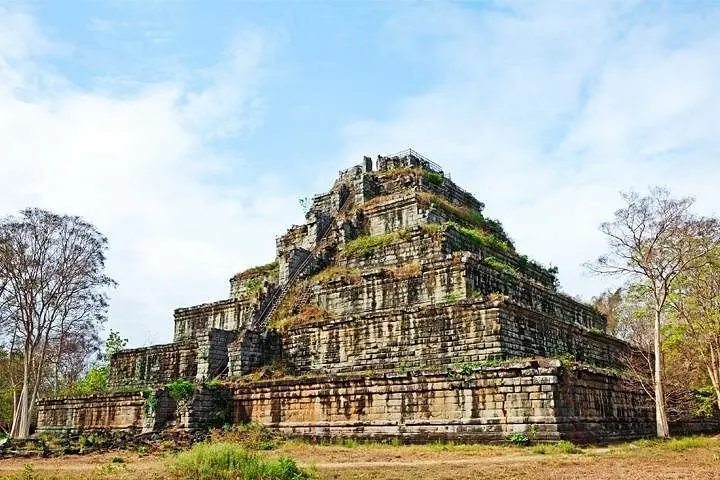
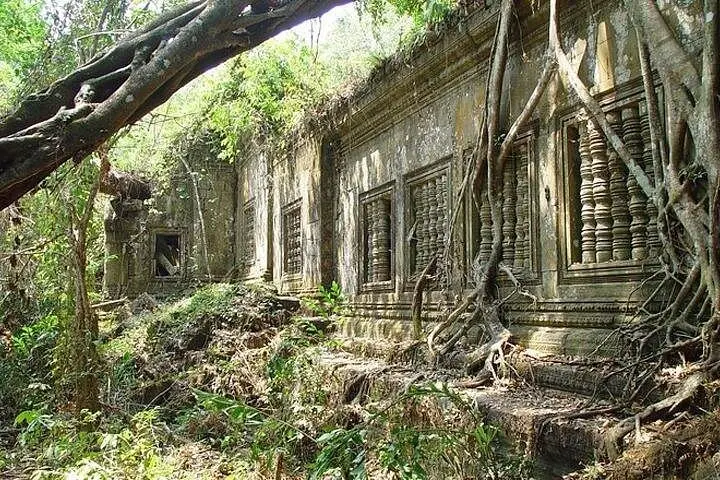
The itinerary threads history and geology: Angkor Archaeological Park covers more than 400 km² of temples and reservoirs built between the 9th and 13th centuries, while Phnom Kulen is a sandstone plateau where riverbeds were carved with lingas and a reclining Buddha stands hewn from bedrock. Koh Ker was briefly Khmer capital in the 10th century, its seven-tiered Prasat Thom rising on a remote ridge. Beng Mealea offers an overgrown counterpart to Angkor Wat, where collapsed galleries and fallen blocks create a raw, exploratory feel.
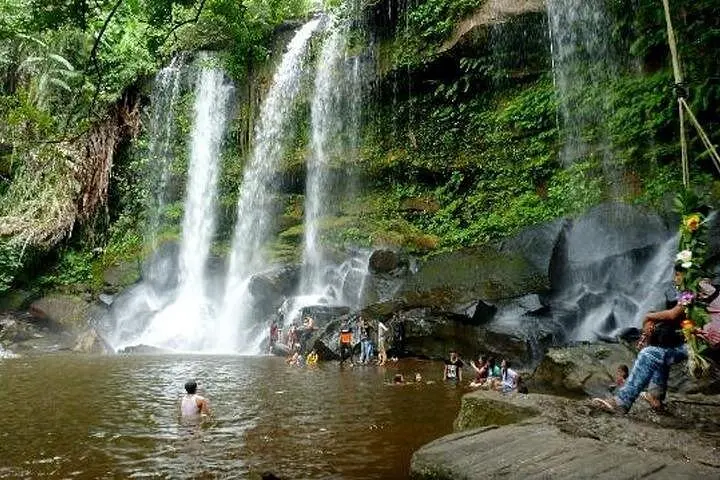
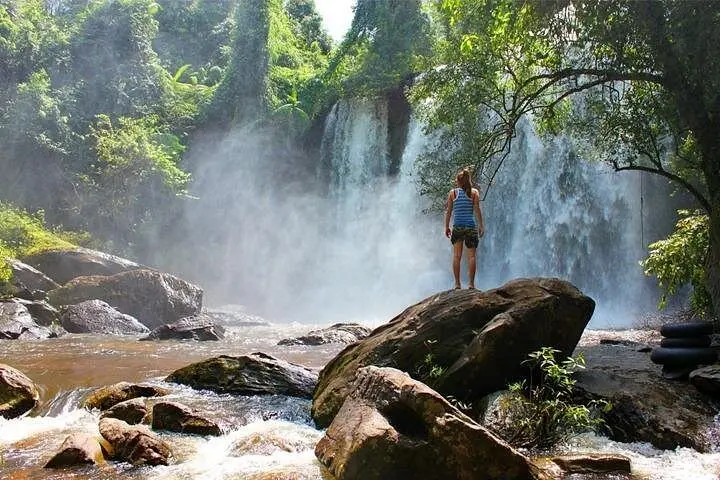
Culture remains present in village markets and roadside shrines; local guides translate iconography and funerary beliefs tied to sites like Pre Rup. Nature asserts itself too: waterfalls at Kulen invite a swim, and forested tracks around Beng Mealea push at your attention with sounds and humidity.
Practical guidance: expect long days in an air-conditioned vehicle with short on-foot sections—stone steps, uneven paths, and a 15–30 minute climb for Phnom Bakheng at sunset. Bring lightweight, breathable clothing that covers shoulders for temple entry, sturdy walking shoes with grip, sun protection, and a refillable water bottle. Plan temple passes in advance, pace photo stops to avoid midday heat, and allow extra time for remote transfers to Koh Ker and Beng Mealea.
Yes. Angkor passes are required to enter the park; buy them at the official Angkor Ticket Center in Siem Reap or through your operator before departure.
Yes—Kulen has waterfalls and natural pools where swimming is common; check safety and avoid strong currents during the rainy season.
Koh Ker is roughly 120–150 km northeast of Siem Reap and can take 3–4 hours each way; Beng Mealea is about 70 km and typically 1.5–2 hours by car, depending on road conditions.
Many major sites have flat causeways and viewing platforms, but secondary laterite paths and steps at places like Ta Prohm and Beng Mealea are uneven—advance notice allows guides to adapt the route.
Angkor Express Boat operates guided outdoor trips and adventures with an emphasis on safety, stewardship, and memorable experiences.
Dawn breaks over the moat and stone causeways of Angkor Wat, and the first day’s light turns bas-reliefs and lotus ponds to gold. Over four days this private circuit moves from the grand galleries of Angkor to quieter forests where roots pry at crumbling lintels, then out across rice plains to Koh Ker and the jungle-worn corridors of Beng Mealea.
Dawn breaks over the moat and stone causeways of Angkor Wat, and the first day’s light turns bas-reliefs and lotus ponds to gold. Over four days this private circuit moves from the grand galleries of Angkor to quieter forests where roots pry at crumbling lintels, then out across rice plains to Koh Ker and the jungle-worn corridors of Beng Mealea.
The itinerary threads history and geology: Angkor Archaeological Park covers more than 400 km² of temples and reservoirs built between the 9th and 13th centuries, while Phnom Kulen is a sandstone plateau where riverbeds were carved with lingas and a reclining Buddha stands hewn from bedrock. Koh Ker was briefly Khmer capital in the 10th century, its seven-tiered Prasat Thom rising on a remote ridge. Beng Mealea offers an overgrown counterpart to Angkor Wat, where collapsed galleries and fallen blocks create a raw, exploratory feel.
Culture remains present in village markets and roadside shrines; local guides translate iconography and funerary beliefs tied to sites like Pre Rup. Nature asserts itself too: waterfalls at Kulen invite a swim, and forested tracks around Beng Mealea push at your attention with sounds and humidity.
Practical guidance: expect long days in an air-conditioned vehicle with short on-foot sections—stone steps, uneven paths, and a 15–30 minute climb for Phnom Bakheng at sunset. Bring lightweight, breathable clothing that covers shoulders for temple entry, sturdy walking shoes with grip, sun protection, and a refillable water bottle. Plan temple passes in advance, pace photo stops to avoid midday heat, and allow extra time for remote transfers to Koh Ker and Beng Mealea.