THE ADVENTURE COLLECTIVE® · Independent discovery and booking for outdoor travel

Move from Roman colonnades to rock‑cut cities and desert camps in four kinetic days. This guided group tour covers Jerash, Petra’s Treasury and Monastery, a Wadi Rum jeep safari and a float in the Dead Sea—blending history, geology and Bedouin hospitality into one compact itinerary.
Move from Roman colonnades to rock‑cut cities and desert camps in four kinetic days. This guided group tour covers Jerash, Petra’s Treasury and Monastery, a Wadi Rum jeep safari and a float in the Dead Sea—blending history, geology and Bedouin hospitality into one compact itinerary.
You step into the Siq before dawn and the canyon narrows until the world is nothing but warm sandstone and quiet footsteps. The light creeps along carved walls and, when the Treasury finally reveals itself, the scale of human ambition strikes like a hush—this is Petra at its most cinematic.
Verified experiences and guided adventures in the surrounding area.
Operated by Hawari Travels · Wadi Musa, Ma'an Governorate
You step into the Siq before dawn and the canyon narrows until the world is nothing but warm sandstone and quiet footsteps. The light creeps along carved walls and, when the Treasury finally reveals itself, the scale of human ambition strikes like a hush—this is Petra at its most cinematic.
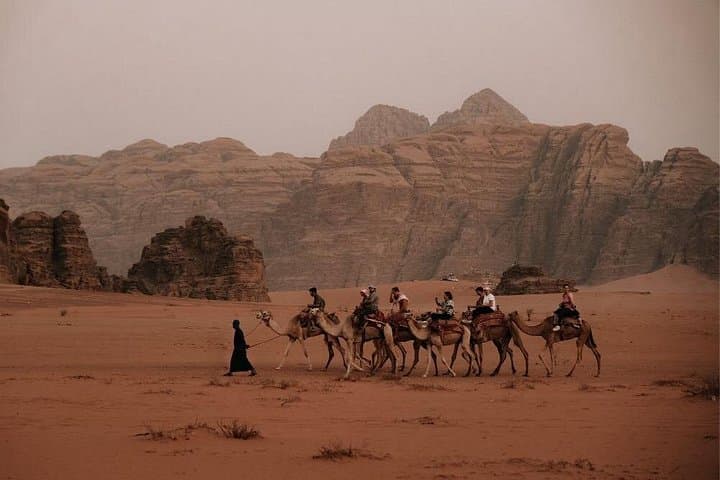
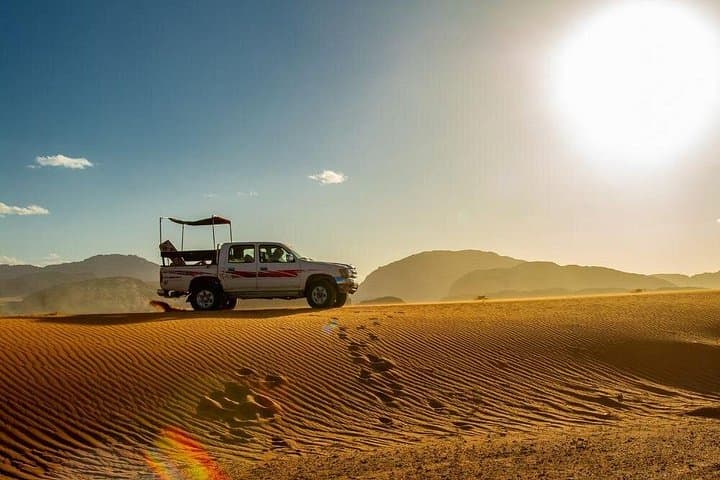
Over four days this group tour threads Jordan’s most magnetic sites into a compact loop: Roman Jerash and Ajloun’s fortress ramparts on Day 1, Petra’s Siq and the Monastery on Day 2, a two‑hour jeep ride and overnight under Wadi Rum’s rim‑rock sky on Day 3, and Madaba’s mosaics, Mount Nebo’s views and a float in the Dead Sea on Day 4. The route moves from fertile hills to fossilized sea shelves and fossil‑red desert, a short geography lesson written in stone.
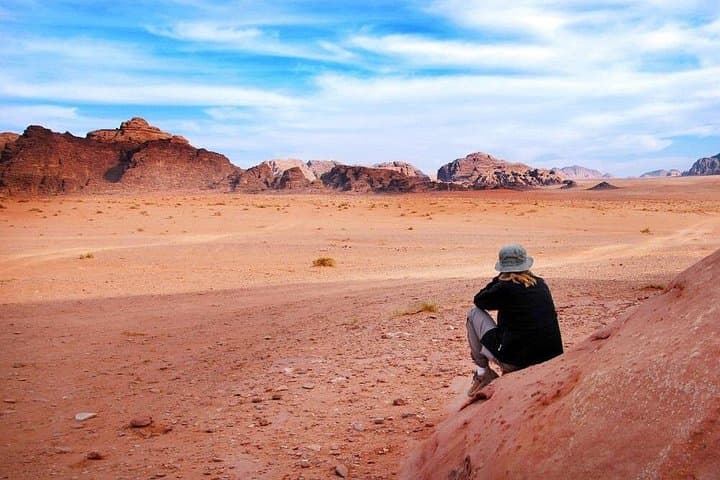
Petra is Nabatean engineering—water channels and monumental façades carved into sandstone—requiring about 1.2 km through the Siq before the Treasury appears. Climbing to the Monastery adds roughly 800 stone steps and another hour each way for fit walkers. Jerash offers broad Roman colonnades and a cardo that stretches several hundred meters; Ajloun Castle perches near 1,000 m above the Jordan Valley and rewards early climbers with sweeping panoramas. Wadi Rum’s geology is primarily sandstone and granite sculpted into arches, canyons and dunes; the jeep tracks here are bumpy and exhilarating rather than technical.
Culturally the tour balances Bedouin hospitality—an underground zarb meal and a night in a deluxe tent—with visits to Christian and Islamic heritage sites in Madaba and Amman. Expect straightforward comforts: 3‑star hotel nights, a private vehicle, local guides, and small touches like two 500 ml water bottles supplied daily.
Practical edge: shoes with firm soles and ankle support matter on Petra’s steps and Wadi Rum’s rocky approaches. Pack sun protection and a lightweight layer for desert nights that can drop 10–15°C after sunset. Hydrate rigorously at low elevations; the Dead Sea sits around −430 m, but its buoyancy and salt require rinsing immediately after floating to protect skin and eyes. If you want the Monastery’s view without the stairs, ask guides for a mule option where available, but be mindful of animal welfare standards.
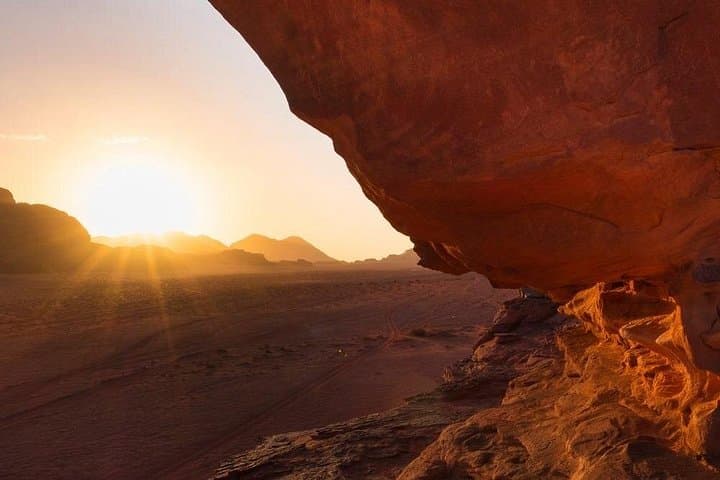
The trip moves at a steady pace—plan for several hours of walking across uneven ground each day. Bring spare cash for tips and onsite fees like Petra by Night if you opt in. For photographers, sunrise light in the Siq and sunset over Wadi Rum are decisive. Above all, respect fragile sites: avoid touching frescoes and stick to marked paths; Jordan’s landscapes look indestructible until they aren’t.
Admissions listed in the itinerary are included; optional extras like Petra by Night are not included unless specified.
Reaching the Monastery requires roughly 800 steps and 45–60 minutes uphill; it's strenuous for anyone with knee or back issues.
Accommodation is in a deluxe Bedouin tent with basic comforts; nights are remote and stargazing is excellent—bring a warm layer.
Yes—floating and mud baths are included; showers are available at most Dead Sea beaches but bring fresh water for rinsing sensitive areas immediately after.
Yes—hotel pickup across Amman is provided; confirm your pickup point at booking and be ready in the lobby 30 minutes before departure.
The tour is family‑friendly overall but the Monastery stairs and some walking in Petra may be difficult for very young children or travelers with serious mobility restrictions.
Hawari Travels operates guided outdoor trips and adventures with an emphasis on safety, stewardship, and memorable experiences.
You step into the Siq before dawn and the canyon narrows until the world is nothing but warm sandstone and quiet footsteps. The light creeps along carved walls and, when the Treasury finally reveals itself, the scale of human ambition strikes like a hush—this is Petra at its most cinematic.
You step into the Siq before dawn and the canyon narrows until the world is nothing but warm sandstone and quiet footsteps. The light creeps along carved walls and, when the Treasury finally reveals itself, the scale of human ambition strikes like a hush—this is Petra at its most cinematic.
Over four days this group tour threads Jordan’s most magnetic sites into a compact loop: Roman Jerash and Ajloun’s fortress ramparts on Day 1, Petra’s Siq and the Monastery on Day 2, a two‑hour jeep ride and overnight under Wadi Rum’s rim‑rock sky on Day 3, and Madaba’s mosaics, Mount Nebo’s views and a float in the Dead Sea on Day 4. The route moves from fertile hills to fossilized sea shelves and fossil‑red desert, a short geography lesson written in stone.
Petra is Nabatean engineering—water channels and monumental façades carved into sandstone—requiring about 1.2 km through the Siq before the Treasury appears. Climbing to the Monastery adds roughly 800 stone steps and another hour each way for fit walkers. Jerash offers broad Roman colonnades and a cardo that stretches several hundred meters; Ajloun Castle perches near 1,000 m above the Jordan Valley and rewards early climbers with sweeping panoramas. Wadi Rum’s geology is primarily sandstone and granite sculpted into arches, canyons and dunes; the jeep tracks here are bumpy and exhilarating rather than technical.
Culturally the tour balances Bedouin hospitality—an underground zarb meal and a night in a deluxe tent—with visits to Christian and Islamic heritage sites in Madaba and Amman. Expect straightforward comforts: 3‑star hotel nights, a private vehicle, local guides, and small touches like two 500 ml water bottles supplied daily.
Practical edge: shoes with firm soles and ankle support matter on Petra’s steps and Wadi Rum’s rocky approaches. Pack sun protection and a lightweight layer for desert nights that can drop 10–15°C after sunset. Hydrate rigorously at low elevations; the Dead Sea sits around −430 m, but its buoyancy and salt require rinsing immediately after floating to protect skin and eyes. If you want the Monastery’s view without the stairs, ask guides for a mule option where available, but be mindful of animal welfare standards.
The trip moves at a steady pace—plan for several hours of walking across uneven ground each day. Bring spare cash for tips and onsite fees like Petra by Night if you opt in. For photographers, sunrise light in the Siq and sunset over Wadi Rum are decisive. Above all, respect fragile sites: avoid touching frescoes and stick to marked paths; Jordan’s landscapes look indestructible until they aren’t.