THE ADVENTURE COLLECTIVE® · Independent discovery and booking for outdoor travel

A four-day journey from Tangier to Marrakech that takes you across Rif peaks, cedar forests, Dades and Todra gorges, and into the shifting sands of Erg Chebbi for a camel trek and overnight in a Berber camp. Practical routing, sunrise dune climbs and kasbah history make this a concentrated Moroccan odyssey.
A four-day journey from Tangier to Marrakech that takes you across Rif peaks, cedar forests, Dades and Todra gorges, and into the shifting sands of Erg Chebbi for a camel trek and overnight in a Berber camp. Practical routing, sunrise dune climbs and kasbah history make this a concentrated Moroccan odyssey.
You step off the coastal air into a land that changes with every hour: northern Rif folds into blue-washed alleys, the High Atlas rises like a wall, and farther south the Erg Chebbi dunes push and reshape with the wind.
Verified experiences and guided adventures in the surrounding area.
Operated by Morocco Safari Tours · Merzouga, Drâa-Tafilalet
You step off the coastal air into a land that changes with every hour: northern Rif folds into blue-washed alleys, the High Atlas rises like a wall, and farther south the Erg Chebbi dunes push and reshape with the wind.
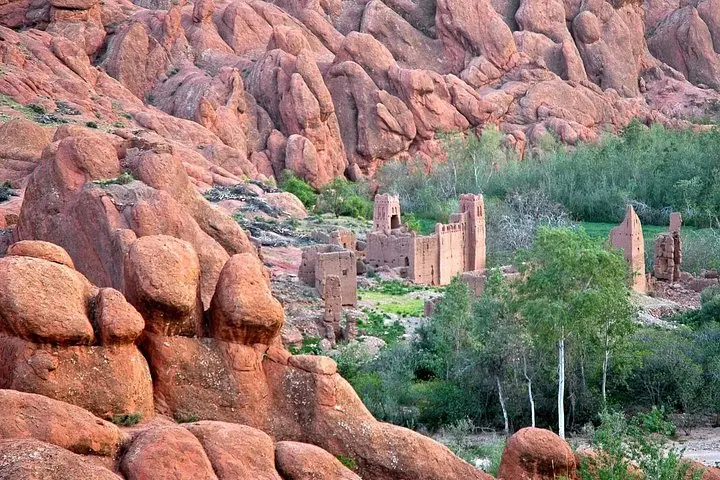
This compact four-day route threads that contrast—Tangier’s port and Chefchaouen’s 15th-century Berber fortifications give way to cedar forests around Azrou and the palm-lined Ziz Valley, ending where the desert rules. Erg Chebbi’s dunes are living geology: wind-carved arcs of sand that glow gold at sunset and cool to pearly blue before dawn. Between them, Todra and Dades gorges expose limestone canyons and the layered rock known locally as “monkey toes.”
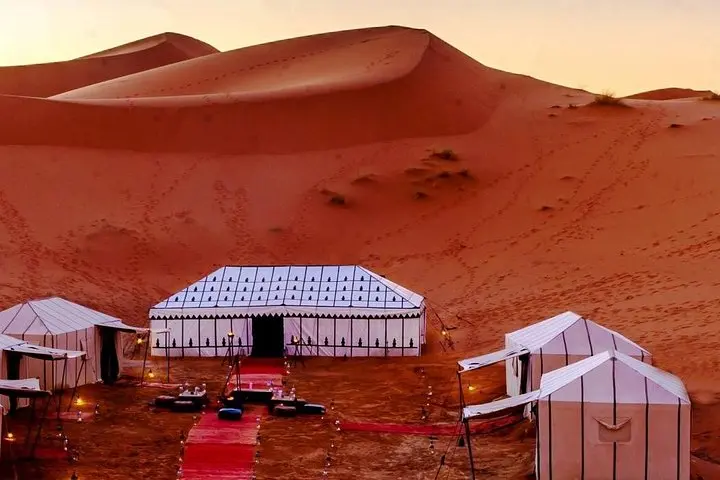
Culturally, expect riad hospitality in Fes and Dades, Berber tents in Merzouga, and market stalls selling rosewater from Kalaa M’Gouna. History is visible in kasbahs like Ait Ben Haddou and in mountain passes used for centuries by caravans.
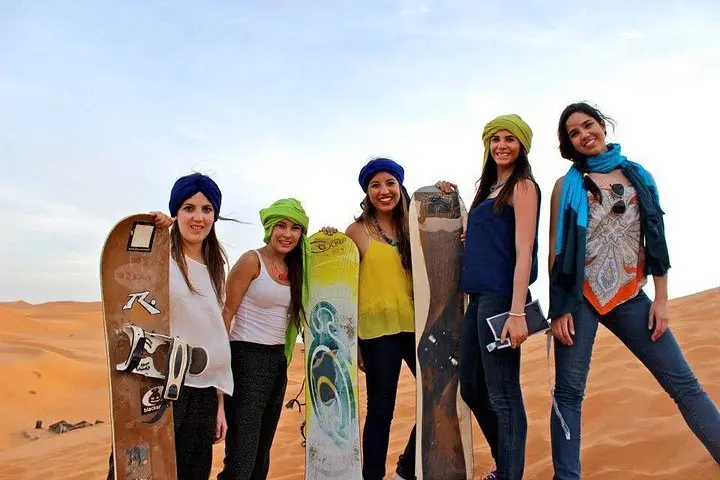
Practical guidance: travel is largely by private 4WD with long driving days—pack for motion comfort. Book dawn dune climbs for the best light and quieter sand. For the camel trek, shoes with traction and a sun hat matter more than fancy kit. Hydrate often; the desert’s dry air accelerates dehydration. Layer evenings—temperatures swing dramatically between day and night. Respect local customs around modest dress in villages and seek guides for safe dune travel and to support local communities.
No—camel rides on this itinerary are short, led by handlers; basic balance and the ability to mount a camel with assistance are all that’s required.
The tour includes listed breakfasts and dinners plus one night in a regular desert camp and hotel/riad stays as described in the itinerary.
Expect long driving legs—this is a point-to-point tour with several multi-hour transfers between towns, gorges and the desert.
Tizi n’Tichka reaches about 2,260 m; most travelers acclimate fine but take it easy if you have respiratory issues and bring layers for cooler temperatures.
Morocco Safari Tours operates guided outdoor trips and adventures with an emphasis on safety, stewardship, and memorable experiences.
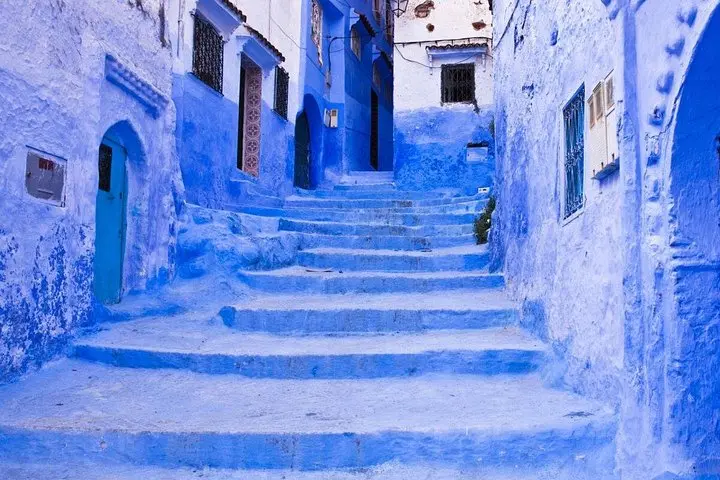
You step off the coastal air into a land that changes with every hour: northern Rif folds into blue-washed alleys, the High Atlas rises like a wall, and farther south the Erg Chebbi dunes push and reshape with the wind.
You step off the coastal air into a land that changes with every hour: northern Rif folds into blue-washed alleys, the High Atlas rises like a wall, and farther south the Erg Chebbi dunes push and reshape with the wind.
This compact four-day route threads that contrast—Tangier’s port and Chefchaouen’s 15th-century Berber fortifications give way to cedar forests around Azrou and the palm-lined Ziz Valley, ending where the desert rules. Erg Chebbi’s dunes are living geology: wind-carved arcs of sand that glow gold at sunset and cool to pearly blue before dawn. Between them, Todra and Dades gorges expose limestone canyons and the layered rock known locally as “monkey toes.”
Culturally, expect riad hospitality in Fes and Dades, Berber tents in Merzouga, and market stalls selling rosewater from Kalaa M’Gouna. History is visible in kasbahs like Ait Ben Haddou and in mountain passes used for centuries by caravans.
Practical guidance: travel is largely by private 4WD with long driving days—pack for motion comfort. Book dawn dune climbs for the best light and quieter sand. For the camel trek, shoes with traction and a sun hat matter more than fancy kit. Hydrate often; the desert’s dry air accelerates dehydration. Layer evenings—temperatures swing dramatically between day and night. Respect local customs around modest dress in villages and seek guides for safe dune travel and to support local communities.