THE ADVENTURE COLLECTIVE® · Independent discovery and booking for outdoor travel

Fly by helicopter to an exclusive section of Franz Josef Glacier, then follow expert guides across blue ice and crevassed terrain. This small-group heli-hike combines a scenic flight with hands-on glacier travel and instruction.
Fly by helicopter to an exclusive section of Franz Josef Glacier, then follow expert guides across blue ice and crevassed terrain. This small-group heli-hike combines a scenic flight with hands-on glacier travel and instruction.
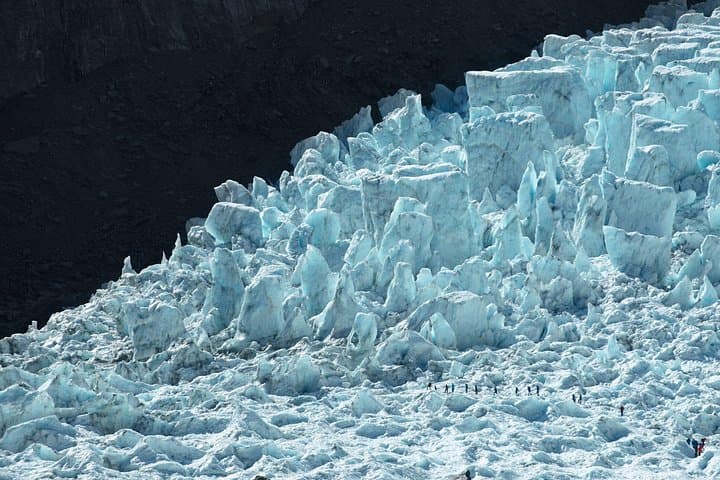
A cold wind cuts through the helicopter cabin as the valley below shrinks and the white of the Southern Alps spreads into the distance. Within minutes the pilot drops onto a blue-ice plateau at the Pinnacles — the glacier opens like a frozen city, crevasses yawning and seracs shifting with an ancient, slow insistence.
Verified experiences and guided adventures in the surrounding area.
Operated by Franz Josef Glacier Guides · Franz Josef Village, West Coast
A cold wind cuts through the helicopter cabin as the valley below shrinks and the white of the Southern Alps spreads into the distance. Within minutes the pilot drops onto a blue-ice plateau at the Pinnacles — the glacier opens like a frozen city, crevasses yawning and seracs shifting with an ancient, slow insistence.
Franz Josef Glacier (Kā Roimata o Hine Hukatere) sits on the wet west coast of New Zealand’s South Island, shaped by tectonics and one of the fastest-flowing temperate glaciers in the world. Māori and European histories meet here: local iwi have long-held stories of the glacier’s origin, while Victorian explorers first mapped its dramatic advances and retreats. Geologically, the glacier is a dynamic system of ice, moraine and meltwater; climbers and scientists continually study its rapid changes as a visible sign of regional climate shifts.
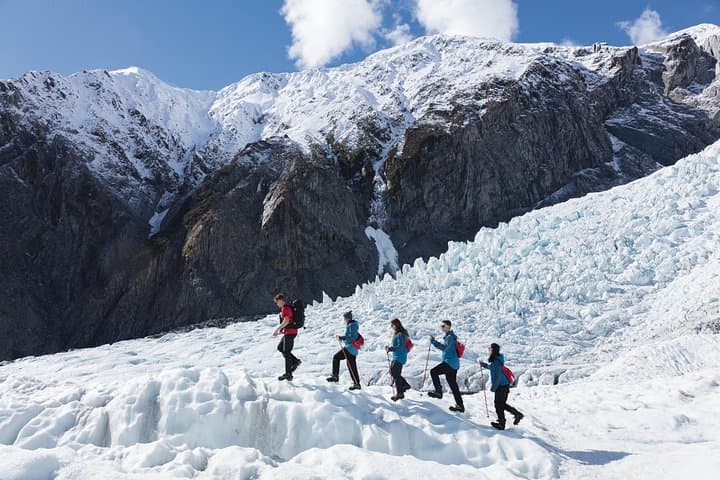
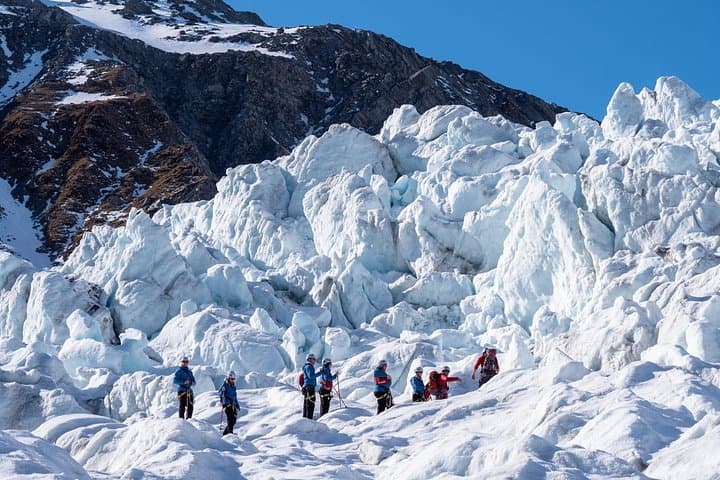
On this small-group heli-hike travelers combine a short scenic flight with guided ice travel. Guides fit participants with crampons and lead across ridged blue ice, teaching basic ropework, safe route-finding and explaining glaciology and local Māori narratives along the way. Expect uneven, steep terrain, regular altitude shifts and strong weather variability; no two trips are identical.
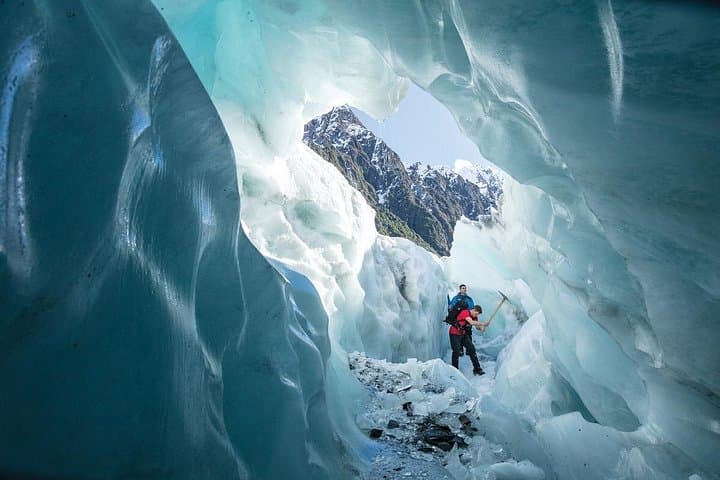
Practical notes: arrive 15 minutes early, dress in multiple warm, quick-dry layers, and bring sunscreen and sunglasses — UV on ice is intense. Fitness requirements are moderate; guides can curtail activity for safety. The experience rewards participants with close-up views of crevasses, ice pinnacles and the valley glacier system — a raw, tactile encounter with moving ice that both challenges and educates.
Allow approximately 2–4 hours including scenic helicopter transfers and the guided glacier walk; exact timing depends on weather and group pace.
Minimum age is typically 10 years for the shorter trip; weight limits apply (operator max ~115kg) and participants should be in at least moderate fitness to manage steep, icy terrain.
Flights and hikes are weather-dependent; operators may reschedule or refund if conditions are unsafe — build flexibility into your travel plans.
No prior glacier experience required; guides instruct on crampon use and safe glacier travel, but you must be comfortable walking on ice and uneven ground.
Franz Josef Glacier Guides operates guided outdoor trips and adventures with an emphasis on safety, stewardship, and memorable experiences.
A cold wind cuts through the helicopter cabin as the valley below shrinks and the white of the Southern Alps spreads into the distance. Within minutes the pilot drops onto a blue-ice plateau at the Pinnacles — the glacier opens like a frozen city, crevasses yawning and seracs shifting with an ancient, slow insistence.
A cold wind cuts through the helicopter cabin as the valley below shrinks and the white of the Southern Alps spreads into the distance. Within minutes the pilot drops onto a blue-ice plateau at the Pinnacles — the glacier opens like a frozen city, crevasses yawning and seracs shifting with an ancient, slow insistence.
Franz Josef Glacier (Kā Roimata o Hine Hukatere) sits on the wet west coast of New Zealand’s South Island, shaped by tectonics and one of the fastest-flowing temperate glaciers in the world. Māori and European histories meet here: local iwi have long-held stories of the glacier’s origin, while Victorian explorers first mapped its dramatic advances and retreats. Geologically, the glacier is a dynamic system of ice, moraine and meltwater; climbers and scientists continually study its rapid changes as a visible sign of regional climate shifts.
On this small-group heli-hike travelers combine a short scenic flight with guided ice travel. Guides fit participants with crampons and lead across ridged blue ice, teaching basic ropework, safe route-finding and explaining glaciology and local Māori narratives along the way. Expect uneven, steep terrain, regular altitude shifts and strong weather variability; no two trips are identical.
Practical notes: arrive 15 minutes early, dress in multiple warm, quick-dry layers, and bring sunscreen and sunglasses — UV on ice is intense. Fitness requirements are moderate; guides can curtail activity for safety. The experience rewards participants with close-up views of crevasses, ice pinnacles and the valley glacier system — a raw, tactile encounter with moving ice that both challenges and educates.