THE ADVENTURE COLLECTIVE® · Independent discovery and booking for outdoor travel

A brisk 25-minute helicopter flight that lands you on the neve of Franz Josef Glacier — eight to ten minutes to step onto ancient ice. Weather-dependent and weight-checked, this flight pairs dramatic valley views with a short, unforgettable glacier stop.
A brisk 25-minute helicopter flight that lands you on the neve of Franz Josef Glacier — eight to ten minutes to step onto ancient ice. Weather-dependent and weight-checked, this flight pairs dramatic valley views with a short, unforgettable glacier stop.
You lift off from the helipad in Franz Josef Village and the rainforest peels away beneath you; the valley narrows, ice edges into shadow, and the glacier waits like an old, creaking machine of blue and white. In 25 minutes you climb the valley, cross the coastal plain, and set the skids down on the neve — eight to ten minutes to stand on living ice and feel cold that has been measured over millennia.
Verified experiences and guided adventures in the surrounding area.
Operated by Totally Tourism - The Helicopter Line · Franz Josef, West Coast
You lift off from the helipad in Franz Josef Village and the rainforest peels away beneath you; the valley narrows, ice edges into shadow, and the glacier waits like an old, creaking machine of blue and white. In 25 minutes you climb the valley, cross the coastal plain, and set the skids down on the neve — eight to ten minutes to stand on living ice and feel cold that has been measured over millennia.
The glacier carries a layered history: carved by repeated advances and retreats since the last ice age, it is named Franz Josef after an Austrian emperor while its Māori name, Kā Roimata o Hine Hukatere, recalls a local legend. Geologically the flow is fast for a temperate glacier, constrained by steep valley walls; climbers and guides who work it know how quickly crevasses and seracs can change.
Culturally the West Coast mixes Māori and settler histories, and small Franz Josef Village functions as the basecamp for aerial, guided, and walking access. Wildlife is subtle here — coastal seals and native forest birds are common below, while alpine gulls wheel above.
Practical guide: flights are weather-dependent and weight-checked at check-in; dress in warm, windproof layers and wear sturdy, waterproof boots for the snow landing. Expect clear safety briefings, live pilot commentary, and limited time on the ice — bring a camera with a strap and plan for quick, sheltered stops. The experience is short but intense: high reward, low physical demand, and utterly focused on that rare moment of standing on glacier neve.
Flights are weather-dependent; if canceled you can usually rebook for another available scenic flight at any Helicopter Line operation of similar duration and price, subject to availability.
Yes—your declared weight at booking must match your weight at check-in; adjustments greater than 15 kg (33 lb) can require rescheduling based on aircraft loading rules.
The snow landing is typically 8–10 minutes—long enough to step onto the neve, take photos, and get a short briefing from the pilot or guide.
Infants must sit on laps and infant seats are available; the activity is generally accessible but requires stepping in/out of a helicopter and walking on uneven snow, so discuss mobility needs with the operator beforehand.
Totally Tourism - The Helicopter Line operates guided outdoor trips and adventures with an emphasis on safety, stewardship, and memorable experiences.
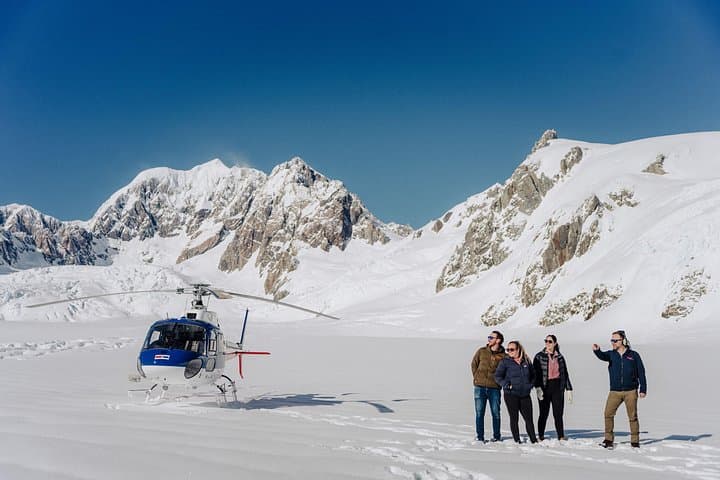
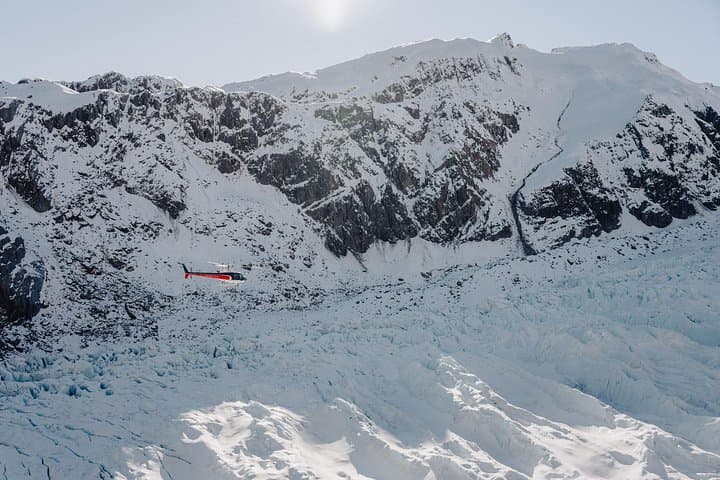
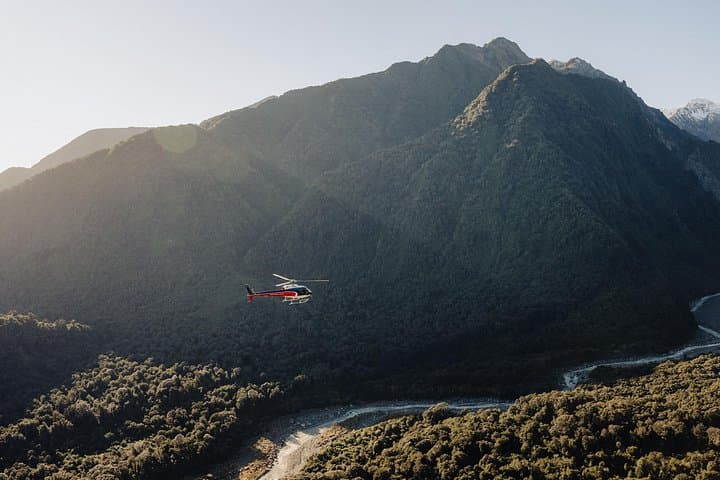
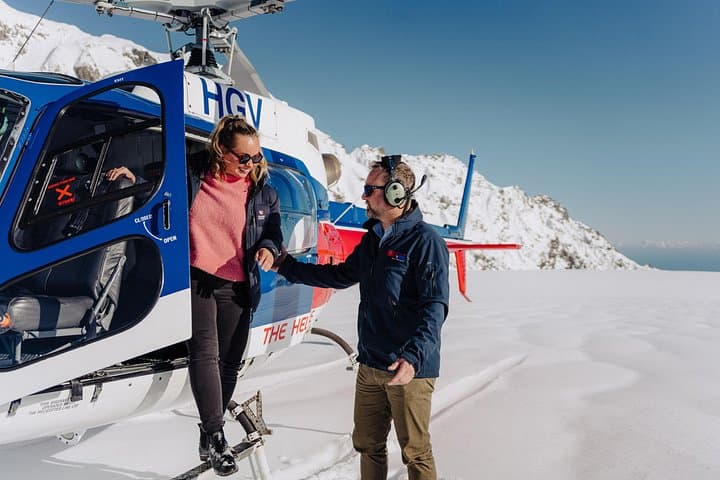
You lift off from the helipad in Franz Josef Village and the rainforest peels away beneath you; the valley narrows, ice edges into shadow, and the glacier waits like an old, creaking machine of blue and white. In 25 minutes you climb the valley, cross the coastal plain, and set the skids down on the neve — eight to ten minutes to stand on living ice and feel cold that has been measured over millennia.
You lift off from the helipad in Franz Josef Village and the rainforest peels away beneath you; the valley narrows, ice edges into shadow, and the glacier waits like an old, creaking machine of blue and white. In 25 minutes you climb the valley, cross the coastal plain, and set the skids down on the neve — eight to ten minutes to stand on living ice and feel cold that has been measured over millennia.
The glacier carries a layered history: carved by repeated advances and retreats since the last ice age, it is named Franz Josef after an Austrian emperor while its Māori name, Kā Roimata o Hine Hukatere, recalls a local legend. Geologically the flow is fast for a temperate glacier, constrained by steep valley walls; climbers and guides who work it know how quickly crevasses and seracs can change.
Culturally the West Coast mixes Māori and settler histories, and small Franz Josef Village functions as the basecamp for aerial, guided, and walking access. Wildlife is subtle here — coastal seals and native forest birds are common below, while alpine gulls wheel above.
Practical guide: flights are weather-dependent and weight-checked at check-in; dress in warm, windproof layers and wear sturdy, waterproof boots for the snow landing. Expect clear safety briefings, live pilot commentary, and limited time on the ice — bring a camera with a strap and plan for quick, sheltered stops. The experience is short but intense: high reward, low physical demand, and utterly focused on that rare moment of standing on glacier neve.