THE ADVENTURE COLLECTIVE® · Independent discovery and booking for outdoor travel

Take a fixed-wing flight from Queenstown, then helicopter to Franz Josef Glacier for a guided crampon hike across icefalls and caves. Expect two hours on the glacier, changing routes based on daily conditions and guided instruction throughout.
Take a fixed-wing flight from Queenstown, then helicopter to Franz Josef Glacier for a guided crampon hike across icefalls and caves. Expect two hours on the glacier, changing routes based on daily conditions and guided instruction throughout.
You land on blue-white ice with the rotor wash still pushing wind through your jacket and the glacier opening like a living map beneath your feet. The helicopter skirts icefalls and ribboned meltwater, then sets you down high on Franz Josef’s upper icefall; guides fit crampons and you trade the hum of engines for the soft, grinding language of ice.
Verified experiences and guided adventures in the surrounding area.
Operated by True South Flights · Franz Josef, West Coast
You land on blue-white ice with the rotor wash still pushing wind through your jacket and the glacier opening like a living map beneath your feet. The helicopter skirts icefalls and ribboned meltwater, then sets you down high on Franz Josef’s upper icefall; guides fit crampons and you trade the hum of engines for the soft, grinding language of ice.
This glacier sits where temperate rain forest climbs abruptly into alpine ice — a geological boundary carved by uplifted Southern Alps and persistent coastal snowfall. Māori history links the glacier to ancestral stories and local iwi who named and navigated these valleys long before tourism. In recent decades the glacier’s terminus has retreated, making today’s walks both an encounter with raw ice and a lesson in changing climates.
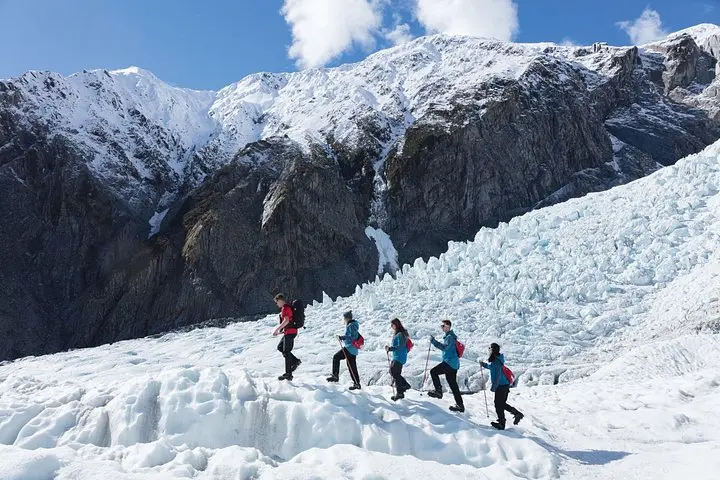
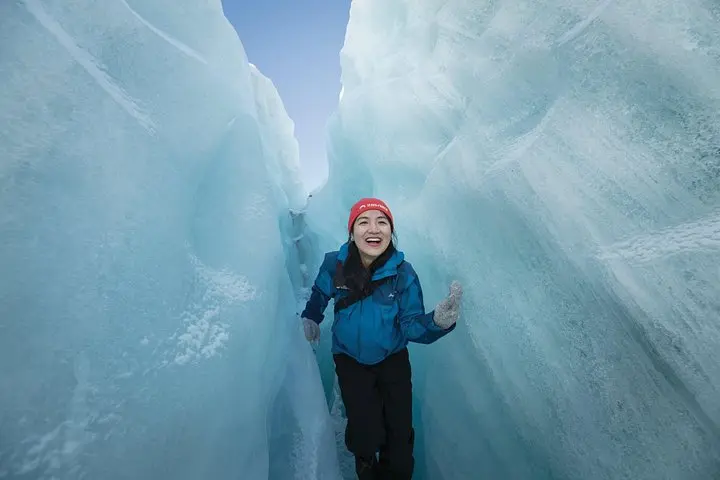
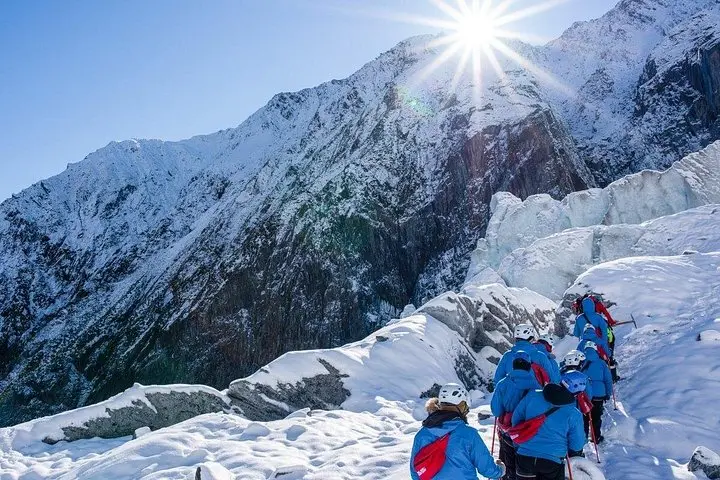
On the hike, expect two hours of guided travel across crevassed, sculpted surfaces: tunnels, blue seracs, and melt channels. Guides teach rope protocol and crampon technique; routes change daily depending on conditions. The experience balances aerial perspective with hands-on movement — balanced footing, measured steps and frequent stops for interpretation and photos.
Practical notes: dress in layers, waterproof outerwear and sturdy socks; boots and crampons are provided but bring your own thermal base layer if you run cold. Plan for weather-driven itinerary changes — flights and hikes can be canceled for safety. Moderate to strong fitness helps: uneven ice and short steep sections require good balance and stamina. Early booking in high season secures seats on the fixed-wing transfer and helicopter slots.
No prior glacier experience is required; guides provide crampon instruction and route management for safe travel across the ice.
Yes—sturdy boots and crampons are supplied; bringing your own thermal layers and suitable socks is recommended.
Tours are weather-dependent; operators typically offer full refunds or rebooking when flights or heli operations are canceled for safety.
Children may be permitted but there are age/weight restrictions and fitness requirements—check operator policies and disclose ages at booking.
True South Flights operates guided outdoor trips and adventures with an emphasis on safety, stewardship, and memorable experiences.
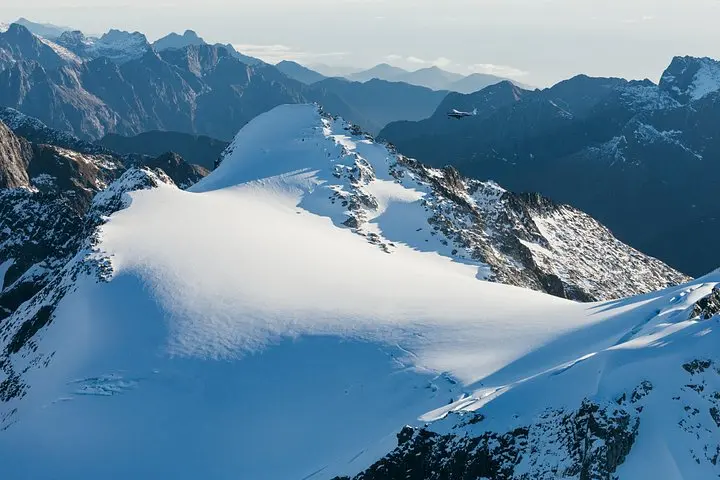
You land on blue-white ice with the rotor wash still pushing wind through your jacket and the glacier opening like a living map beneath your feet. The helicopter skirts icefalls and ribboned meltwater, then sets you down high on Franz Josef’s upper icefall; guides fit crampons and you trade the hum of engines for the soft, grinding language of ice.
You land on blue-white ice with the rotor wash still pushing wind through your jacket and the glacier opening like a living map beneath your feet. The helicopter skirts icefalls and ribboned meltwater, then sets you down high on Franz Josef’s upper icefall; guides fit crampons and you trade the hum of engines for the soft, grinding language of ice.
This glacier sits where temperate rain forest climbs abruptly into alpine ice — a geological boundary carved by uplifted Southern Alps and persistent coastal snowfall. Māori history links the glacier to ancestral stories and local iwi who named and navigated these valleys long before tourism. In recent decades the glacier’s terminus has retreated, making today’s walks both an encounter with raw ice and a lesson in changing climates.
On the hike, expect two hours of guided travel across crevassed, sculpted surfaces: tunnels, blue seracs, and melt channels. Guides teach rope protocol and crampon technique; routes change daily depending on conditions. The experience balances aerial perspective with hands-on movement — balanced footing, measured steps and frequent stops for interpretation and photos.
Practical notes: dress in layers, waterproof outerwear and sturdy socks; boots and crampons are provided but bring your own thermal base layer if you run cold. Plan for weather-driven itinerary changes — flights and hikes can be canceled for safety. Moderate to strong fitness helps: uneven ice and short steep sections require good balance and stamina. Early booking in high season secures seats on the fixed-wing transfer and helicopter slots.