THE ADVENTURE COLLECTIVE® · Independent discovery and booking for outdoor travel

Start at Andrew Jackson’s statue and let a local guide reframe the French Quarter—from St. Louis Cathedral and Pontalba’s ironwork to Pirate Alley and the Mardi Gras history preserved in the Presbytère. This concise 90-minute walk balances architecture, lore, and practical tips for first-time visitors.
Start at Andrew Jackson’s statue and let a local guide reframe the French Quarter—from St. Louis Cathedral and Pontalba’s ironwork to Pirate Alley and the Mardi Gras history preserved in the Presbytère. This concise 90-minute walk balances architecture, lore, and practical tips for first-time visitors.
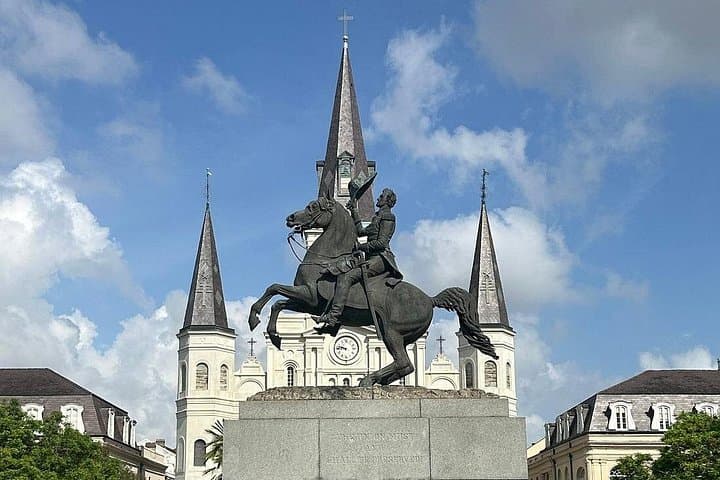
You meet at the base of Andrew Jackson’s bronze horse, the iron sun bouncing off the cathedral’s pale façade, and the city begins to speak. The French Quarter doesn’t wait politely — it offers anecdotes in brass footnotes: jazz spilling from a doorway, a balcony that remembers duels, and the Mississippi off to the side, an ever-moving presence that pushes barges and rumor alike downriver.
Verified experiences and guided adventures in the surrounding area.
Operated by Tours by Foot New Orleans · New Orleans, Louisiana
You meet at the base of Andrew Jackson’s bronze horse, the iron sun bouncing off the cathedral’s pale façade, and the city begins to speak. The French Quarter doesn’t wait politely — it offers anecdotes in brass footnotes: jazz spilling from a doorway, a balcony that remembers duels, and the Mississippi off to the side, an ever-moving presence that pushes barges and rumor alike downriver.
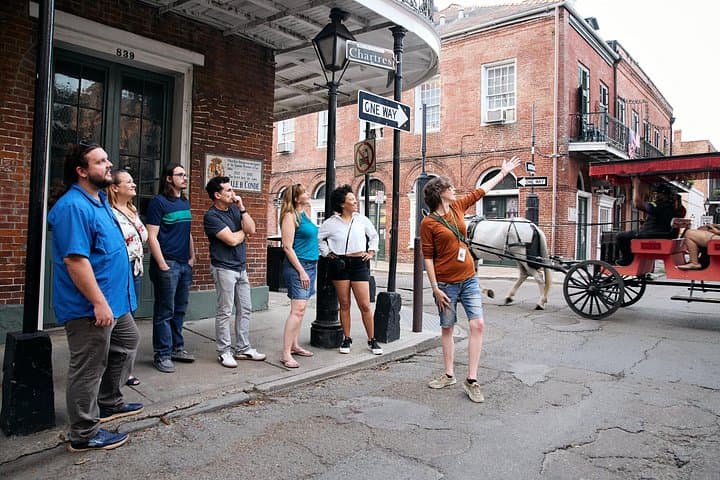
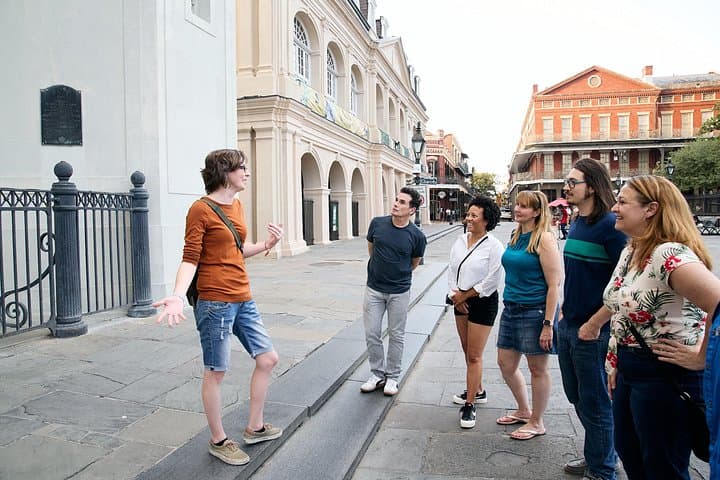
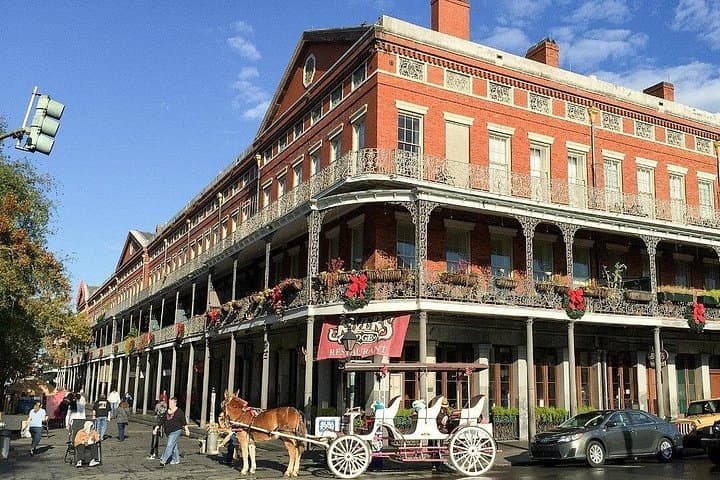
This 90-minute small-group walk compresses centuries into a few blocks. Your guide moves through the crowd like a cartographer of memory, pointing to the St. Louis Cathedral — one of the nation’s oldest continuously used cathedrals — and to the Pontalba Buildings, early American apartment blocks born of audacious female patronage. Pirate Alley narrows to a whisper, and the guide turns pirate lore into a civics lesson: privateers and trade shaped this port city’s laws as much as its festivals.
The story of Mardi Gras threads through the tour. You’ll get a primer on the masked societies and see how the Presbytère now preserves that pageant alongside exhibits on Hurricane Katrina — how a resilient city rebuilt its ritual life even as it rebuilt its streets. Architecture here is readable: French and Spanish colonial lines, ironwork balconies, and the Ursuline Convent’s plain, purposeful façade remind you of who controlled land and faith.
Geology is less dramatic but present: you tread on reclaimed marsh and raised streets, which explains why New Orleans feels both flat and slightly altered underfoot. Expect cobbles, narrow sidewalks, and streets that flood in heavy rains; the river’s attitude toward the city is never neutral.
Practicalities are simple but matter. The route covers roughly one mile with essentially zero elevation gain — an urban stroll, not a hike — but surfaces include uneven brick and cobblestone, so wear supportive shoes and keep a compact umbrella on hand in summer storms. Bring water; though cafés are everywhere, lines form quickly. If you want to dive deeper, the tour finishes at the Presbytère with an optional self-guided visit to Mardi Gras and Katrina exhibits — factor an extra 30–60 minutes.
Timing is everything: mornings are cooler and photograph best light on the cathedral, late afternoons catch musicians warming up, and after-dark Bourbon Street is a different animal — loud and theatrical. The guide’s local knowledge is the advantage here: skip the tourist clichés and gain context — of architecture, of trade, of celebration — so when the beads do fly you’ll know why they matter.
This walk is ideal for first-time visitors who want history spiced with local color and for repeat travelers who crave an orientation that goes beyond neon. It’s short, informative, and built to leave you with both pictures and stories you’ll remember long after the brass cools.
Meet at the equestrian statue of Andrew Jackson in the center of Jackson Square; the guide will stand between the statue and St. Louis Cathedral.
Yes. The French Quarter route includes accessible surfaces and the operator indicates wheelchair accessibility; notify the guide if you need accommodations.
Admission to the Presbytère is not included; the tour ends there and you can enter for a self-guided visit at your own expense.
Yes—families are welcome. The pace is gentle and the guide will adapt stories for mixed-age groups.
Tipping is customary for guiding services in New Orleans; 15–20% of a comparable tour price is common if you enjoyed the experience.
Tours generally run in light rain; the operator’s cancellation policy allows full refunds if canceled at least 24 hours in advance.
Tours by Foot New Orleans operates guided outdoor trips and adventures with an emphasis on safety, stewardship, and memorable experiences.
You meet at the base of Andrew Jackson’s bronze horse, the iron sun bouncing off the cathedral’s pale façade, and the city begins to speak. The French Quarter doesn’t wait politely — it offers anecdotes in brass footnotes: jazz spilling from a doorway, a balcony that remembers duels, and the Mississippi off to the side, an ever-moving presence that pushes barges and rumor alike downriver.
You meet at the base of Andrew Jackson’s bronze horse, the iron sun bouncing off the cathedral’s pale façade, and the city begins to speak. The French Quarter doesn’t wait politely — it offers anecdotes in brass footnotes: jazz spilling from a doorway, a balcony that remembers duels, and the Mississippi off to the side, an ever-moving presence that pushes barges and rumor alike downriver.
This 90-minute small-group walk compresses centuries into a few blocks. Your guide moves through the crowd like a cartographer of memory, pointing to the St. Louis Cathedral — one of the nation’s oldest continuously used cathedrals — and to the Pontalba Buildings, early American apartment blocks born of audacious female patronage. Pirate Alley narrows to a whisper, and the guide turns pirate lore into a civics lesson: privateers and trade shaped this port city’s laws as much as its festivals.
The story of Mardi Gras threads through the tour. You’ll get a primer on the masked societies and see how the Presbytère now preserves that pageant alongside exhibits on Hurricane Katrina — how a resilient city rebuilt its ritual life even as it rebuilt its streets. Architecture here is readable: French and Spanish colonial lines, ironwork balconies, and the Ursuline Convent’s plain, purposeful façade remind you of who controlled land and faith.
Geology is less dramatic but present: you tread on reclaimed marsh and raised streets, which explains why New Orleans feels both flat and slightly altered underfoot. Expect cobbles, narrow sidewalks, and streets that flood in heavy rains; the river’s attitude toward the city is never neutral.
Practicalities are simple but matter. The route covers roughly one mile with essentially zero elevation gain — an urban stroll, not a hike — but surfaces include uneven brick and cobblestone, so wear supportive shoes and keep a compact umbrella on hand in summer storms. Bring water; though cafés are everywhere, lines form quickly. If you want to dive deeper, the tour finishes at the Presbytère with an optional self-guided visit to Mardi Gras and Katrina exhibits — factor an extra 30–60 minutes.
Timing is everything: mornings are cooler and photograph best light on the cathedral, late afternoons catch musicians warming up, and after-dark Bourbon Street is a different animal — loud and theatrical. The guide’s local knowledge is the advantage here: skip the tourist clichés and gain context — of architecture, of trade, of celebration — so when the beads do fly you’ll know why they matter.
This walk is ideal for first-time visitors who want history spiced with local color and for repeat travelers who crave an orientation that goes beyond neon. It’s short, informative, and built to leave you with both pictures and stories you’ll remember long after the brass cools.