THE ADVENTURE COLLECTIVE® · Independent discovery and booking for outdoor travel

Cross the spine of the Southern Alps on a 40-minute helicopter flight from Franz Josef that circles Aoraki / Mount Cook and lands on glacier snow. Expect sweeping glacier views, a snow landing, and weather-dependent scheduling.
Cross the spine of the Southern Alps on a 40-minute helicopter flight from Franz Josef that circles Aoraki / Mount Cook and lands on glacier snow. Expect sweeping glacier views, a snow landing, and weather-dependent scheduling.
You lift off from the West Coast and the coast itself recedes like an old map—green shorelines give way to ribbed ice and a spine of mountains that seems to push skyward. The helicopter crosses the Southern Alps, skimming glaciers that creak and glitter, before circling Aoraki / Mount Cook and setting skis on a compacted snowfield for a short, surreal landing.
Verified experiences and guided adventures in the surrounding area.
Operated by Glacier Helicopters · Franz Josef, West Coast
You lift off from the West Coast and the coast itself recedes like an old map—green shorelines give way to ribbed ice and a spine of mountains that seems to push skyward. The helicopter crosses the Southern Alps, skimming glaciers that creak and glitter, before circling Aoraki / Mount Cook and setting skis on a compacted snowfield for a short, surreal landing.
This flight threads together recent geological chapters: carved valleys and active neves that have shaped the landscape for millennia. Aoraki is central to Māori oral history; the mountain’s name and presence are woven into Ngāi Tahu traditions. The route also reveals glacial morphology—crevasses, icefalls and the steep cirques that tell of persistent ice flow.
Culturally the West Coast is a working place—towns like Franz Josef grew around gold, timber and now tourism; pilots and guides pair technical skills with local knowledge to read weather and ice. Expect brisk alpine air that bites and sun that reflects hard from white surfaces—nature here commands attention.
Practical guidance: arrive 30 minutes early, dress in warm layers and sturdy footwear, and bring sunglasses and a camera (subject to operator restrictions—no drones or selfie sticks). Flights are weather-dependent; plan a flexible window and be ready for last-minute changes. The landing on the glacier is brief but accessible for most travelers; follow crew instructions for safety. For a compact, high-impact alpine experience, this helicopter flight delivers panoramic geology, mountain culture and a rare moment standing on real névé beneath New Zealand’s highest peak.
The advertised flight time is 40 minutes; the snow landing and on-glacier time is brief—plan about 1–2 hours total including check-in.
Flights are weather-dependent; operators will offer alternative times or a full refund if cancelled at least 24 hours prior per policy.
Children must be accompanied by an adult; infants are required to sit on an adult’s lap and specialized infant seats may be available—check at booking.
No—drones, selfie sticks, bags and certain electronics are prohibited for safety and weight reasons.
Glacier Helicopters operates guided outdoor trips and adventures with an emphasis on safety, stewardship, and memorable experiences.
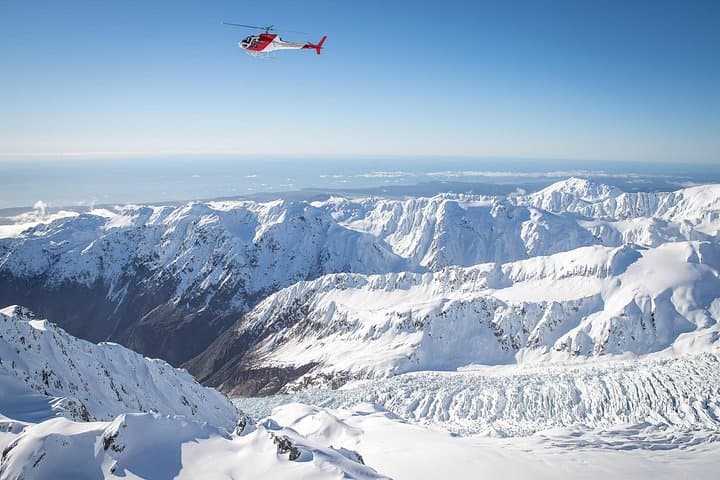
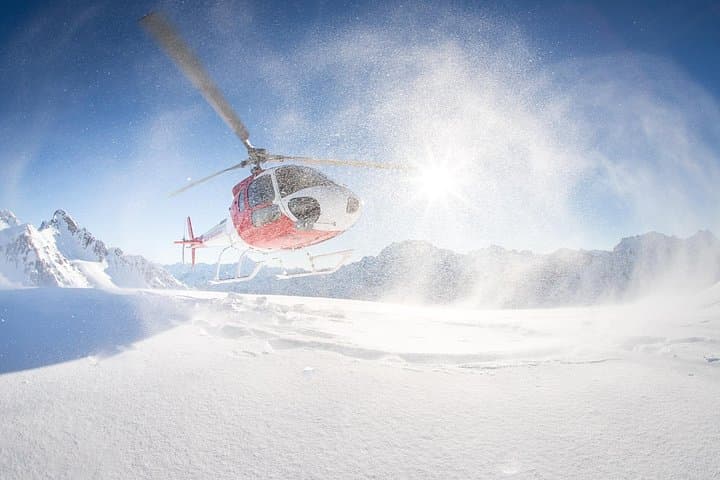
You lift off from the West Coast and the coast itself recedes like an old map—green shorelines give way to ribbed ice and a spine of mountains that seems to push skyward. The helicopter crosses the Southern Alps, skimming glaciers that creak and glitter, before circling Aoraki / Mount Cook and setting skis on a compacted snowfield for a short, surreal landing.
You lift off from the West Coast and the coast itself recedes like an old map—green shorelines give way to ribbed ice and a spine of mountains that seems to push skyward. The helicopter crosses the Southern Alps, skimming glaciers that creak and glitter, before circling Aoraki / Mount Cook and setting skis on a compacted snowfield for a short, surreal landing.
This flight threads together recent geological chapters: carved valleys and active neves that have shaped the landscape for millennia. Aoraki is central to Māori oral history; the mountain’s name and presence are woven into Ngāi Tahu traditions. The route also reveals glacial morphology—crevasses, icefalls and the steep cirques that tell of persistent ice flow.
Culturally the West Coast is a working place—towns like Franz Josef grew around gold, timber and now tourism; pilots and guides pair technical skills with local knowledge to read weather and ice. Expect brisk alpine air that bites and sun that reflects hard from white surfaces—nature here commands attention.
Practical guidance: arrive 30 minutes early, dress in warm layers and sturdy footwear, and bring sunglasses and a camera (subject to operator restrictions—no drones or selfie sticks). Flights are weather-dependent; plan a flexible window and be ready for last-minute changes. The landing on the glacier is brief but accessible for most travelers; follow crew instructions for safety. For a compact, high-impact alpine experience, this helicopter flight delivers panoramic geology, mountain culture and a rare moment standing on real névé beneath New Zealand’s highest peak.