THE ADVENTURE COLLECTIVE® · Independent discovery and booking for outdoor travel

An early-morning departure from Marsa Alam delivers you to Luxor’s monumental riverbanks and desert cliffs in a single long, curated day. With a private Egyptologist guide, explore the Valley of the Kings, Hatshepsut’s temple, Karnak and more — all on a tailored itinerary.
An early-morning departure from Marsa Alam delivers you to Luxor’s monumental riverbanks and desert cliffs in a single long, curated day. With a private Egyptologist guide, explore the Valley of the Kings, Hatshepsut’s temple, Karnak and more — all on a tailored itinerary.
You wake before dawn in Marsa Alam and the desert pushes the car forward — wide plains sliding past as the driver follows a ribbon of asphalt toward the Nile. By mid-morning the air changes: palm-lined riverbanks replace ochre dunes and the silhouette of temple pylons appears on the horizon, heavy with time.
Verified experiences and guided adventures in the surrounding area.
Operated by Saray El-Nile · Luxor, Luxor Governorate
You wake before dawn in Marsa Alam and the desert pushes the car forward — wide plains sliding past as the driver follows a ribbon of asphalt toward the Nile. By mid-morning the air changes: palm-lined riverbanks replace ochre dunes and the silhouette of temple pylons appears on the horizon, heavy with time.
Luxor was the heart of ancient Thebes, the New Kingdom’s political and religious capital. Stone quarries and cliff faces around the valley reveal the geology that made these monuments possible — sandstone and limestone carved into tombs and temples that recorded pharaohs’ lives. Cultural layers accumulate here: tomb paintings that speak of the afterlife, mortuary temples honoring kings and queens, and modern villages still shaped by the Nile’s slow work.
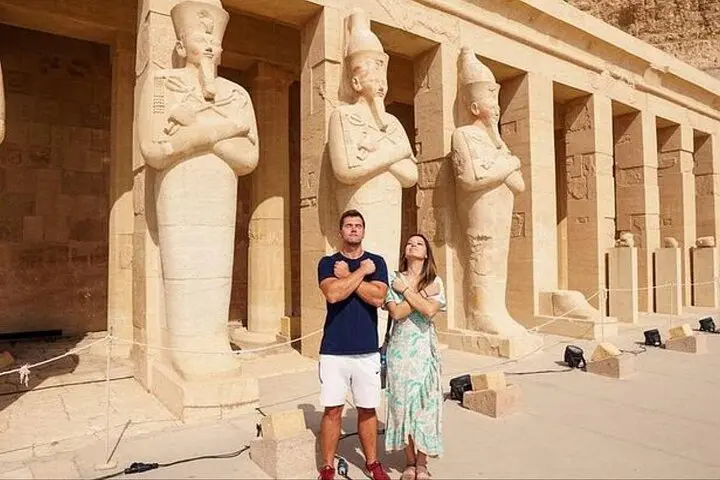
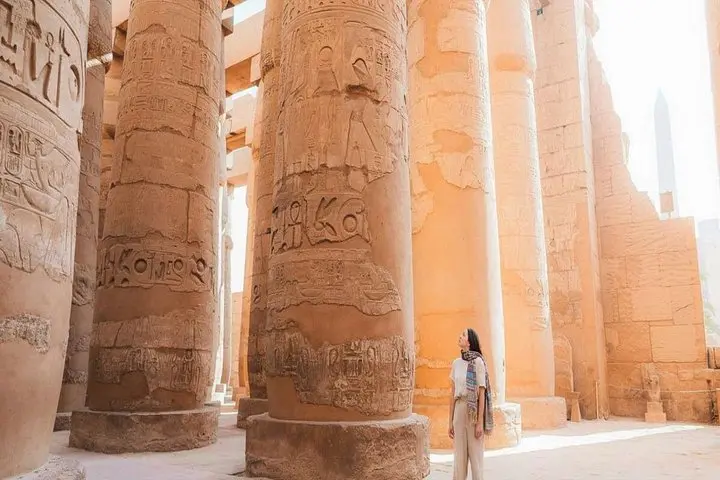
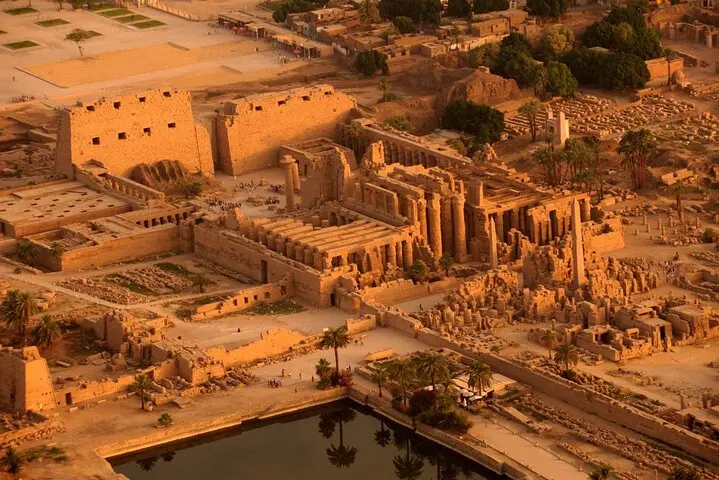
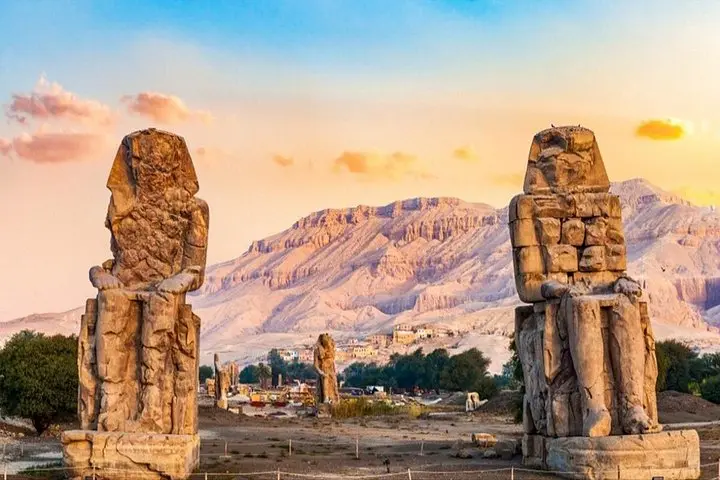
Your Egyptologist explains the iconography at Karnak, leads you along the painted corridors of the Valley of the Kings and points out Queen Hatshepsut’s terraces cut into the cliff at Deir el-Bahari. Stops include the Colossi of Memnon and a Nile-side lunch where river life moves at its own unhurried pace.
Practical guidance: this is a long day (expect early pickup and a 6–8 hour round trip drive total). Wear broken-in walking shoes for uneven floors and steps, carry at least 2 liters of water, and bring sun protection — shade is limited. Photography rules and ticketing vary by site; your guide manages permits and timing to avoid lines when possible. The private format gives flexibility: slow the pace at a favored tomb, or move on if heat or crowds rise. It’s a full, immersive day that pairs comfort with concentrated history.
Most principal site admissions (Valley of the Kings, Karnak, Hatshepsut) are included when noted; confirm with the operator which tickets are covered and if any special tombs require additional purchase.
Driving time is roughly 3–4 hours one-way depending on route and stops, so expect a full-day outing with 6–8 hours spent in transit overall.
Yes — it’s privately paced and physically easy overall, but it involves walking on uneven ground and climbing steps; inform the operator of mobility needs to adjust the itinerary.
Many tombs forbid flash; bring a camera with good low-light performance and ask your guide about restrictions before entering.
Saray El-Nile operates guided outdoor trips and adventures with an emphasis on safety, stewardship, and memorable experiences.
You wake before dawn in Marsa Alam and the desert pushes the car forward — wide plains sliding past as the driver follows a ribbon of asphalt toward the Nile. By mid-morning the air changes: palm-lined riverbanks replace ochre dunes and the silhouette of temple pylons appears on the horizon, heavy with time.
You wake before dawn in Marsa Alam and the desert pushes the car forward — wide plains sliding past as the driver follows a ribbon of asphalt toward the Nile. By mid-morning the air changes: palm-lined riverbanks replace ochre dunes and the silhouette of temple pylons appears on the horizon, heavy with time.
Luxor was the heart of ancient Thebes, the New Kingdom’s political and religious capital. Stone quarries and cliff faces around the valley reveal the geology that made these monuments possible — sandstone and limestone carved into tombs and temples that recorded pharaohs’ lives. Cultural layers accumulate here: tomb paintings that speak of the afterlife, mortuary temples honoring kings and queens, and modern villages still shaped by the Nile’s slow work.
Your Egyptologist explains the iconography at Karnak, leads you along the painted corridors of the Valley of the Kings and points out Queen Hatshepsut’s terraces cut into the cliff at Deir el-Bahari. Stops include the Colossi of Memnon and a Nile-side lunch where river life moves at its own unhurried pace.
Practical guidance: this is a long day (expect early pickup and a 6–8 hour round trip drive total). Wear broken-in walking shoes for uneven floors and steps, carry at least 2 liters of water, and bring sun protection — shade is limited. Photography rules and ticketing vary by site; your guide manages permits and timing to avoid lines when possible. The private format gives flexibility: slow the pace at a favored tomb, or move on if heat or crowds rise. It’s a full, immersive day that pairs comfort with concentrated history.