THE ADVENTURE COLLECTIVE® · Independent discovery and booking for outdoor travel

Swap Marrakech’s ochre lanes for Atlantic wind and wide beaches on a private full-day excursion to Essaouira. Explore the UNESCO medina, climb 18th-century ramparts and enjoy a port-side lunch while learning the town’s trading and musical heritage.
Swap Marrakech’s ochre lanes for Atlantic wind and wide beaches on a private full-day excursion to Essaouira. Explore the UNESCO medina, climb 18th-century ramparts and enjoy a port-side lunch while learning the town’s trading and musical heritage.
The day opens with Marrakech's dry heat behind you and the Atlantic breeze growing louder as the road unfurls west. By mid-morning the town of Essaouira appears: whitewashed houses, the blue of fishing boats, and the constant push of wind off the ocean that seems to rearrange the sand and the day's tempo.
Verified experiences and guided adventures in the surrounding area.
Operated by Morocco Tours 4x4 - Day Tours · Essaouira, Marrakech-Safi
The day opens with Marrakech's dry heat behind you and the Atlantic breeze growing louder as the road unfurls west. By mid-morning the town of Essaouira appears: whitewashed houses, the blue of fishing boats, and the constant push of wind off the ocean that seems to rearrange the sand and the day's tempo.
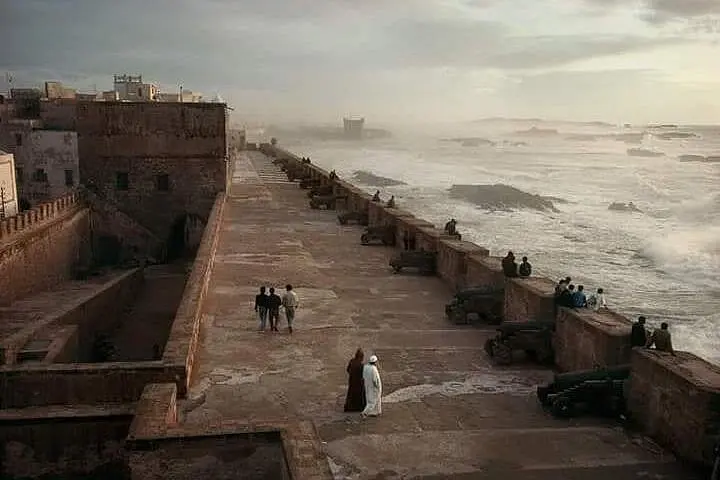
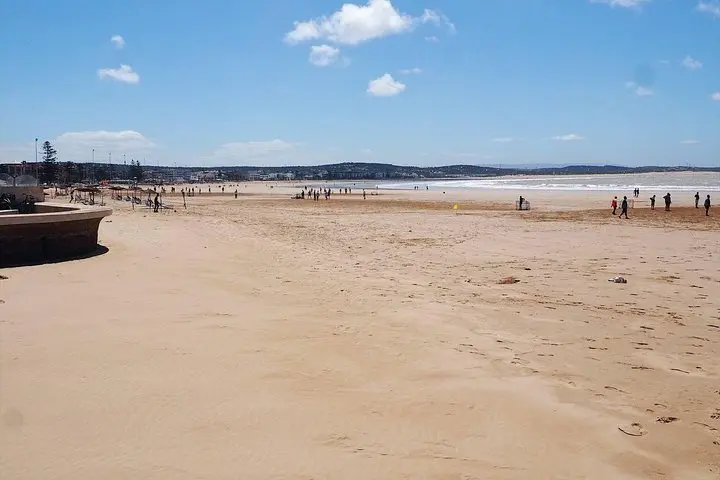
Essaouira—formerly Mogador—has been a strategic port since the 18th century when French military architect Théodore Cornut designed the ramparts to guard trade and fishing. The town sits at sea level on a craggy coast of wind-scoured dunes, low limestone outcrops and a broad sandy beach where kitesurfers and walkers test themselves against steady offshore gusts. Cultural threads here are thick: Gnawa music, thuya wood workshops, silversmiths and a medina laid out in grid-like streets that reflect its planned port origins.
Expect cobbled alleys, bustling souks selling argan oil and carved wood, and a lunchtime plate of grilled fish at the port—simple, fresh and a local rhythm. Practicalities: the private drive from Marrakech takes roughly 2.5–3 hours each way, so pack layers for wind and sun, and prepare for a lot of short on-foot explorations rather than long hikes.
Wear grippy shoes for uneven stone and sand, carry cash for small purchases, and keep sunscreen and a windbreaker handy. Guides handle logistics and local introductions, but comfortable pacing—stopping to listen to a street musician or climb the ramparts—makes the day. The reward is clear: a coastal town that trades Marrakech's heat for salty air, craftsmenship and Atlantic horizon views.
Typical drive time is about 2.5–3 hours each way depending on traffic and stops along the route.
Parts of the medina and ramparts have uneven cobbles and steps; some areas are navigable with assistance, but full access may be limited.
Swim conditions vary—strong winds and currents are common; swimming is possible in calm conditions but is not guaranteed or supervised on this tour.
Yes—lunch at the port is included, typically fresh grilled fish or seafood with local sides and bread, reflecting Essaouira's fishing heritage.
Morocco Tours 4x4 - Day Tours operates guided outdoor trips and adventures with an emphasis on safety, stewardship, and memorable experiences.
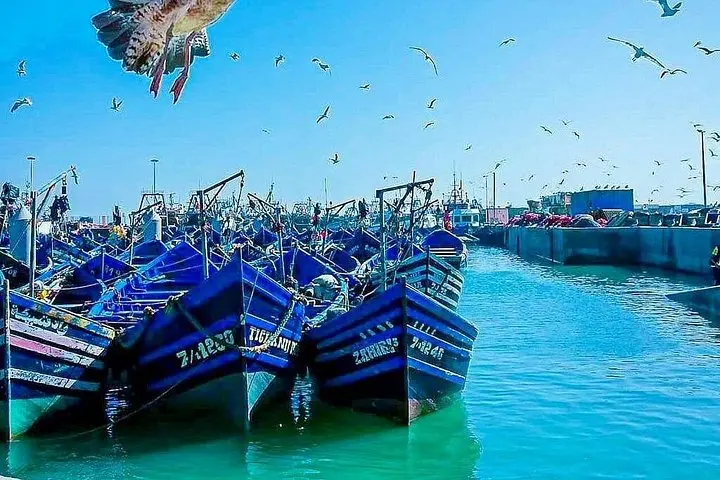

The day opens with Marrakech's dry heat behind you and the Atlantic breeze growing louder as the road unfurls west. By mid-morning the town of Essaouira appears: whitewashed houses, the blue of fishing boats, and the constant push of wind off the ocean that seems to rearrange the sand and the day's tempo.
The day opens with Marrakech's dry heat behind you and the Atlantic breeze growing louder as the road unfurls west. By mid-morning the town of Essaouira appears: whitewashed houses, the blue of fishing boats, and the constant push of wind off the ocean that seems to rearrange the sand and the day's tempo.
Essaouira—formerly Mogador—has been a strategic port since the 18th century when French military architect Théodore Cornut designed the ramparts to guard trade and fishing. The town sits at sea level on a craggy coast of wind-scoured dunes, low limestone outcrops and a broad sandy beach where kitesurfers and walkers test themselves against steady offshore gusts. Cultural threads here are thick: Gnawa music, thuya wood workshops, silversmiths and a medina laid out in grid-like streets that reflect its planned port origins.
Expect cobbled alleys, bustling souks selling argan oil and carved wood, and a lunchtime plate of grilled fish at the port—simple, fresh and a local rhythm. Practicalities: the private drive from Marrakech takes roughly 2.5–3 hours each way, so pack layers for wind and sun, and prepare for a lot of short on-foot explorations rather than long hikes.
Wear grippy shoes for uneven stone and sand, carry cash for small purchases, and keep sunscreen and a windbreaker handy. Guides handle logistics and local introductions, but comfortable pacing—stopping to listen to a street musician or climb the ramparts—makes the day. The reward is clear: a coastal town that trades Marrakech's heat for salty air, craftsmenship and Atlantic horizon views.