THE ADVENTURE COLLECTIVE® · Independent discovery and booking for outdoor travel

Walk from the Imperial Palace East Gardens through remnants of Edo Castle to the restored red-brick Tokyo Station. This 2½-hour guided route pairs samurai-era ruins and landscaped gardens with Marunouchi’s modern architecture.
Walk from the Imperial Palace East Gardens through remnants of Edo Castle to the restored red-brick Tokyo Station. This 2½-hour guided route pairs samurai-era ruins and landscaped gardens with Marunouchi’s modern architecture.
Morning light brushes the castle stones and the moat reflects a slice of sky as the group sets off from Wadakura Fountain Park. The walk moves with the city’s heartbeat — through quiet garden lanes, past remaining watchtowers, and into the corporate glass of Marunouchi before finishing beneath Tokyo Station’s restored red-brick façade.
Verified experiences and guided adventures in the surrounding area.
Operated by Reelu inc · Tokyo, Tokyo
Morning light brushes the castle stones and the moat reflects a slice of sky as the group sets off from Wadakura Fountain Park. The walk moves with the city’s heartbeat — through quiet garden lanes, past remaining watchtowers, and into the corporate glass of Marunouchi before finishing beneath Tokyo Station’s restored red-brick façade.
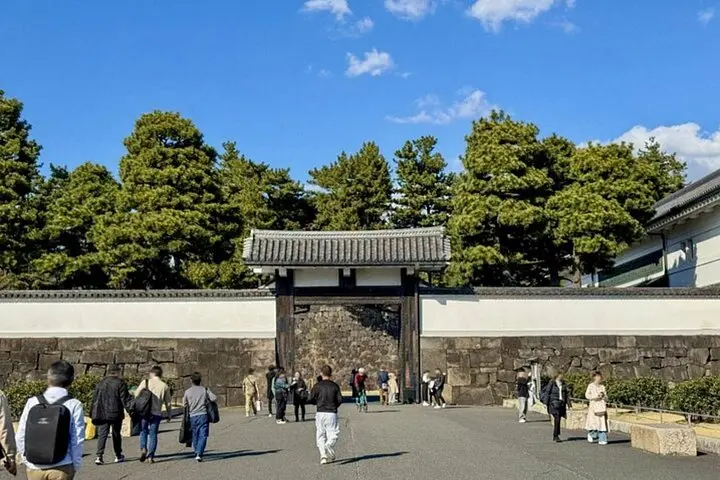
This route threads together Edo-period military engineering and Meiji- and Taishō-era modernization. Visitors will pass Ōte-mon Gate and the Hyakunin Bansho guardhouse, stand on the former main keep’s stone foundations, and find a model reconstructing the lost Tenshukaku. Geologically the area sits on Tokyo’s low alluvial plain; stone walls and moats were engineered to control water and protect the political center.
Culturally, the tour highlights samurai-era functions of space and how modern Tokyo layered commerce and design on top. Marunouchi’s plazas and art pieces contrast with Ninomaru’s carefully pruned trees and Suwa-no-chaya’s quiet trace.
Practical guidance: expect roughly 3–4 km of mostly flat, paved walking with negligible elevation gain, taking about 2½ hours. Surfaces are stroller- and wheelchair-friendly in many sections; public transit links at both ends make logistics simple. Morning or late afternoon reduces peak tourist crowds; spring plum and cherry bloom and autumn foliage provide the most visual payoff. Bring a refillable water bottle, light rain protection during the rainy season, and a camera — the Nijubashi and Tokyo Station are prime photo stops. The guided format adds historical context and keeps the route efficient while allowing time at key ruins and gardens.
The guided route covers about 3–4 km and runs roughly 2½ hours, including stops at gardens and ruins.
Much of the route is on paved paths and accessible, though some historic areas have stone surfaces — check with the tour operator for specific accessibility needs.
The tour visits public gardens and viewing points; the listed tour includes the guide but not any optional paid exhibits.
Spring (plum and cherry blossoms) and autumn (foliage) offer the most dramatic scenery; summer can be hot and rainy, winter is crisp and quieter.
Reelu inc operates guided outdoor trips and adventures with an emphasis on safety, stewardship, and memorable experiences.
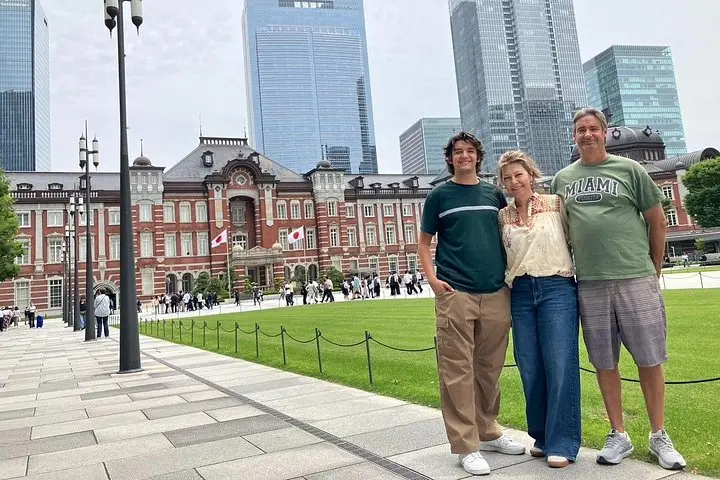
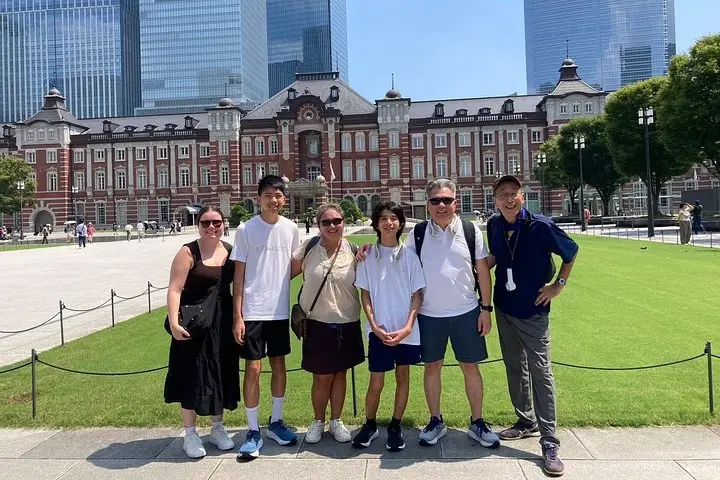
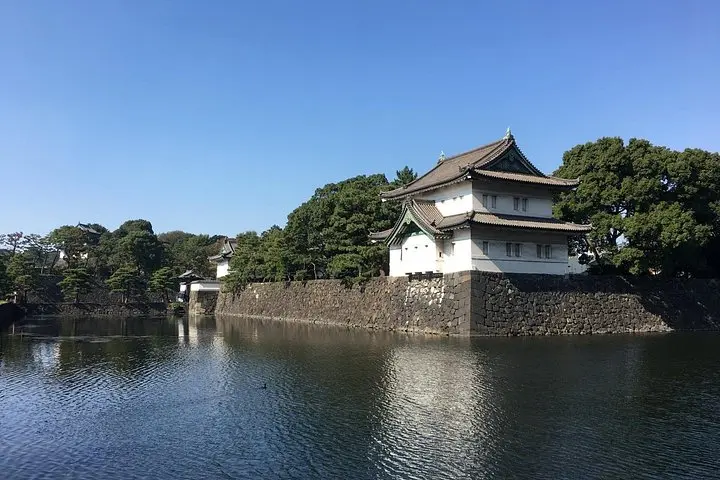
Morning light brushes the castle stones and the moat reflects a slice of sky as the group sets off from Wadakura Fountain Park. The walk moves with the city’s heartbeat — through quiet garden lanes, past remaining watchtowers, and into the corporate glass of Marunouchi before finishing beneath Tokyo Station’s restored red-brick façade.
Morning light brushes the castle stones and the moat reflects a slice of sky as the group sets off from Wadakura Fountain Park. The walk moves with the city’s heartbeat — through quiet garden lanes, past remaining watchtowers, and into the corporate glass of Marunouchi before finishing beneath Tokyo Station’s restored red-brick façade.
This route threads together Edo-period military engineering and Meiji- and Taishō-era modernization. Visitors will pass Ōte-mon Gate and the Hyakunin Bansho guardhouse, stand on the former main keep’s stone foundations, and find a model reconstructing the lost Tenshukaku. Geologically the area sits on Tokyo’s low alluvial plain; stone walls and moats were engineered to control water and protect the political center.
Culturally, the tour highlights samurai-era functions of space and how modern Tokyo layered commerce and design on top. Marunouchi’s plazas and art pieces contrast with Ninomaru’s carefully pruned trees and Suwa-no-chaya’s quiet trace.
Practical guidance: expect roughly 3–4 km of mostly flat, paved walking with negligible elevation gain, taking about 2½ hours. Surfaces are stroller- and wheelchair-friendly in many sections; public transit links at both ends make logistics simple. Morning or late afternoon reduces peak tourist crowds; spring plum and cherry bloom and autumn foliage provide the most visual payoff. Bring a refillable water bottle, light rain protection during the rainy season, and a camera — the Nijubashi and Tokyo Station are prime photo stops. The guided format adds historical context and keeps the route efficient while allowing time at key ruins and gardens.