THE ADVENTURE COLLECTIVE® · Independent discovery and booking for outdoor travel

Depart Port Said for a private, Egyptologist-led day that pairs the monumental Giza Plateau with the ancient innovations of Saqqara. This full-day tour combines expert interpretation, included site entrances, and local lunch with private transfers.
Depart Port Said for a private, Egyptologist-led day that pairs the monumental Giza Plateau with the ancient innovations of Saqqara. This full-day tour combines expert interpretation, included site entrances, and local lunch with private transfers.
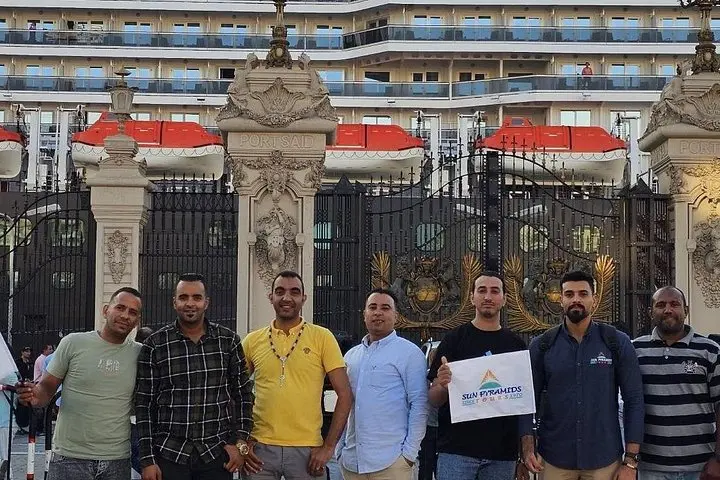
The morning light on the Nile Delta peels back like a curtain as a private vehicle departs Port Said, the Mediterranean port giving way to scrub, villages and the rising silhouette of the Giza Plateau.
Verified experiences and guided adventures in the surrounding area.
Operated by Sun Pyramids Tours · Giza, Giza Governorate
The morning light on the Nile Delta peels back like a curtain as a private vehicle departs Port Said, the Mediterranean port giving way to scrub, villages and the rising silhouette of the Giza Plateau.
Arriving at Giza, the stones shift scale: Cheops’ Great Pyramid sits on bedrock of Eocene limestone, its geometry exact enough to still draw engineers’ curiosity. A private Egyptologist guides guests through the Giza complex — Cheops, Chephren and Mykerinos — and the Valley Temple, where dressed granite blocks and ancient mortuary routes make the ceremonial logic of the site tangible.
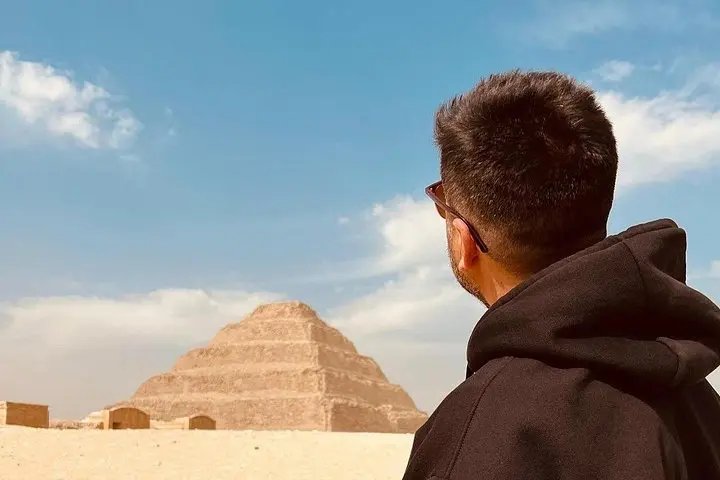
Later the tour moves south to Saqqara, home of Djoser’s Step Pyramid, the first large-scale stone edifice in human history and a clear architectural pivot from mudbrick tombs to monumental stone. The Sakkara necropolis offers mastabas and burial shafts that illuminate evolving funerary practice and royal ideology across the Old Kingdom.
Cultural notes: expect conversations about quarrying, labor organization and the papyrus trade; there’s a stop at a Papyrus Institute for artisan-made souvenirs and a local lunch that introduces Egyptian staples like ful and koshari.
Practical guidance: the full-day itinerary runs roughly 12 hours with a three-hour transfer each way; entrance fees are included except the optional Great Pyramid interior ticket. Bring sun protection and steady walking shoes for uneven stone and sand. Plan for early starts in summer to avoid peak heat, carry cash for tipping and small purchases, and follow your guide’s instructions to minimize wear on fragile monuments.
Most site entrance fees are included in this tour, but the optional ticket to enter the Great Pyramid’s interior is purchased on-site.
The operator lists wheelchair accessibility, but some ancient areas have uneven paths—notify the company ahead to arrange suitable pickup and route planning.
Expect approximately a three-hour transfer each way depending on traffic and ship scheduling, making this a full 12-hour day.
Yes—tipping is customary. Bring small bills in Egyptian pounds to tip your Egyptologist guide and driver directly.
Sun Pyramids Tours operates guided outdoor trips and adventures with an emphasis on safety, stewardship, and memorable experiences.


The morning light on the Nile Delta peels back like a curtain as a private vehicle departs Port Said, the Mediterranean port giving way to scrub, villages and the rising silhouette of the Giza Plateau.
The morning light on the Nile Delta peels back like a curtain as a private vehicle departs Port Said, the Mediterranean port giving way to scrub, villages and the rising silhouette of the Giza Plateau.
Arriving at Giza, the stones shift scale: Cheops’ Great Pyramid sits on bedrock of Eocene limestone, its geometry exact enough to still draw engineers’ curiosity. A private Egyptologist guides guests through the Giza complex — Cheops, Chephren and Mykerinos — and the Valley Temple, where dressed granite blocks and ancient mortuary routes make the ceremonial logic of the site tangible.
Later the tour moves south to Saqqara, home of Djoser’s Step Pyramid, the first large-scale stone edifice in human history and a clear architectural pivot from mudbrick tombs to monumental stone. The Sakkara necropolis offers mastabas and burial shafts that illuminate evolving funerary practice and royal ideology across the Old Kingdom.
Cultural notes: expect conversations about quarrying, labor organization and the papyrus trade; there’s a stop at a Papyrus Institute for artisan-made souvenirs and a local lunch that introduces Egyptian staples like ful and koshari.
Practical guidance: the full-day itinerary runs roughly 12 hours with a three-hour transfer each way; entrance fees are included except the optional Great Pyramid interior ticket. Bring sun protection and steady walking shoes for uneven stone and sand. Plan for early starts in summer to avoid peak heat, carry cash for tipping and small purchases, and follow your guide’s instructions to minimize wear on fragile monuments.