THE ADVENTURE COLLECTIVE® · Independent discovery and booking for outdoor travel

A single day that stitches 3,000 years of Egyptian engineering — from Ramses II’s Abu Simbel to the Unfinished Obelisk and the modern Aswan High Dam. Expect long drives, sweeping desert light, and concentrated history at three very different monuments.
A single day that stitches 3,000 years of Egyptian engineering — from Ramses II’s Abu Simbel to the Unfinished Obelisk and the modern Aswan High Dam. Expect long drives, sweeping desert light, and concentrated history at three very different monuments.
You climb into a private, air-conditioned car before sunrise and the desert light thins into a long ribbon ahead. The Nile dares you with its slow authority as the highway unspools 280 km (175 miles) toward Abu Simbel, where four colossal seated figures of Ramses II watch the horizon.
Verified experiences and guided adventures in the surrounding area.
Operated by Eyes of Egypt · Aswan, Aswan Governorate
You climb into a private, air-conditioned car before sunrise and the desert light thins into a long ribbon ahead. The Nile dares you with its slow authority as the highway unspools 280 km (175 miles) toward Abu Simbel, where four colossal seated figures of Ramses II watch the horizon.
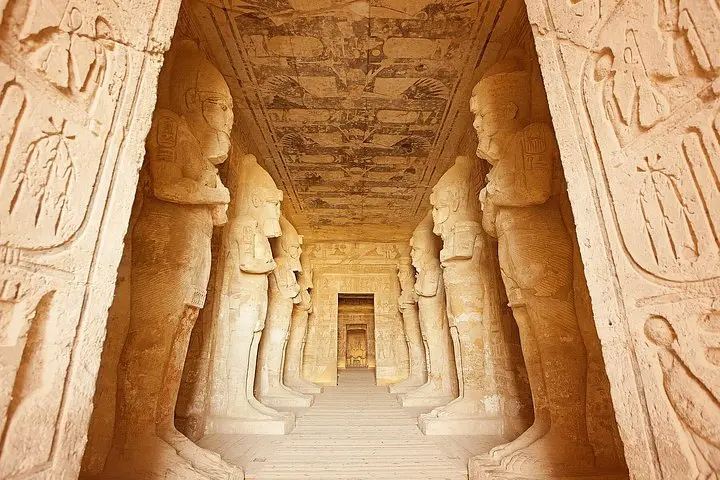
The day moves from carved stone to quarry and concrete: Abu Simbel’s twin rock temples (13th century BC) showcase pharaonic scale and precise astronomy; the Unfinished Obelisk in the Aswan granite quarry freezes ancient quarrying techniques mid‑process at roughly 42 meters and some 1,200 tons; the Aswan High Dam — 3,830 m long and 111 m high — reveals modern Egypt’s reshaping of the Nile and creation of Lake Nasser.
Geology and culture are on display — granite born in deep crustal processes, monuments tied to royal ideology, and 20th‑century engineering that changed farming, fishing, and settlement patterns upstream.
Practically, expect a long day: plan for a 10–11 hour outing with about three-hour drives each way and guided stops of 60–180 minutes. Bring sun protection, refillable water, lightweight layers for the breeze on Lake Nasser, and a camera with spare battery. Mobility access exists at many stops, but ask about specifics if you need assistance. Choose Gold or Platinum for an on-site guide who turns carved reliefs into stories and shortens waits with pre-planned logistics.
The rhythm of the trip is patient — long travel punctuated by sudden, unforgettable scale — and it rewards anyone who wants to read Egyptian technology across millennia in a single, carefully paced day.
Expect about 3 hours each way for the 280 km (175 mi) drive, typically including brief rest stops.
Some packages include entrance tickets (Platinum); check your chosen option — Gold often provides guided commentary without pre-paid tickets.
Many sites offer wheelchair-accessible paths and transportation is accessible, but check with the operator for site-specific assistance and vehicle configuration.
Yes, but logistics are lengthy; many travelers prefer organized transfers or private tours to handle permits, timing, and long-distance driving.
Eyes of Egypt operates guided outdoor trips and adventures with an emphasis on safety, stewardship, and memorable experiences.
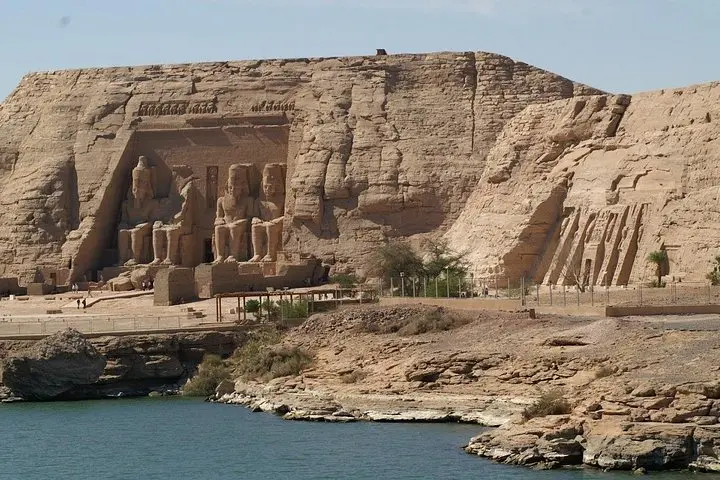
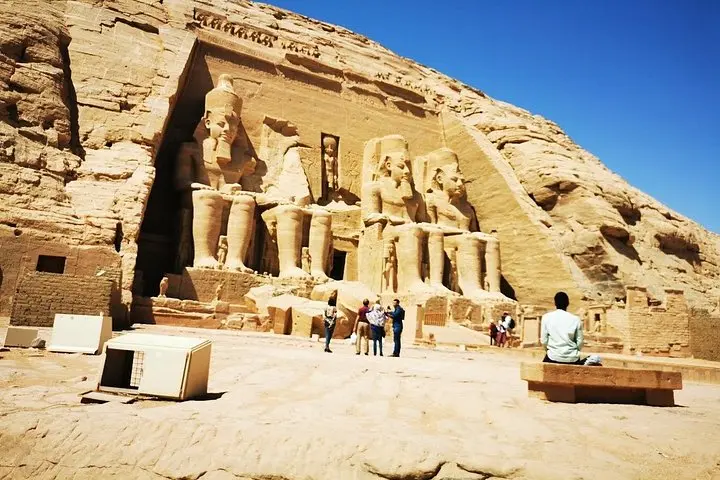
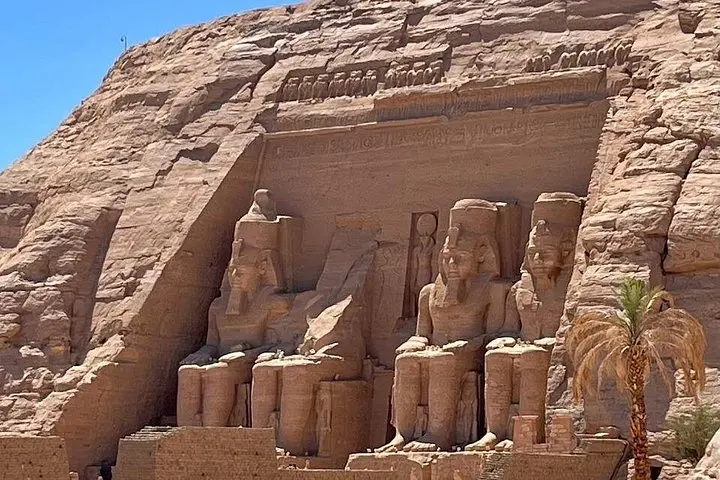
You climb into a private, air-conditioned car before sunrise and the desert light thins into a long ribbon ahead. The Nile dares you with its slow authority as the highway unspools 280 km (175 miles) toward Abu Simbel, where four colossal seated figures of Ramses II watch the horizon.
You climb into a private, air-conditioned car before sunrise and the desert light thins into a long ribbon ahead. The Nile dares you with its slow authority as the highway unspools 280 km (175 miles) toward Abu Simbel, where four colossal seated figures of Ramses II watch the horizon.
The day moves from carved stone to quarry and concrete: Abu Simbel’s twin rock temples (13th century BC) showcase pharaonic scale and precise astronomy; the Unfinished Obelisk in the Aswan granite quarry freezes ancient quarrying techniques mid‑process at roughly 42 meters and some 1,200 tons; the Aswan High Dam — 3,830 m long and 111 m high — reveals modern Egypt’s reshaping of the Nile and creation of Lake Nasser.
Geology and culture are on display — granite born in deep crustal processes, monuments tied to royal ideology, and 20th‑century engineering that changed farming, fishing, and settlement patterns upstream.
Practically, expect a long day: plan for a 10–11 hour outing with about three-hour drives each way and guided stops of 60–180 minutes. Bring sun protection, refillable water, lightweight layers for the breeze on Lake Nasser, and a camera with spare battery. Mobility access exists at many stops, but ask about specifics if you need assistance. Choose Gold or Platinum for an on-site guide who turns carved reliefs into stories and shortens waits with pre-planned logistics.
The rhythm of the trip is patient — long travel punctuated by sudden, unforgettable scale — and it rewards anyone who wants to read Egyptian technology across millennia in a single, carefully paced day.