THE ADVENTURE COLLECTIVE® · Independent discovery and booking for outdoor travel

Walk Jabal Shada with Bu Kinaz to trace childhood paths, visit an old school, and taste farm-roasted Qahwah. This easy cultural hike blends geology, local coffee traditions, and a shared village lunch.
Walk Jabal Shada with Bu Kinaz to trace childhood paths, visit an old school, and taste farm-roasted Qahwah. This easy cultural hike blends geology, local coffee traditions, and a shared village lunch.
The trail opens with the smell of wet earth and roasting beans as the group slips into a cedar-and-acacia forest on the slopes of Jabal Shada. Sunlight fragments through the canopy; Bu Kinaz walks ahead, pointing out a carved stone where he once rested, a moss-darkened spring that still murmurs, and the narrow path children used to race down toward the abandoned schoolhouse.
Verified experiences and guided adventures in the surrounding area.
Operated by 365 Adventures · Al-Baha, Al Bahah
The trail opens with the smell of wet earth and roasting beans as the group slips into a cedar-and-acacia forest on the slopes of Jabal Shada. Sunlight fragments through the canopy; Bu Kinaz walks ahead, pointing out a carved stone where he once rested, a moss-darkened spring that still murmurs, and the narrow path children used to race down toward the abandoned schoolhouse.
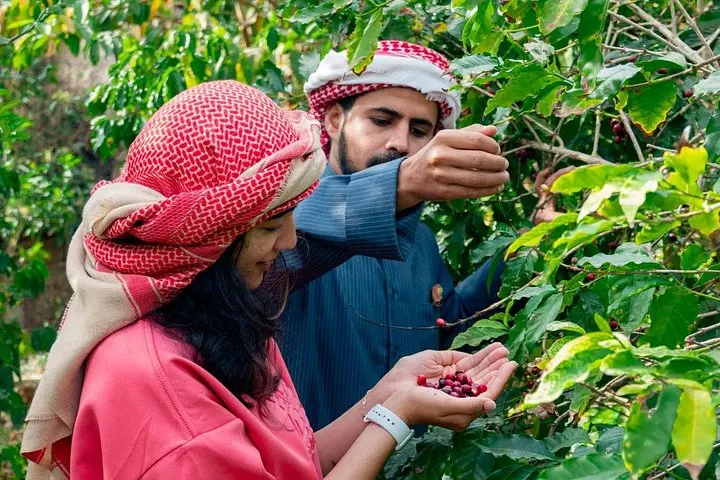
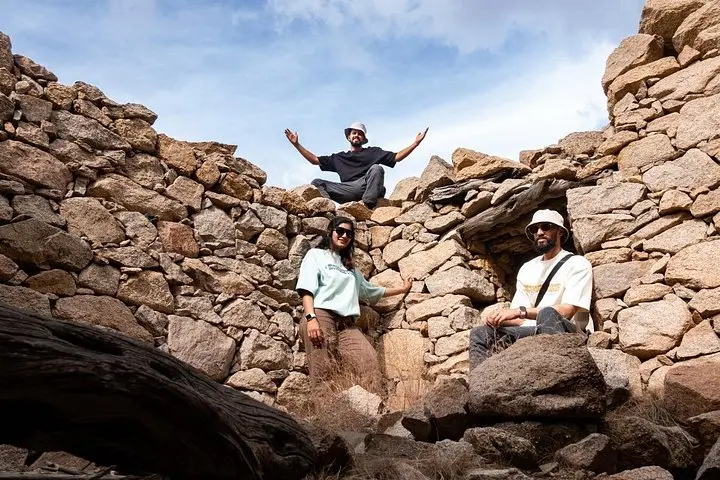
This landscape is part of Al Bahah’s highland rim, formed by uplifted Tertiary rocks and sculpted by seasonal runoff into terraces and caves. Stone houses here use local schist and volcanic outcrops; the village’s coffee heritage ties a living crop—Arabica cultivated on small plots—to a history of household trade and social ritual. Cultural fragments—old school timetables, fruit trees marked by generations—surface between geological shelves.
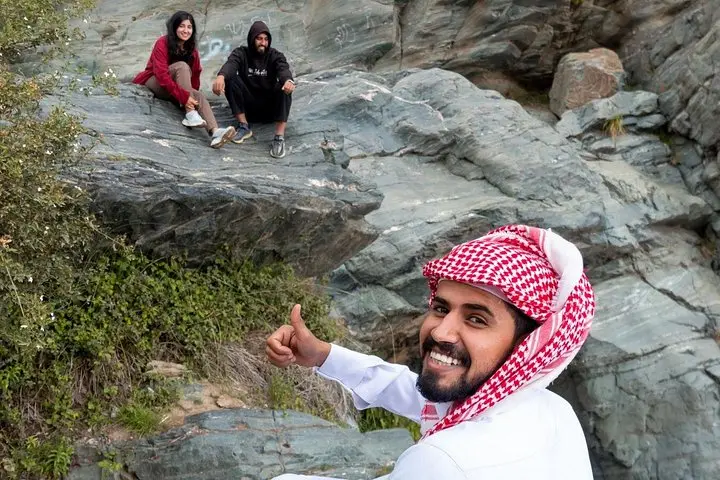
Expect steady, easy walking on packed dirt and rocky spur trails, punctuated by short steep pitches and viewpoints with broad valley vistas. The hike is as much about conversation as distance: stories, traditional Qahwah, and a communal lunch prepared from local produce make the route a social loop from trail to table.
Practical notes: wear grippy hiking shoes for loose scree, carry at least 1–2 liters of water, and layer for wind on exposed ridges. Morning starts keep temperatures cool and light levels clean for photos. Be prepared to follow narrow paths and to leave no trace—these villages rely on fragile terraces and local water sources.
The experience runs about six hours total and is rated easy—mostly steady walking with a few short, steeper pitches suitable for most abilities.
Yes—participants share traditional Qahwah and a local lunch sourced from the farm and village as part of the tour.
Yes; the route is family-friendly, but participants should be comfortable on uneven ground and able to walk several hours with breaks.
Facilities are limited; plan accordingly and use offerings at the farm or village stops when available.
365 Adventures operates guided outdoor trips and adventures with an emphasis on safety, stewardship, and memorable experiences.
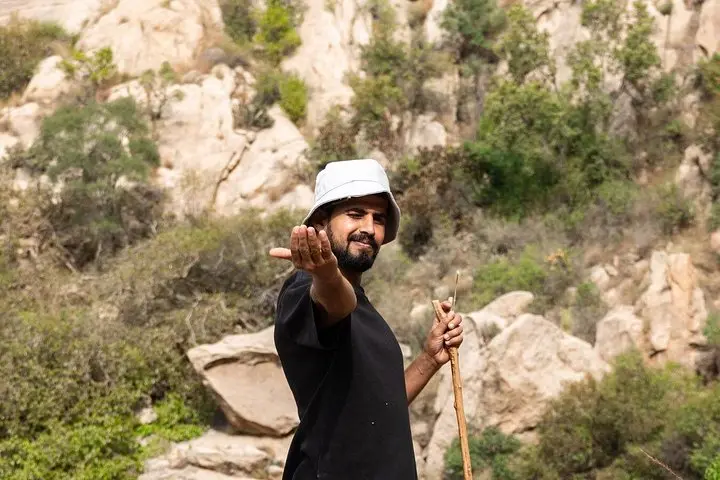
The trail opens with the smell of wet earth and roasting beans as the group slips into a cedar-and-acacia forest on the slopes of Jabal Shada. Sunlight fragments through the canopy; Bu Kinaz walks ahead, pointing out a carved stone where he once rested, a moss-darkened spring that still murmurs, and the narrow path children used to race down toward the abandoned schoolhouse.
The trail opens with the smell of wet earth and roasting beans as the group slips into a cedar-and-acacia forest on the slopes of Jabal Shada. Sunlight fragments through the canopy; Bu Kinaz walks ahead, pointing out a carved stone where he once rested, a moss-darkened spring that still murmurs, and the narrow path children used to race down toward the abandoned schoolhouse.
This landscape is part of Al Bahah’s highland rim, formed by uplifted Tertiary rocks and sculpted by seasonal runoff into terraces and caves. Stone houses here use local schist and volcanic outcrops; the village’s coffee heritage ties a living crop—Arabica cultivated on small plots—to a history of household trade and social ritual. Cultural fragments—old school timetables, fruit trees marked by generations—surface between geological shelves.
Expect steady, easy walking on packed dirt and rocky spur trails, punctuated by short steep pitches and viewpoints with broad valley vistas. The hike is as much about conversation as distance: stories, traditional Qahwah, and a communal lunch prepared from local produce make the route a social loop from trail to table.
Practical notes: wear grippy hiking shoes for loose scree, carry at least 1–2 liters of water, and layer for wind on exposed ridges. Morning starts keep temperatures cool and light levels clean for photos. Be prepared to follow narrow paths and to leave no trace—these villages rely on fragile terraces and local water sources.