THE ADVENTURE COLLECTIVE® · Independent discovery and booking for outdoor travel

A private guided day from Zagreb to Zadar puts you on the boardwalks above Plitvice’s travertine lakes and waterfalls—UNESCO-listed, geologically active and ideal for photography. This one-way transfer-and-tour pairs efficient logistics with time to explore the park’s best viewpoints.
A private guided day from Zagreb to Zadar puts you on the boardwalks above Plitvice’s travertine lakes and waterfalls—UNESCO-listed, geologically active and ideal for photography. This one-way transfer-and-tour pairs efficient logistics with time to explore the park’s best viewpoints.
You step off the minivan and the air changes—cool, green, and edged with the mineral tang of limestone. A ribbon of boardwalk unfurls ahead, leading across water that is impossibly clear and colored in bands of turquoise, jade and deep blue. That first wooden plank creaks underfoot like a welcome; the falls are already speaking, a steady conversation of water over travertine.
Verified experiences and guided adventures in the surrounding area.
Operated by Budget Transfer Croatia · Plitvička Jezera, Lika-Senj County
You step off the minivan and the air changes—cool, green, and edged with the mineral tang of limestone. A ribbon of boardwalk unfurls ahead, leading across water that is impossibly clear and colored in bands of turquoise, jade and deep blue. That first wooden plank creaks underfoot like a welcome; the falls are already speaking, a steady conversation of water over travertine.
Plitvice Lakes National Park reads like a living geology lesson. Over tens of thousands of years calcium-rich waters have built travertine dams, carving a stairway of 16 terraced lakes and dozens of waterfalls. In 1979 UNESCO declared the park a World Heritage Site—recognition of both its unique geology and mature beech forest that supports bears, wolves and rare birds.
The route most private guided tours follow threads through the Upper and Lower Lakes: circuits of boardwalks, stepped stone paths and short stair climbs that reveal sudden panoramas. Your guide points out the slow work of the karst—how springs, moss and seasonal floods cemented barriers that keep the lakes separate and ever-changing. Cultural touches appear in small ways: local shepherding practiced on nearby slopes, the austere stone houses of Lika-Senj County, and the coastal pull of Zadar where many travelers continue their journey—some because, as Alfred Hitchcock noted, the sunset there arrests the day.
Practically speaking, this is a day designed for movement and viewing. Expect roughly 3–6 miles of walking depending on the itinerary, with modest elevation gain (often under 150 meters) but many stairs and uneven surfaces. Trails are a mix of wooden boardwalks—slick when wet—gravel paths and carved stone. Guides handle logistics: timed park entry, a possible Kozjak boat crossing, and a transfer that continues on to Zadar by late afternoon.
Tips that make the day smoother: arrive early to dodge the crowds and see the light pooling on the lower lakes; wear supportive footwear with grip for wet boards; carry a refillable water bottle and rain shell; and bring a compact daypack—there’s little shade on exposed stretches. If wildlife is on your wish list, keep quiet near forest edges at dawn or dusk; sightings are infrequent but authentic.
The private format matters—more flexibility for photography stops, a pace set to your group, and the convenience of hotel pickup in Zagreb and a one-way drop in Zadar. Whether you arrive from the capital or are en route to the Adriatic, a guided stop at Plitvice condenses the park’s geological drama into a single, memorable day.
The tour includes approximately 3 hours inside the park as part of a 7‑hour private transfer from Zagreb to Zadar—enough time for a guided circuit of the major viewpoints.
Park admission is not listed as included—confirm with the operator before travel and purchase tickets in advance during high season.
Trails include stairs and uneven sections; children and older guests should be able to walk several miles or consider shorter routes and frequent rests.
This is a private tour, so guides typically allow flexibility for photography stops within the schedule and park rules.
Swimming in Plitvice Lakes is prohibited to protect the travertine formations and water quality—respect all park regulations.
Most itineraries include a short break; bring snacks or plan a quick meal at the park’s designated visitor facilities between circuits.
Budget Transfer Croatia operates guided outdoor trips and adventures with an emphasis on safety, stewardship, and memorable experiences.

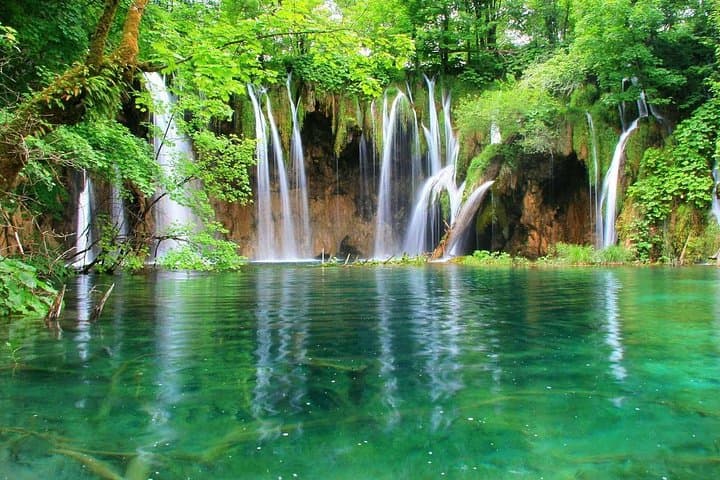
You step off the minivan and the air changes—cool, green, and edged with the mineral tang of limestone. A ribbon of boardwalk unfurls ahead, leading across water that is impossibly clear and colored in bands of turquoise, jade and deep blue. That first wooden plank creaks underfoot like a welcome; the falls are already speaking, a steady conversation of water over travertine.
You step off the minivan and the air changes—cool, green, and edged with the mineral tang of limestone. A ribbon of boardwalk unfurls ahead, leading across water that is impossibly clear and colored in bands of turquoise, jade and deep blue. That first wooden plank creaks underfoot like a welcome; the falls are already speaking, a steady conversation of water over travertine.
Plitvice Lakes National Park reads like a living geology lesson. Over tens of thousands of years calcium-rich waters have built travertine dams, carving a stairway of 16 terraced lakes and dozens of waterfalls. In 1979 UNESCO declared the park a World Heritage Site—recognition of both its unique geology and mature beech forest that supports bears, wolves and rare birds.
The route most private guided tours follow threads through the Upper and Lower Lakes: circuits of boardwalks, stepped stone paths and short stair climbs that reveal sudden panoramas. Your guide points out the slow work of the karst—how springs, moss and seasonal floods cemented barriers that keep the lakes separate and ever-changing. Cultural touches appear in small ways: local shepherding practiced on nearby slopes, the austere stone houses of Lika-Senj County, and the coastal pull of Zadar where many travelers continue their journey—some because, as Alfred Hitchcock noted, the sunset there arrests the day.
Practically speaking, this is a day designed for movement and viewing. Expect roughly 3–6 miles of walking depending on the itinerary, with modest elevation gain (often under 150 meters) but many stairs and uneven surfaces. Trails are a mix of wooden boardwalks—slick when wet—gravel paths and carved stone. Guides handle logistics: timed park entry, a possible Kozjak boat crossing, and a transfer that continues on to Zadar by late afternoon.
Tips that make the day smoother: arrive early to dodge the crowds and see the light pooling on the lower lakes; wear supportive footwear with grip for wet boards; carry a refillable water bottle and rain shell; and bring a compact daypack—there’s little shade on exposed stretches. If wildlife is on your wish list, keep quiet near forest edges at dawn or dusk; sightings are infrequent but authentic.
The private format matters—more flexibility for photography stops, a pace set to your group, and the convenience of hotel pickup in Zagreb and a one-way drop in Zadar. Whether you arrive from the capital or are en route to the Adriatic, a guided stop at Plitvice condenses the park’s geological drama into a single, memorable day.