THE ADVENTURE COLLECTIVE® · Independent discovery and booking for outdoor travel

In one long day from Marrakech you cross rocky Agafay plains, high Atlas foothills and stop in living Berber villages for a taste of local life. This practical guide tells you what to expect, how to prepare, and where the best photos and markets are.
In one long day from Marrakech you cross rocky Agafay plains, high Atlas foothills and stop in living Berber villages for a taste of local life. This practical guide tells you what to expect, how to prepare, and where the best photos and markets are.
Morning light breaks over a scrubbed, rocky plain as the van slips out of Marrakech and into open country. The Agafay Desert unfolds like a stony sea; camels pace at the edge of dunes carved by wind and time, and Atlas foothills silhouette against a wide sky. By midmorning the road climbs, passing terraced farms and flat-roofed stone villages where smoke from cooking fires threads upward.
Verified experiences and guided adventures in the surrounding area.
Operated by Art de Cuivre Travel · Marrakech, Marrakech-Safi
Morning light breaks over a scrubbed, rocky plain as the van slips out of Marrakech and into open country. The Agafay Desert unfolds like a stony sea; camels pace at the edge of dunes carved by wind and time, and Atlas foothills silhouette against a wide sky. By midmorning the road climbs, passing terraced farms and flat-roofed stone villages where smoke from cooking fires threads upward.
This one-day route stitches together geology and culture: the Agafay is a rain-sculpted rocky desert on the Haouz plain, while the High Atlas is young, uplifted rock that throws sharp valleys like the Imlil drainage. For centuries Amazigh (Berber) communities have farmed those slopes, trading at weekly souks in Asni, Amizmiz and Tahnaout. Lunch in a Tnirt house gives a direct look at domestic life — tagine, mint tea and layered storytelling — and a camel ride offers a human-scale way to read the desert’s contours.
Practical guidance: expect a full 8-hour day with significant time in a vehicle; walks are short but on uneven paths. Bring sun protection, plenty of water and sturdy shoes for village footsteps. Timing matters — mornings and late afternoons are cooler and best for photos; the desert stores daytime heat and releases it at dusk. Respect private homes during village visits, ask before photographing people, and check pickup details with your operator. This trip blends easy logistics with landscape variety: a compact sampler of south Morocco’s mountains, villages and arid views that rewards curiosity more than endurance.
Yes—most operators include round-trip pickup from central Marrakech hotels; confirm your exact pickup time and location at booking.
Walks are short and on uneven village tracks; no technical hiking is required but wear stable shoes.
Camel rides are usually calm and guided; operators often provide assistance and safety briefings—check age limits with your provider.
Bring Moroccan dirhams for markets, tips and small purchases; ATMs in Marrakech provide cash before departure.
Art de Cuivre Travel operates guided outdoor trips and adventures with an emphasis on safety, stewardship, and memorable experiences.
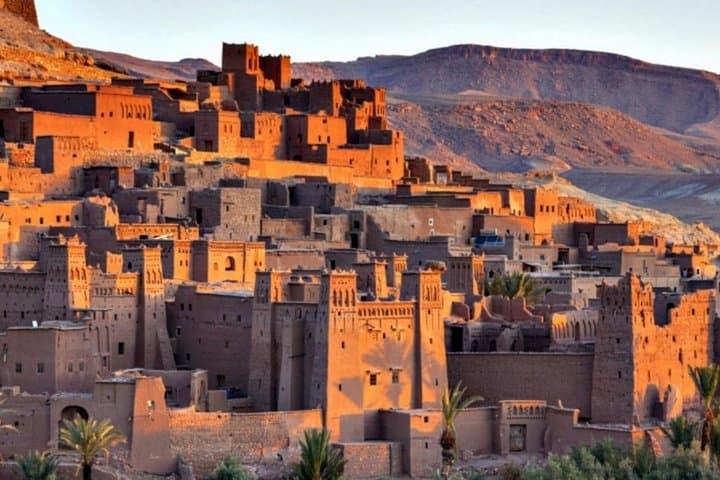


Morning light breaks over a scrubbed, rocky plain as the van slips out of Marrakech and into open country. The Agafay Desert unfolds like a stony sea; camels pace at the edge of dunes carved by wind and time, and Atlas foothills silhouette against a wide sky. By midmorning the road climbs, passing terraced farms and flat-roofed stone villages where smoke from cooking fires threads upward.
Morning light breaks over a scrubbed, rocky plain as the van slips out of Marrakech and into open country. The Agafay Desert unfolds like a stony sea; camels pace at the edge of dunes carved by wind and time, and Atlas foothills silhouette against a wide sky. By midmorning the road climbs, passing terraced farms and flat-roofed stone villages where smoke from cooking fires threads upward.
This one-day route stitches together geology and culture: the Agafay is a rain-sculpted rocky desert on the Haouz plain, while the High Atlas is young, uplifted rock that throws sharp valleys like the Imlil drainage. For centuries Amazigh (Berber) communities have farmed those slopes, trading at weekly souks in Asni, Amizmiz and Tahnaout. Lunch in a Tnirt house gives a direct look at domestic life — tagine, mint tea and layered storytelling — and a camel ride offers a human-scale way to read the desert’s contours.
Practical guidance: expect a full 8-hour day with significant time in a vehicle; walks are short but on uneven paths. Bring sun protection, plenty of water and sturdy shoes for village footsteps. Timing matters — mornings and late afternoons are cooler and best for photos; the desert stores daytime heat and releases it at dusk. Respect private homes during village visits, ask before photographing people, and check pickup details with your operator. This trip blends easy logistics with landscape variety: a compact sampler of south Morocco’s mountains, villages and arid views that rewards curiosity more than endurance.