
Full-Day Ait Ben Haddou & Ouarzazate Tour from Marrakech — Kasbahs, Atlas Pass and Desert Gateways
Drive over the High Atlas to Aït Ben Haddou and Ouarzazate on a 12-hour cultural and landscape tour. Walk the ksar’s clay lanes, cross Tizi n'Tichka pass and glimpse the desert fringe while learning about caravan history and local life.
An Adventure In Marrakech.
Drive over the High Atlas to Aït Ben Haddou and Ouarzazate on a 12-hour cultural and landscape tour. Walk the ksar’s clay lanes, cross Tizi n'Tichka pass and glimpse the desert fringe while learning about caravan history and local life.
Read the full experience
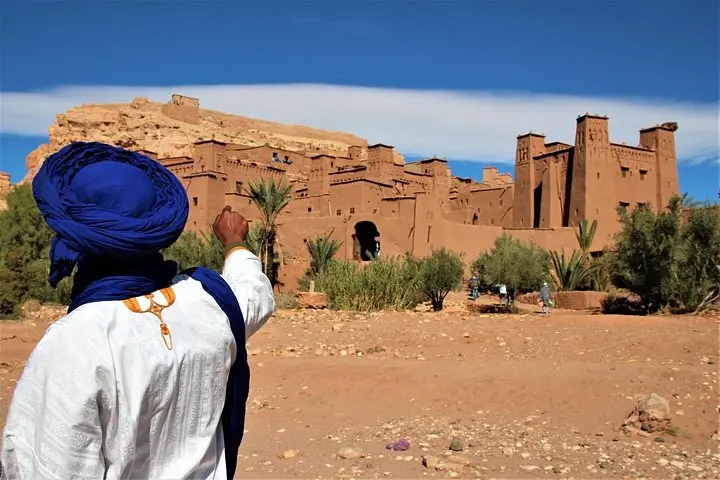
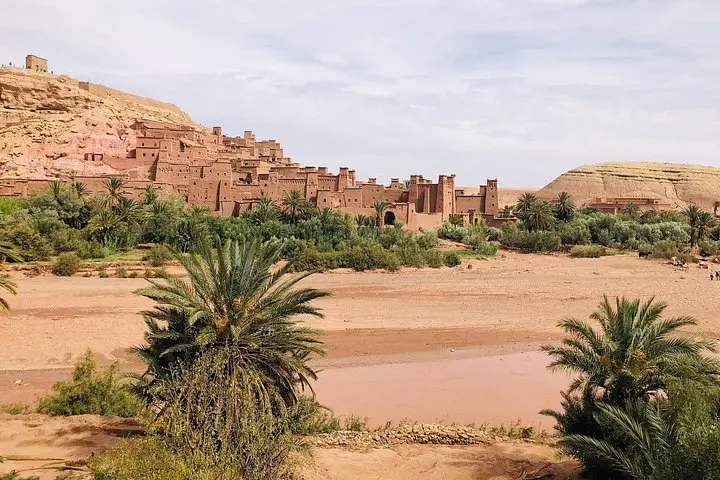
A low sun slices the High Atlas as the road climbs toward Tizi n'Tichka; the van hums and the landscape changes from red ochre plains to wind-sculpted passes. By mid-morning the earthen walls of Aït Ben Haddou appear on a bend—clay towers rising from the riverbank like a village carved from the earth itself. You step out onto stone steps worn by centuries of traders and film crews.
A low sun slices the High Atlas as the road climbs toward Tizi n'Tichka; the van hums and the landscape changes from red ochre plains to wind-sculpted passes. By mid-morning the earthen walls of Aït Ben Haddou appear on a bend—clay towers rising from the riverbank like a village carved from the earth itself. You step out onto stone steps worn by centuries of traders and film crews.
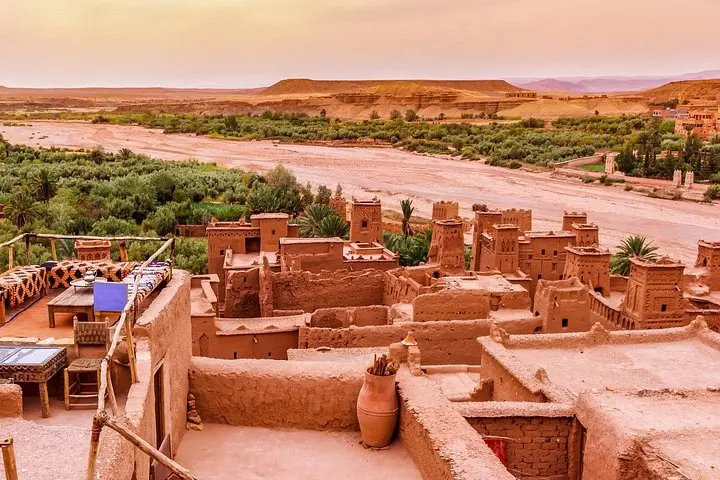
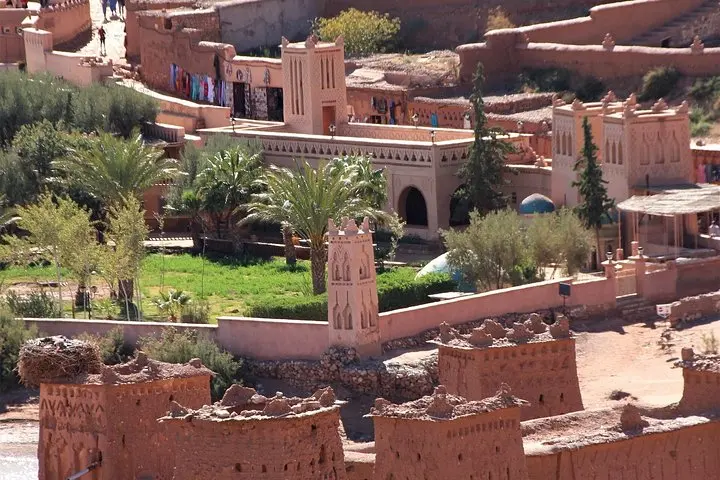
This route follows parts of the old caravan trail that linked Marrakech to the Sahara. Aït Ben Haddou is a ksar—a cluster of fortified houses—and a UNESCO World Heritage Site notable for its rammed-earth architecture. Further along, the Telouet Kasbah traces the wealth and decline of the Glaoui family; the Tizi n'Tichka pass (about 2,260 m) cuts through folded, volcanic and sedimentary Atlas geology that records tectonic uplift and erosion.
Local culture here blends Amazigh (Berber) traditions, palm-grove agriculture and a modern tourism economy that includes film studios around Ouarzazate. Expect short, steep village climbs, dusty alleys and wide desert light—elements that have drawn filmmakers for decades.
Practical guidance: the round trip covers roughly 360 km and is a full 12-hour day—plan for long stretches in the vehicle and several short walks over uneven stone. Carry 2–3 liters of water, sun protection, comfortable closed-toe shoes and a light wind layer for higher elevations. Bring cash for small-site fees or local vendors, and aim to visit early or late in the day to avoid peak heat. The tour suits travelers comfortable with long drives who want a compact mix of culture, geology and desert access in one day.
Frequently asked questions
The road distance is about 180 km one-way; with stops the full round-trip tour generally takes about 12 hours.
Walking involves short climbs on stone steps and alleys inside the ksar; it's manageable for most but not suitable for those with serious mobility limitations.
Check your booking details—this tour commonly includes transport and pickup, but small local site fees or optional guided entrance fees may be extra and paid in cash.
Spring and fall offer mild temperatures and good light for photography; summers are hot in the valleys while winters bring cool nights and possible chill at higher elevations.
About This Experience
Morocco SM Tours operates guided outdoor trips and adventures with an emphasis on safety, stewardship, and memorable experiences.
Adventure tips
Recommended gear
- Closed-toe hiking shoes: Provide traction and protection on uneven stone steps and dusty paths.
- Water bottle (2–3L capacity): Keeps you hydrated through long drives and desert-adjacent walks.
- Sun protection (hat, sunscreen, sunglasses): Protects skin and eyes from intense sun on exposed stretches and in the valley.
- Light wind layer: Useful for cooler temperatures on the Atlas pass and in late-afternoon breezes.
Photos of the experience
Related adventures & guides
Read the full experience
A low sun slices the High Atlas as the road climbs toward Tizi n'Tichka; the van hums and the landscape changes from red ochre plains to wind-sculpted passes. By mid-morning the earthen walls of Aït Ben Haddou appear on a bend—clay towers rising from the riverbank like a village carved from the earth itself. You step out onto stone steps worn by centuries of traders and film crews.
A low sun slices the High Atlas as the road climbs toward Tizi n'Tichka; the van hums and the landscape changes from red ochre plains to wind-sculpted passes. By mid-morning the earthen walls of Aït Ben Haddou appear on a bend—clay towers rising from the riverbank like a village carved from the earth itself. You step out onto stone steps worn by centuries of traders and film crews.
This route follows parts of the old caravan trail that linked Marrakech to the Sahara. Aït Ben Haddou is a ksar—a cluster of fortified houses—and a UNESCO World Heritage Site notable for its rammed-earth architecture. Further along, the Telouet Kasbah traces the wealth and decline of the Glaoui family; the Tizi n'Tichka pass (about 2,260 m) cuts through folded, volcanic and sedimentary Atlas geology that records tectonic uplift and erosion.
Local culture here blends Amazigh (Berber) traditions, palm-grove agriculture and a modern tourism economy that includes film studios around Ouarzazate. Expect short, steep village climbs, dusty alleys and wide desert light—elements that have drawn filmmakers for decades.
Practical guidance: the round trip covers roughly 360 km and is a full 12-hour day—plan for long stretches in the vehicle and several short walks over uneven stone. Carry 2–3 liters of water, sun protection, comfortable closed-toe shoes and a light wind layer for higher elevations. Bring cash for small-site fees or local vendors, and aim to visit early or late in the day to avoid peak heat. The tour suits travelers comfortable with long drives who want a compact mix of culture, geology and desert access in one day.
Make a day of it nearby.
Verified experiences and guided adventures in the surrounding area.