
Full-Day Aït Benhaddou & Ouarzazate from Marrakech — Tizi n’Tichka Pass, Kasbahs & Film Studios
Drive the High Atlas to Aït Benhaddou and Ouarzazate on a private full-day trip from Marrakech. Traverse Tizi n’Tichka, explore a UNESCO ksar, and visit film studios while learning Berber and cinematic history.
An Adventure In Marrakech.
Drive the High Atlas to Aït Benhaddou and Ouarzazate on a private full-day trip from Marrakech. Traverse Tizi n’Tichka, explore a UNESCO ksar, and visit film studios while learning Berber and cinematic history.
Read the full experience
You roll away from Marrakech while the city is still cool and quiet, and the road climbs into the High Atlas. The Tizi n’Tichka pass opens like a page of geology: wind-sculpted slopes, terraced villages, and a string of panoramic pullouts where the light sharpens the ochre of ancient mudbrick.
You roll away from Marrakech while the city is still cool and quiet, and the road climbs into the High Atlas. The Tizi n’Tichka pass opens like a page of geology: wind-sculpted slopes, terraced villages, and a string of panoramic pullouts where the light sharpens the ochre of ancient mudbrick.
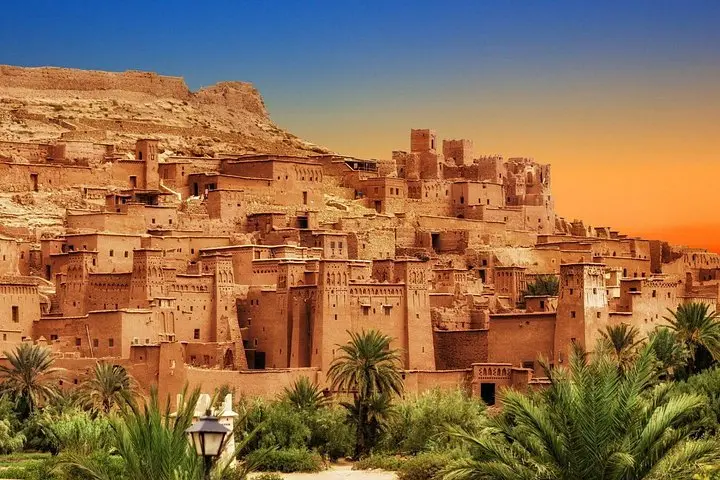
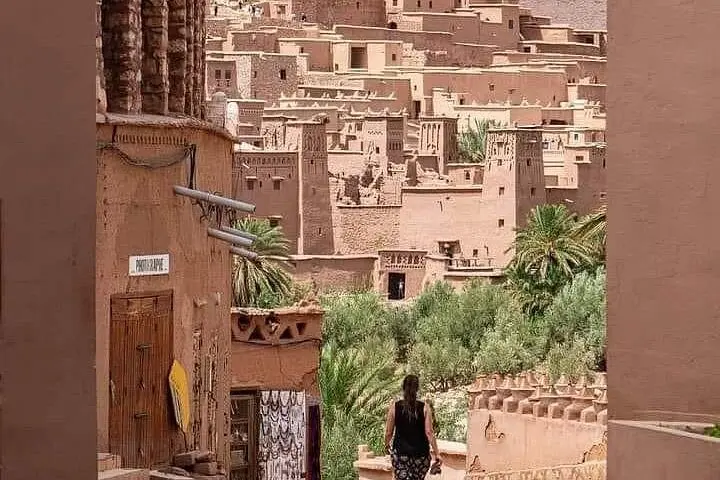
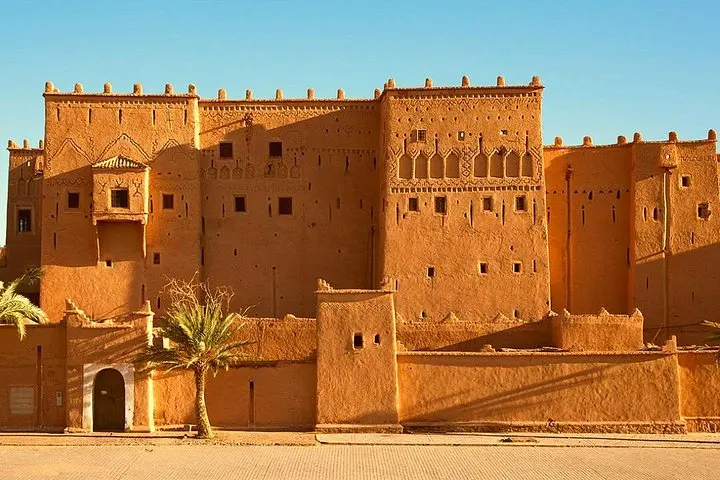
Aït Benhaddou sits on a river bend like a fortified poem — a ksar where caravan routes met craft and where defensive towers watch over winding alleys. The site’s earthen walls reveal local construction methods and the slow erosion that shapes this semi-arid landscape. Ouarzazate, lower on the plateau at roughly 1,160 m, grew as an administrative and film hub; its studios let you peer behind the curtain of movies shot in these wide-open spaces.
Culturally, expect Berber hospitality, small roadside markets, and a mix of modern village life opposite the preserved kasbah. Geologically the route crosses folded Precambrian and Mesozoic layers exposed by uplift, then flattens into desert plateaus that push south toward the Sahara.
Practical guidance: this is a long, full-day trip (about 10–12 hours). Most walking at Aït Benhaddou is on uneven stone and mudbrick surfaces; wear sturdy shoes and bring at least 2 liters of water. Sun protection is essential—shade is scarce outside built areas. Photography is excellent early and late in the day; mid-day light is harsh. If you prefer a slower pace, request extra time at either site or skip the studio visit. Expect roadside stops, simple snack options, and bilingual drivers who can explain local history — book pickup from Marrakech and plan for a late return to the city.
Frequently asked questions
Expect about 3–4 hours each way depending on traffic and stops; total trip time is typically 10–12 hours.
Admission is often paid on-site; confirm with the operator—some options include guided visits with entry fees covered.
Children are welcome, but the kasbah has uneven steps and narrow lanes; limited mobility may make sections difficult—ask about alternatives or shorter visits.
Yes—most itineraries include a stop at Atlas Film Studios; time there can be adjusted depending on your interest and the chosen tour option.
About This Experience
Marrakech First Trip operates guided outdoor trips and adventures with an emphasis on safety, stewardship, and memorable experiences.
Adventure tips
Recommended gear
- Sturdy walking shoes: Provides traction on cobblestones and earthen slopes at Aït Benhaddou.
- Sun hat and sunglasses: Protects from strong sun over the exposed plateau and during long stops.
- Reusable water bottle or hydration bladder: Keeps you hydrated through the long drive and walks—easy to refill with bottled water.
- Light pack or daypack: Carries layers, camera, snacks, and any small purchases from markets.
Photos of the experience
Related adventures & guides
Read the full experience
You roll away from Marrakech while the city is still cool and quiet, and the road climbs into the High Atlas. The Tizi n’Tichka pass opens like a page of geology: wind-sculpted slopes, terraced villages, and a string of panoramic pullouts where the light sharpens the ochre of ancient mudbrick.
You roll away from Marrakech while the city is still cool and quiet, and the road climbs into the High Atlas. The Tizi n’Tichka pass opens like a page of geology: wind-sculpted slopes, terraced villages, and a string of panoramic pullouts where the light sharpens the ochre of ancient mudbrick.
Aït Benhaddou sits on a river bend like a fortified poem — a ksar where caravan routes met craft and where defensive towers watch over winding alleys. The site’s earthen walls reveal local construction methods and the slow erosion that shapes this semi-arid landscape. Ouarzazate, lower on the plateau at roughly 1,160 m, grew as an administrative and film hub; its studios let you peer behind the curtain of movies shot in these wide-open spaces.
Culturally, expect Berber hospitality, small roadside markets, and a mix of modern village life opposite the preserved kasbah. Geologically the route crosses folded Precambrian and Mesozoic layers exposed by uplift, then flattens into desert plateaus that push south toward the Sahara.
Practical guidance: this is a long, full-day trip (about 10–12 hours). Most walking at Aït Benhaddou is on uneven stone and mudbrick surfaces; wear sturdy shoes and bring at least 2 liters of water. Sun protection is essential—shade is scarce outside built areas. Photography is excellent early and late in the day; mid-day light is harsh. If you prefer a slower pace, request extra time at either site or skip the studio visit. Expect roadside stops, simple snack options, and bilingual drivers who can explain local history — book pickup from Marrakech and plan for a late return to the city.
Make a day of it nearby.
Verified experiences and guided adventures in the surrounding area.