THE ADVENTURE COLLECTIVE® · Independent discovery and booking for outdoor travel

Cycle an eight-hour loop through Angkor’s temple complex, from Angkor Wat to Ta Prohm and Bayon, mixing rainforest trails with paved causeways. This practical guide covers what to expect—distance, terrain, cultural rules and how to prepare for a full day on two wheels.
Cycle an eight-hour loop through Angkor’s temple complex, from Angkor Wat to Ta Prohm and Bayon, mixing rainforest trails with paved causeways. This practical guide covers what to expect—distance, terrain, cultural rules and how to prepare for a full day on two wheels.
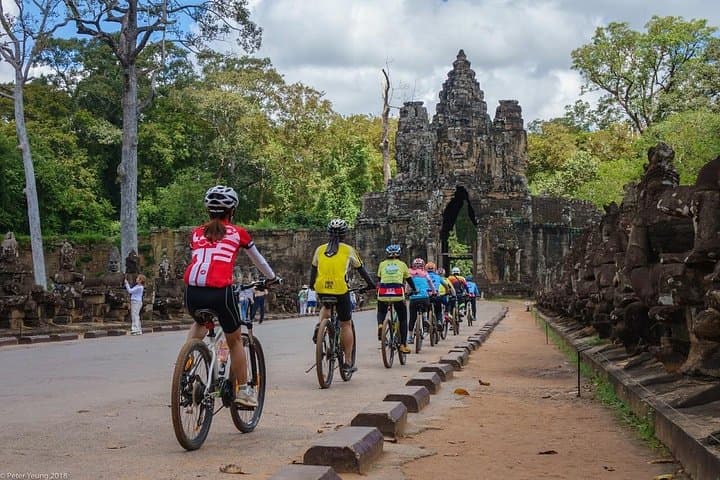
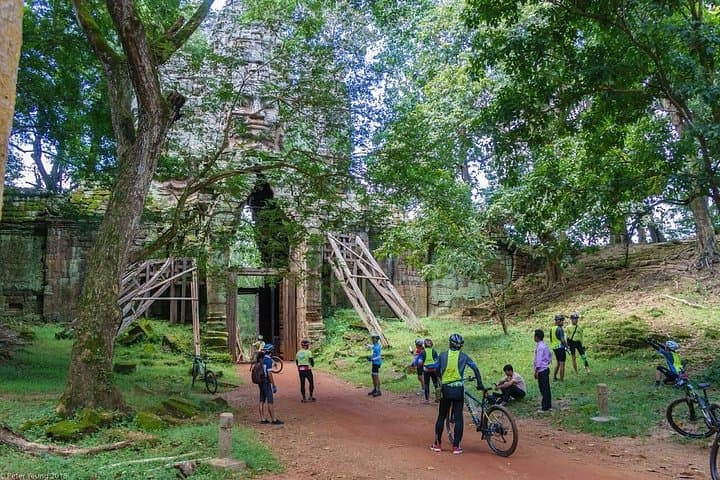
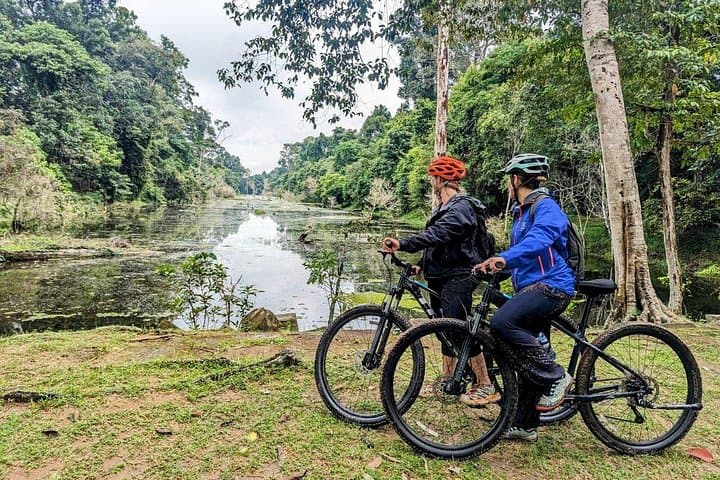
Morning light slants through the canopy as riders set off from Siem Reap, tires whispering on packed earth while temple towers peek through palm fronds. The route moves from wide causeways into narrow forest tracks where roots and ancient stones jostle for attention; the rainforest here nudges at the temples, reclaiming walls and stairways with moss and fig roots.
Verified experiences and guided adventures in the surrounding area.
Operated by Angkor Cycling Tour · Siem Reap, Siem Reap
Morning light slants through the canopy as riders set off from Siem Reap, tires whispering on packed earth while temple towers peek through palm fronds. The route moves from wide causeways into narrow forest tracks where roots and ancient stones jostle for attention; the rainforest here nudges at the temples, reclaiming walls and stairways with moss and fig roots.
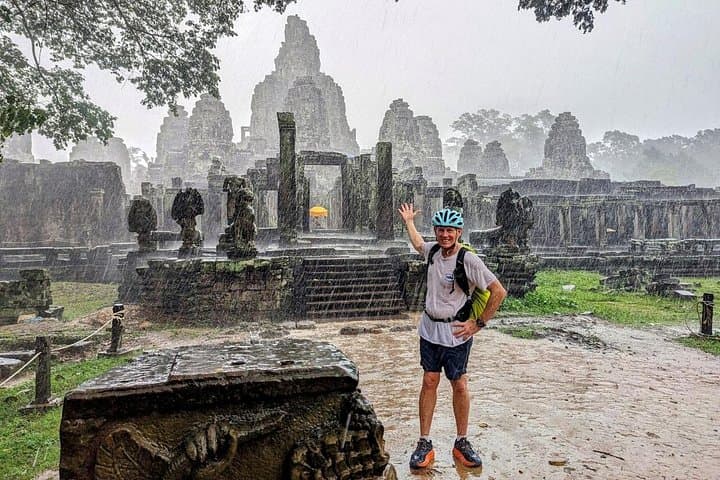
This single-day loop threads together Angkor Wat’s soaring galleries, Ta Prohm’s tree-claimed corridors, the quiet Tanei compound and the stone faces of Bayon and Angkor Thom. Built between the 9th and 12th centuries, the monuments are primarily sandstone and laterite—materials that weather to warm ochres and hold carvings of Khmer cosmology. Riders will cross water moats, roll along laterite causeways and climb short defensive walls to reach vantage points like Prasat Chrung.
Culturally, Angkor remains an active spiritual landscape; respectful dress and slow movement inside temple precincts are expected. Geologically the plain is flat—expect negligible elevation gain but steady pedaling across 25–35 km of mixed paved roads and compact dirt trails. The rainforest sections can be soft after rain and pleasantly dusty in the dry months.
Practical: the tour runs about eight hours, TREK mountain bikes and helmets are supplied, and guides provide water and coconut refreshments. Start at first light to avoid mid‑day heat, carry sun protection and insect repellent, and leave room in your pack for camera gear and temple-appropriate cover ups. Expect a full, sensory day where history, nature and cycling meet on a quiet stretch of the Khmer world.
Yes—premium TREK mountain bikes and helmets are supplied as part of the tour.
Cover shoulders and knees inside sacred sites; avoid revealing clothing and remove hats in certain areas.
Moderate—most of the route is flat, but expect 25–35 km over eight hours with intermittent off-bike walking and short climbs on ancient walls.
Yes—guides tailor the pace for mixed abilities, but basic bike handling and stamina for a full day are recommended.
Angkor Cycling Tour operates guided outdoor trips and adventures with an emphasis on safety, stewardship, and memorable experiences.
Morning light slants through the canopy as riders set off from Siem Reap, tires whispering on packed earth while temple towers peek through palm fronds. The route moves from wide causeways into narrow forest tracks where roots and ancient stones jostle for attention; the rainforest here nudges at the temples, reclaiming walls and stairways with moss and fig roots.
Morning light slants through the canopy as riders set off from Siem Reap, tires whispering on packed earth while temple towers peek through palm fronds. The route moves from wide causeways into narrow forest tracks where roots and ancient stones jostle for attention; the rainforest here nudges at the temples, reclaiming walls and stairways with moss and fig roots.
This single-day loop threads together Angkor Wat’s soaring galleries, Ta Prohm’s tree-claimed corridors, the quiet Tanei compound and the stone faces of Bayon and Angkor Thom. Built between the 9th and 12th centuries, the monuments are primarily sandstone and laterite—materials that weather to warm ochres and hold carvings of Khmer cosmology. Riders will cross water moats, roll along laterite causeways and climb short defensive walls to reach vantage points like Prasat Chrung.
Culturally, Angkor remains an active spiritual landscape; respectful dress and slow movement inside temple precincts are expected. Geologically the plain is flat—expect negligible elevation gain but steady pedaling across 25–35 km of mixed paved roads and compact dirt trails. The rainforest sections can be soft after rain and pleasantly dusty in the dry months.
Practical: the tour runs about eight hours, TREK mountain bikes and helmets are supplied, and guides provide water and coconut refreshments. Start at first light to avoid mid‑day heat, carry sun protection and insect repellent, and leave room in your pack for camera gear and temple-appropriate cover ups. Expect a full, sensory day where history, nature and cycling meet on a quiet stretch of the Khmer world.