THE ADVENTURE COLLECTIVE® · Independent discovery and booking for outdoor travel

Cycle through the heart of Angkor on a full-day private biking tour that links Angkor Wat, Bayon and quieter jungle temples. Expect mixed terrain, cultural insights from an English-speaking guide, and a full day of exploring World Heritage archaeology by bike.
Cycle through the heart of Angkor on a full-day private biking tour that links Angkor Wat, Bayon and quieter jungle temples. Expect mixed terrain, cultural insights from an English-speaking guide, and a full day of exploring World Heritage archaeology by bike.
You push off from Siem Reap before the day’s heat, tires whispering on shaded dirt as the jungle presses close and ancient stone peeks through fig roots. The path snakes past rice paddies and weathered faces carved into Bayon towers, the trees framing the ruins like a knowing audience.
Verified experiences and guided adventures in the surrounding area.
Operated by Luxe4Less Travel · Siem Reap, Siem Reap Province
You push off from Siem Reap before the day’s heat, tires whispering on shaded dirt as the jungle presses close and ancient stone peeks through fig roots. The path snakes past rice paddies and weathered faces carved into Bayon towers, the trees framing the ruins like a knowing audience.
This pedal-powered route threads Angkor’s main monuments — Angkor Wat, Angkor Thom and Bayon — and reaches quieter temple clusters such as the 4 Corner Prasats, Srah Srang and Banteay Kdei. Angkor grew into the capital of the Khmer Empire between the 9th and 15th centuries; Angkor Wat, raised in the 12th century by Suryavarman II, remains the architectural anchor of the site. Geologically the complex sits on low, seasonally flooded plains; stone and laterite weather into ledges and root-torn stairs that demand steady footing.
Culturally, local guides translate bas-reliefs and point out ritual layouts while vendors and farm life remind you this is living landscape, not a museum.
Practical guidance: expect a 7–8 hour day of mixed terrain — paved road, compacted dirt, and loose gravel — with frequent short walks inside temple compounds. Bring a valid Angkor pass, dress for respectful temple access (shoulders and knees covered), and plan for strong midday sun. Hydrate before and during the ride; carry spare cash for food and tips. Helmets are provided, but check brakes and tire pressure on your bike at the start. Aim for an early departure to use cooler morning light and avoid the busiest crowds and hottest hours.
Yes — an Angkor pass is required to enter Angkor Archaeological Park; purchase options include one-day, three-day and seven-day passes at the park entrance or authorized vendors in Siem Reap.
You should be comfortable riding 20–35 km over mixed surfaces and able to walk short uneven temple sections; guides set a moderate pace with stops.
Lunch is not included — the itinerary typically includes a picnic stop where you can eat a brought or purchased meal; confirm arrangements with the operator at booking.
Yes — the tour includes a bike and helmet; check the bike condition at the start and notify the guide of any concerns before departing.
Luxe4Less Travel operates guided outdoor trips and adventures with an emphasis on safety, stewardship, and memorable experiences.


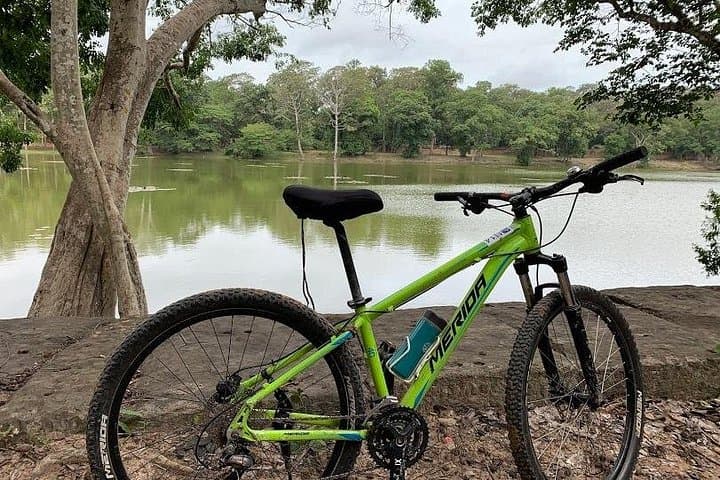

You push off from Siem Reap before the day’s heat, tires whispering on shaded dirt as the jungle presses close and ancient stone peeks through fig roots. The path snakes past rice paddies and weathered faces carved into Bayon towers, the trees framing the ruins like a knowing audience.
You push off from Siem Reap before the day’s heat, tires whispering on shaded dirt as the jungle presses close and ancient stone peeks through fig roots. The path snakes past rice paddies and weathered faces carved into Bayon towers, the trees framing the ruins like a knowing audience.
This pedal-powered route threads Angkor’s main monuments — Angkor Wat, Angkor Thom and Bayon — and reaches quieter temple clusters such as the 4 Corner Prasats, Srah Srang and Banteay Kdei. Angkor grew into the capital of the Khmer Empire between the 9th and 15th centuries; Angkor Wat, raised in the 12th century by Suryavarman II, remains the architectural anchor of the site. Geologically the complex sits on low, seasonally flooded plains; stone and laterite weather into ledges and root-torn stairs that demand steady footing.
Culturally, local guides translate bas-reliefs and point out ritual layouts while vendors and farm life remind you this is living landscape, not a museum.
Practical guidance: expect a 7–8 hour day of mixed terrain — paved road, compacted dirt, and loose gravel — with frequent short walks inside temple compounds. Bring a valid Angkor pass, dress for respectful temple access (shoulders and knees covered), and plan for strong midday sun. Hydrate before and during the ride; carry spare cash for food and tips. Helmets are provided, but check brakes and tire pressure on your bike at the start. Aim for an early departure to use cooler morning light and avoid the busiest crowds and hottest hours.