THE ADVENTURE COLLECTIVE® · Independent discovery and booking for outdoor travel

Spend a private day moving from the carved galleries of Angkor Wat to the jungle waterfalls of Phnom Kulen and the floating villages on Tonle Sap. This 8–9 hour tour blends history, geology and village life with practical transport and an English guide.
Spend a private day moving from the carved galleries of Angkor Wat to the jungle waterfalls of Phnom Kulen and the floating villages on Tonle Sap. This 8–9 hour tour blends history, geology and village life with practical transport and an English guide.
You step out of the tuk‑tuk into a courtyard of stone that still remembers kings. Early light pools in bas‑reliefs; temple faces regard you with the calm of centuries. This private full‑day tour threads Angkor Wat, Bayon and Ta Prohm with a climb to Phnom Kulen’s waterfalls and a boat glide through Kampong Phluk’s stilted community—about 8–9 hours of walking, short drives and boat time.
Verified experiences and guided adventures in the surrounding area.
Operated by Cambodia Shooting Ranges Siem Reap · Siem Reap, Siem Reap Province
You step out of the tuk‑tuk into a courtyard of stone that still remembers kings. Early light pools in bas‑reliefs; temple faces regard you with the calm of centuries. This private full‑day tour threads Angkor Wat, Bayon and Ta Prohm with a climb to Phnom Kulen’s waterfalls and a boat glide through Kampong Phluk’s stilted community—about 8–9 hours of walking, short drives and boat time.
Angkor rose under the Khmer Empire from the 9th to 15th centuries; its sandstone galleries and carved narratives record religion, conquest and engineering. Geology here is gentle—flat plains around a raised temple city; Phnom Kulen is volcanic bedrock and jungle-fed falls that refresh after dusty temple circuits. Local culture remains tied to rice cycles and Buddhist practice; guides translate both the panels of myth carved into stone and the rhythms of riverside life.
Expect mixed surfaces: paved causeways, compacted earth and temple steps. Distances between major temples are a few kilometers; walking at each site can total 4–7 km with minimal elevation gain. Practicalities matter: reserve an Angkor day pass (≈US$37), ticketed boat rides to floating villages cost extra, and entrance to Phnom Kulen has a separate fee.
Plan for heat and humidity—start early, carry sun protection and a refillable water bottle, and wear a shirt and knee‑covering shorts or sarong to respect temple dress codes. The tour is suitable for most fitness levels but involves long periods on your feet and some uneven stone. Bring a light rain shell in the wet season and a charged phone for photos—these ruins prize patient viewing more than speed.
Yes—most temple visits require an Angkor pass (one‑day pass approximately US$37) which can be purchased at the official ticket center or provided as part of some tour options.
Sunrise can be requested but requires an early start and may add time; confirm with your guide whether the itinerary includes sunrise viewing at Phnom Bakheng or Angkor Wat.
Yes—there are designated spots for swimming, but respect posted signs, avoid strong currents, and note that entrance to Kulen typically has a separate fee (≈US$20).
Transportation options and some sites may be accessible, but many temple interiors and steps are not wheelchair‑friendly; check specifics with the operator beforehand.
Cambodia Shooting Ranges Siem Reap operates guided outdoor trips and adventures with an emphasis on safety, stewardship, and memorable experiences.
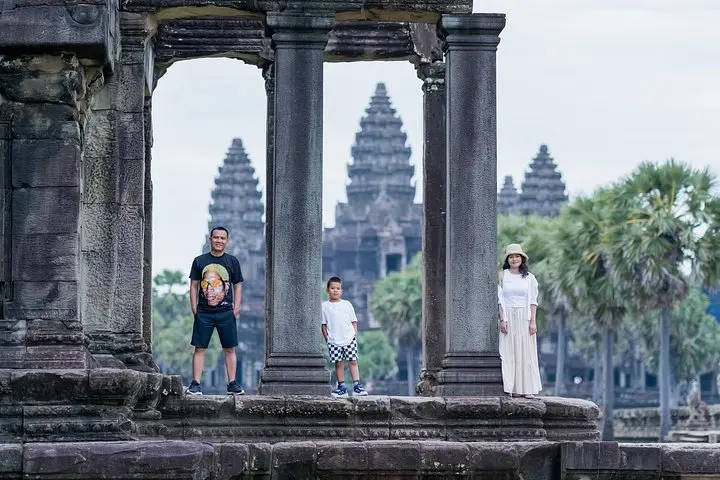
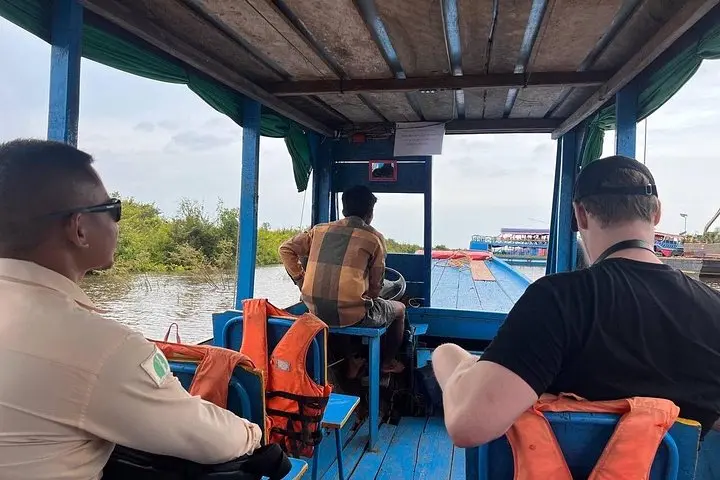
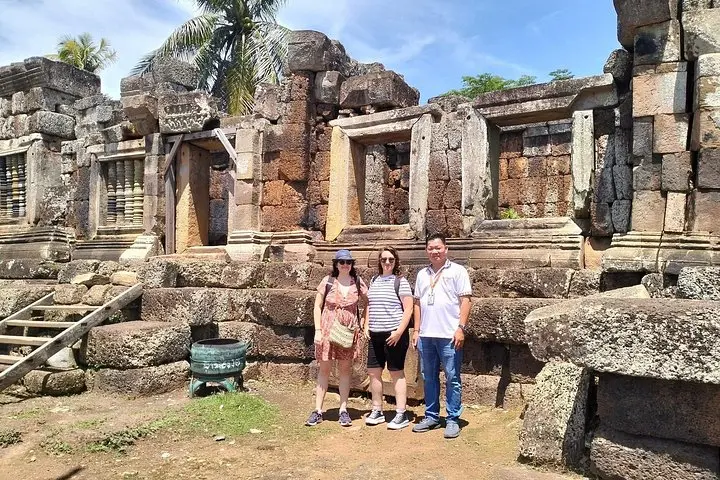
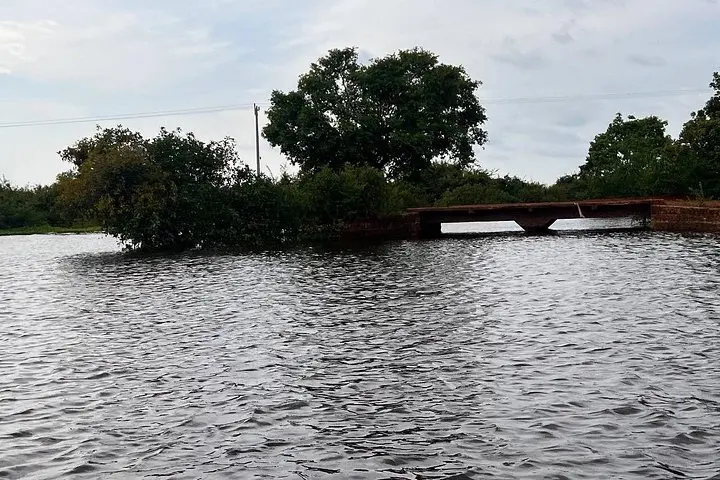
You step out of the tuk‑tuk into a courtyard of stone that still remembers kings. Early light pools in bas‑reliefs; temple faces regard you with the calm of centuries. This private full‑day tour threads Angkor Wat, Bayon and Ta Prohm with a climb to Phnom Kulen’s waterfalls and a boat glide through Kampong Phluk’s stilted community—about 8–9 hours of walking, short drives and boat time.
You step out of the tuk‑tuk into a courtyard of stone that still remembers kings. Early light pools in bas‑reliefs; temple faces regard you with the calm of centuries. This private full‑day tour threads Angkor Wat, Bayon and Ta Prohm with a climb to Phnom Kulen’s waterfalls and a boat glide through Kampong Phluk’s stilted community—about 8–9 hours of walking, short drives and boat time.
Angkor rose under the Khmer Empire from the 9th to 15th centuries; its sandstone galleries and carved narratives record religion, conquest and engineering. Geology here is gentle—flat plains around a raised temple city; Phnom Kulen is volcanic bedrock and jungle-fed falls that refresh after dusty temple circuits. Local culture remains tied to rice cycles and Buddhist practice; guides translate both the panels of myth carved into stone and the rhythms of riverside life.
Expect mixed surfaces: paved causeways, compacted earth and temple steps. Distances between major temples are a few kilometers; walking at each site can total 4–7 km with minimal elevation gain. Practicalities matter: reserve an Angkor day pass (≈US$37), ticketed boat rides to floating villages cost extra, and entrance to Phnom Kulen has a separate fee.
Plan for heat and humidity—start early, carry sun protection and a refillable water bottle, and wear a shirt and knee‑covering shorts or sarong to respect temple dress codes. The tour is suitable for most fitness levels but involves long periods on your feet and some uneven stone. Bring a light rain shell in the wet season and a charged phone for photos—these ruins prize patient viewing more than speed.