THE ADVENTURE COLLECTIVE® · Independent discovery and booking for outdoor travel

Spend a full day moving from sunrise at Angkor Wat to the root-entwined galleries of Ta Prohm at sunset. This guided full-day tour covers Angkor Wat, Angkor Thom, Bayon and Banteay Kdei with practical stops and local insights.
Spend a full day moving from sunrise at Angkor Wat to the root-entwined galleries of Ta Prohm at sunset. This guided full-day tour covers Angkor Wat, Angkor Thom, Bayon and Banteay Kdei with practical stops and local insights.
Before sunrise the causeway to Angkor Wat lies soft and cool; the reflecting pools are glass, the stone ridges still holding night’s shadow. A licensed guide meets you in an air-conditioned vehicle and leads a day that moves from the first light at Angkor Wat through the carved faces of Bayon, past the Terrace of the Elephants, and into the root-wrapped corridors of Ta Prohm as the sun slips toward the horizon.
Verified experiences and guided adventures in the surrounding area.
Operated by Royal Phnom Penh Tours · Siem Reap, Siem Reap Province
Before sunrise the causeway to Angkor Wat lies soft and cool; the reflecting pools are glass, the stone ridges still holding night’s shadow. A licensed guide meets you in an air-conditioned vehicle and leads a day that moves from the first light at Angkor Wat through the carved faces of Bayon, past the Terrace of the Elephants, and into the root-wrapped corridors of Ta Prohm as the sun slips toward the horizon.
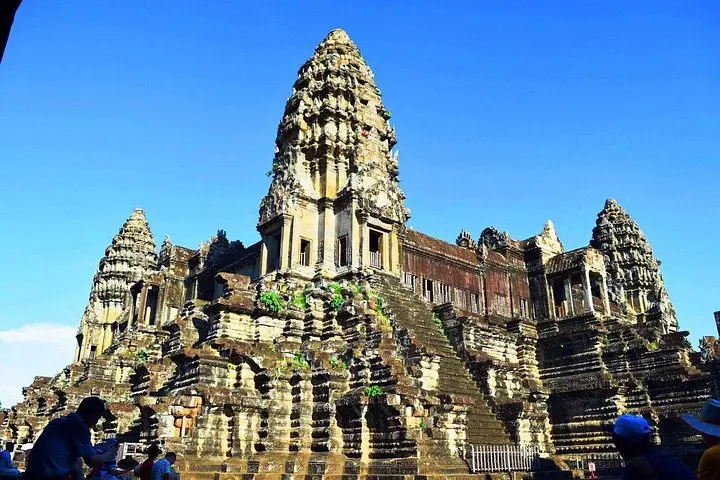
The monuments here are the physical record of the Khmer Empire (9th–15th centuries), shaped from sandstone and laterite and built by kings such as Jayavarman VII. Angkor spans roughly 400 square kilometers and is largely flat—platforms, causeways and short carved stairways punctuate broad temple plazas. Culture and religion overlap in bas-reliefs: Hindu creation myths, later Buddhist reworkings and the royal processions of a once-powerful capital.
Practically, expect lots of walking on uneven stone, intermittent stairs and shaded groves that can harbor macaques and monitor lizards. A typical full day runs 8–9 hours with breaks for lunch; entrance fees are bought at the park gate. Guides handle logistics and interpretation, pointing out architectural details like the Bayon’s 216 faces and the way roots have become structural partners at Ta Prohm.
Bring breathable clothing that covers shoulders and knees for temple entry, a daypack with water, sunscreen and insect repellent. Aim to move deliberately: mornings are cooler and less crowded, late afternoon delivers softer light and dramatic silhouettes. Respect the fragile masonry, stay on marked paths and let the stones tell their long story as you pass.
No; entrance tickets are purchased at the park ticket office—the guide will stop to arrange this for you if needed.
This full-day itinerary typically runs 8–9 hours; some departures begin very early for sunrise (around 4:30–5:00am) and finish after sunset photography opportunities.
Yes—it's rated suitable for all fitness levels but expect prolonged walking and uneven terrain; carry breaks and pace accordingly.
Depending on the schedule you book, operators may offer sunrise starts and evening stops at photogenic temples; confirm timing with your operator at booking.
Royal Phnom Penh Tours operates guided outdoor trips and adventures with an emphasis on safety, stewardship, and memorable experiences.
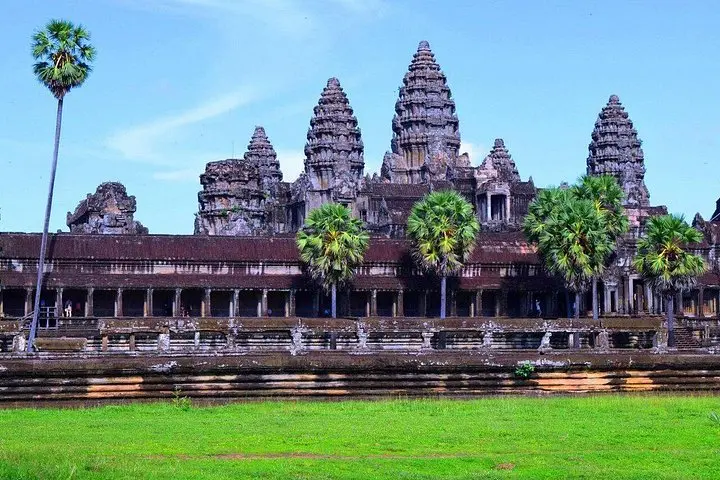
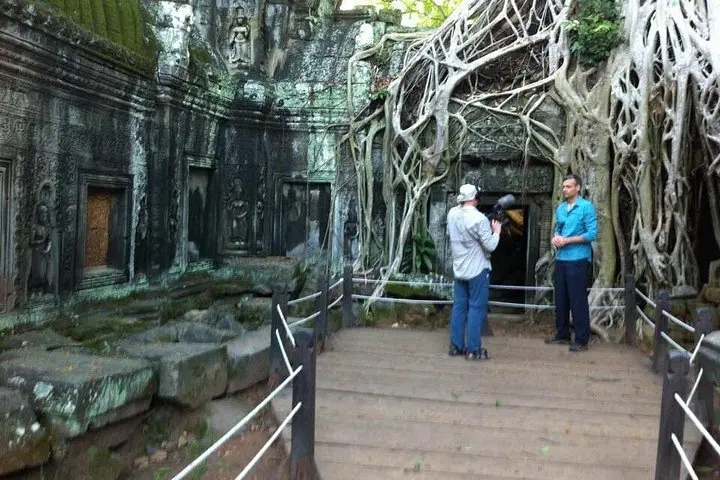
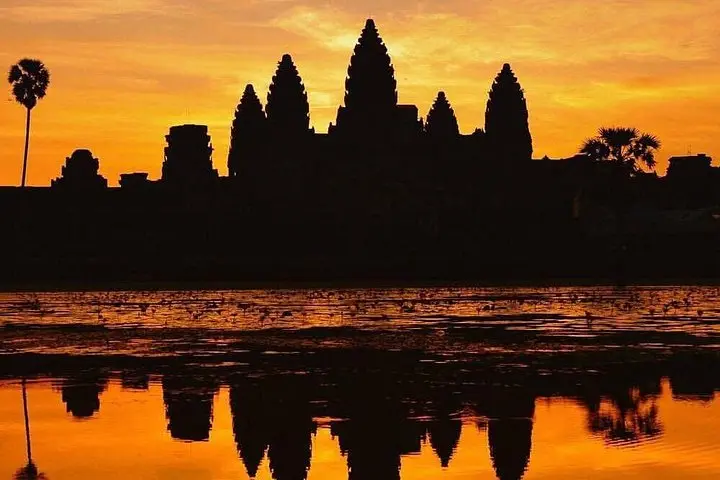
Before sunrise the causeway to Angkor Wat lies soft and cool; the reflecting pools are glass, the stone ridges still holding night’s shadow. A licensed guide meets you in an air-conditioned vehicle and leads a day that moves from the first light at Angkor Wat through the carved faces of Bayon, past the Terrace of the Elephants, and into the root-wrapped corridors of Ta Prohm as the sun slips toward the horizon.
Before sunrise the causeway to Angkor Wat lies soft and cool; the reflecting pools are glass, the stone ridges still holding night’s shadow. A licensed guide meets you in an air-conditioned vehicle and leads a day that moves from the first light at Angkor Wat through the carved faces of Bayon, past the Terrace of the Elephants, and into the root-wrapped corridors of Ta Prohm as the sun slips toward the horizon.
The monuments here are the physical record of the Khmer Empire (9th–15th centuries), shaped from sandstone and laterite and built by kings such as Jayavarman VII. Angkor spans roughly 400 square kilometers and is largely flat—platforms, causeways and short carved stairways punctuate broad temple plazas. Culture and religion overlap in bas-reliefs: Hindu creation myths, later Buddhist reworkings and the royal processions of a once-powerful capital.
Practically, expect lots of walking on uneven stone, intermittent stairs and shaded groves that can harbor macaques and monitor lizards. A typical full day runs 8–9 hours with breaks for lunch; entrance fees are bought at the park gate. Guides handle logistics and interpretation, pointing out architectural details like the Bayon’s 216 faces and the way roots have become structural partners at Ta Prohm.
Bring breathable clothing that covers shoulders and knees for temple entry, a daypack with water, sunscreen and insect repellent. Aim to move deliberately: mornings are cooler and less crowded, late afternoon delivers softer light and dramatic silhouettes. Respect the fragile masonry, stay on marked paths and let the stones tell their long story as you pass.