THE ADVENTURE COLLECTIVE® · Independent discovery and booking for outdoor travel

Ride a tuk-tuk through village lanes to Bayon, Ta Prohm and Angkor Wat, finishing with a Pre Rup sunset. This full-day tour mixes light walking, temple exploration, and cultural insight—ideal for travelers who want a single-day, accessible deep-dive into Angkor Park.
Ride a tuk-tuk through village lanes to Bayon, Ta Prohm and Angkor Wat, finishing with a Pre Rup sunset. This full-day tour mixes light walking, temple exploration, and cultural insight—ideal for travelers who want a single-day, accessible deep-dive into Angkor Park.
You swing into the morning on the narrow seat of a tuk-tuk, humidity settling on your shirt as the driver threads between rice paddies and low stone walls. The air smells of wet earth and motor oil; temples puncture the skyline like hulking, patient machines of another time. This is a day of slow discovery—an off-road village walk, the carved faces of Bayon, fig roots strangling Ta Prohm, and the long approach to Angkor Wat finished with a sunset at Pre Rup.
Verified experiences and guided adventures in the surrounding area.
Operated by Angkor Focus Travel · Siem Reap, Siem Reap Province
You swing into the morning on the narrow seat of a tuk-tuk, humidity settling on your shirt as the driver threads between rice paddies and low stone walls. The air smells of wet earth and motor oil; temples puncture the skyline like hulking, patient machines of another time. This is a day of slow discovery—an off-road village walk, the carved faces of Bayon, fig roots strangling Ta Prohm, and the long approach to Angkor Wat finished with a sunset at Pre Rup.
The Angkor complex records the rise of the Khmer Empire from the 9th to the 15th century. Angkor Wat itself, begun in the 12th century under Suryavarman II, is the park’s architectural peak: concentric galleries, bas-reliefs of epic tales, and sandstone blocks quarried and lifted with staggering effort. Geologically, the area sits on an alluvial plain fed by the Tonle Sap system; seasonal floods shaped the ancient water management that supported the city’s population. Culturally, local villages remain tied to rice cycles and temple tourism—guides often bridge traditional practices and modern visitors.
Practically: expect nine hours of light walking and many uneven steps; bring sun protection, refillable water, respectful clothing that covers shoulders and knees, and cash for lunch or small purchases. Start early to avoid the hottest hours, move between shaded ruins during midday, and use your guide to navigate entry routes and quieter viewpoints. The tuk-tuk is flexible—ask for short detours to watch village life or pause at a lotus pond. By sunset, the stone warms to a deep rust and the day closes with a clear, expansive sky—an accessible, full-day introduction to one of Southeast Asia’s most compelling archaeological landscapes.
Yes — all visitors must buy an Angkor Archaeological Park pass at the official ticket centre; 1-day and multi-day options are available. Keep your pass with you at all times.
No — the itinerary is classified as easy with mostly flat walking and short climbs, but expect long days in heat and some uneven stone surfaces.
The tour price typically excludes the Angkor Park entry pass and lunch; your guide will advise where to buy the pass and recommended lunch spots.
Sunset at Pre Rup draws fewer international crowds than sunrise at Angkor Wat, offering a quieter vantage while still providing expansive evening light.
Angkor Focus Travel operates guided outdoor trips and adventures with an emphasis on safety, stewardship, and memorable experiences.

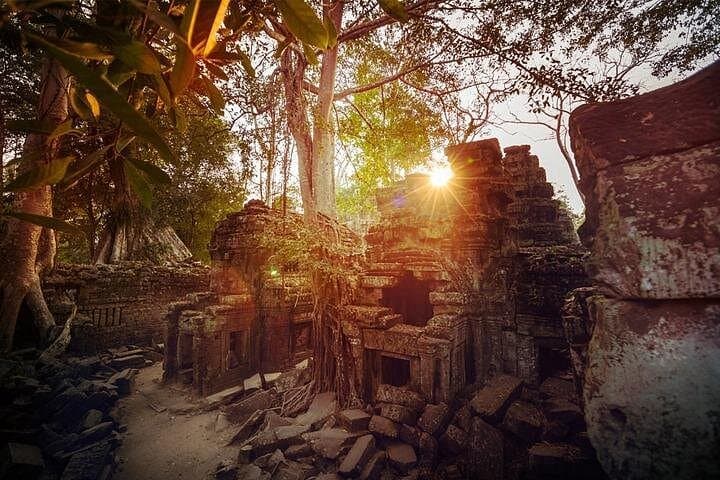


You swing into the morning on the narrow seat of a tuk-tuk, humidity settling on your shirt as the driver threads between rice paddies and low stone walls. The air smells of wet earth and motor oil; temples puncture the skyline like hulking, patient machines of another time. This is a day of slow discovery—an off-road village walk, the carved faces of Bayon, fig roots strangling Ta Prohm, and the long approach to Angkor Wat finished with a sunset at Pre Rup.
You swing into the morning on the narrow seat of a tuk-tuk, humidity settling on your shirt as the driver threads between rice paddies and low stone walls. The air smells of wet earth and motor oil; temples puncture the skyline like hulking, patient machines of another time. This is a day of slow discovery—an off-road village walk, the carved faces of Bayon, fig roots strangling Ta Prohm, and the long approach to Angkor Wat finished with a sunset at Pre Rup.
The Angkor complex records the rise of the Khmer Empire from the 9th to the 15th century. Angkor Wat itself, begun in the 12th century under Suryavarman II, is the park’s architectural peak: concentric galleries, bas-reliefs of epic tales, and sandstone blocks quarried and lifted with staggering effort. Geologically, the area sits on an alluvial plain fed by the Tonle Sap system; seasonal floods shaped the ancient water management that supported the city’s population. Culturally, local villages remain tied to rice cycles and temple tourism—guides often bridge traditional practices and modern visitors.
Practically: expect nine hours of light walking and many uneven steps; bring sun protection, refillable water, respectful clothing that covers shoulders and knees, and cash for lunch or small purchases. Start early to avoid the hottest hours, move between shaded ruins during midday, and use your guide to navigate entry routes and quieter viewpoints. The tuk-tuk is flexible—ask for short detours to watch village life or pause at a lotus pond. By sunset, the stone warms to a deep rust and the day closes with a clear, expansive sky—an accessible, full-day introduction to one of Southeast Asia’s most compelling archaeological landscapes.