THE ADVENTURE COLLECTIVE® · Independent discovery and booking for outdoor travel

Spend a day tracing Angkor’s highlights — from the mirrored pools of Angkor Wat to the pink carvings of Banteay Srei and Ta Prohm’s tree-engulfed corridors. This private full-day tour blends brisk walks with scenic drives and local insights.
Spend a day tracing Angkor’s highlights — from the mirrored pools of Angkor Wat to the pink carvings of Banteay Srei and Ta Prohm’s tree-engulfed corridors. This private full-day tour blends brisk walks with scenic drives and local insights.
Dawn lifts off the reflection pool at Angkor Wat like a slow exhale — stone towers dark against an orange sky while the first tourists drift between causeways. On this full-day private route you move from the monumental symmetry of Angkor Wat to the pink sandstone carvings of Banteay Srei, then into forest-cloaked Ta Prohm and the face-lined galleries of Bayon inside Angkor Thom.
Verified experiences and guided adventures in the surrounding area.
Operated by Happy Angkor Tour · Siem Reap, Siem Reap Province
Dawn lifts off the reflection pool at Angkor Wat like a slow exhale — stone towers dark against an orange sky while the first tourists drift between causeways. On this full-day private route you move from the monumental symmetry of Angkor Wat to the pink sandstone carvings of Banteay Srei, then into forest-cloaked Ta Prohm and the face-lined galleries of Bayon inside Angkor Thom.
These sites span centuries: Banteay Srei’s delicate reliefs date to the 10th century, Angkor Wat was completed in the 12th as the Khmer Empire’s Hindu-turned-Buddhist state temple, and Angkor Thom’s terraced platforms and Bayon faces reflect later royal ambitions. Geologically the complex sits on low sandstone ridges and laterite foundations; erosion and rising groundwater shape modern conservation choices. Along the way you’ll see irrigated paddy fields and small villages that still follow seasonal rhythms tied to the Tonle Sap.
Practically, this is a day of short walks across uneven stone, occasional steep steps and long drives between pockets of ruins. Your guide typically helps secure the Angkor pass before the first stop; the tour includes hotel pickup, bottled water and air-conditioned transport but not entrance fees.
Pack light layers, sun protection and a modest outfit that covers shoulders and knees. Start early to avoid heat and crowds, bring insect repellent for shaded temples, and carry small bills for local purchases and tips. Move deliberately through the ruins, respect restricted areas, and leave time at midday for shade and a local lunch — the rhythm of the day is part of the experience.
No — entrance fees are not included. The guide will typically stop at the ticket center on the way to Angkor Wat and can help you purchase the appropriate pass.
Expect repeated short walks across temple compounds and some steep stone staircases; the day is long but not physically demanding for people in normal health.
Yes, major temples are open year-round, though access to certain areas may close occasionally for conservation work or events—your guide will update you.
Photography is allowed in most outdoor areas, though flash and tripods may be restricted inside some sanctuaries; always follow guide and site signs.
Happy Angkor Tour operates guided outdoor trips and adventures with an emphasis on safety, stewardship, and memorable experiences.
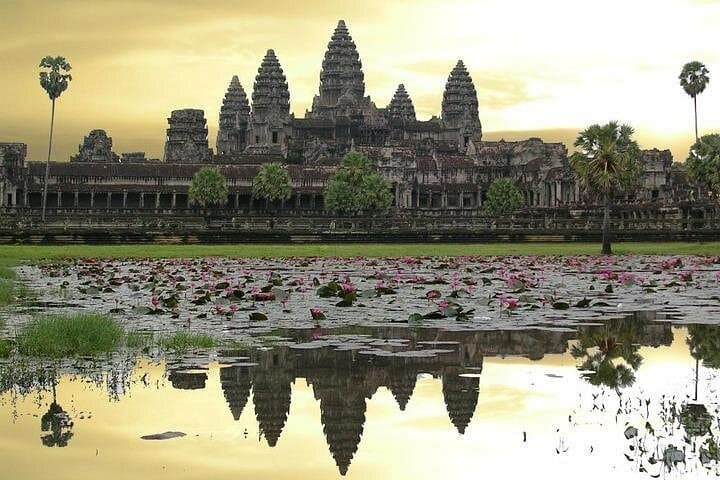
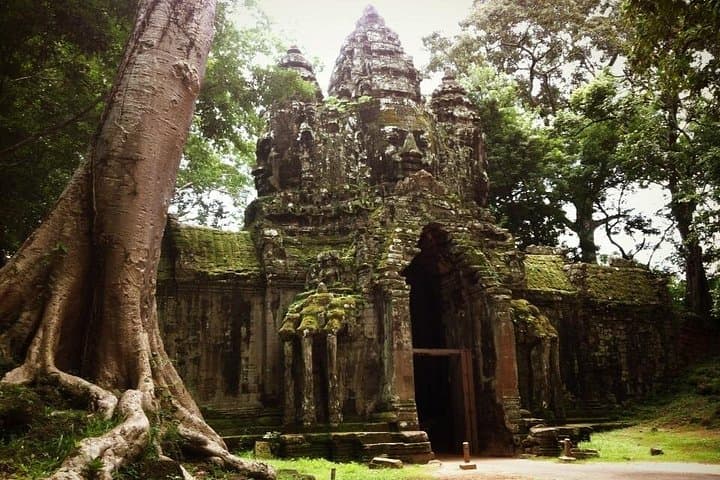
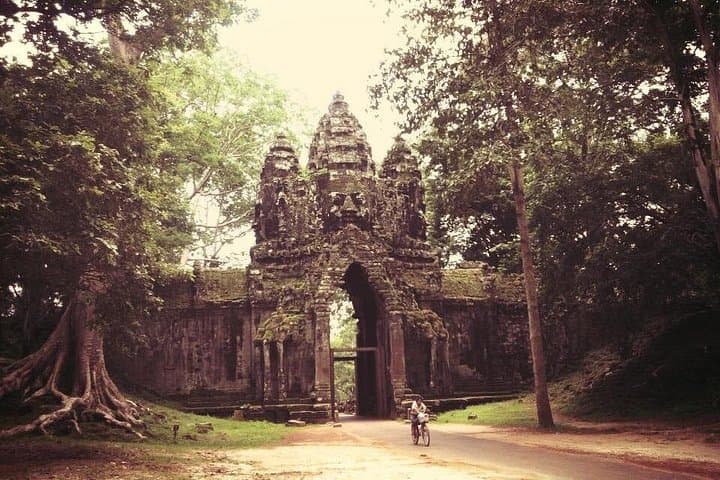

Dawn lifts off the reflection pool at Angkor Wat like a slow exhale — stone towers dark against an orange sky while the first tourists drift between causeways. On this full-day private route you move from the monumental symmetry of Angkor Wat to the pink sandstone carvings of Banteay Srei, then into forest-cloaked Ta Prohm and the face-lined galleries of Bayon inside Angkor Thom.
Dawn lifts off the reflection pool at Angkor Wat like a slow exhale — stone towers dark against an orange sky while the first tourists drift between causeways. On this full-day private route you move from the monumental symmetry of Angkor Wat to the pink sandstone carvings of Banteay Srei, then into forest-cloaked Ta Prohm and the face-lined galleries of Bayon inside Angkor Thom.
These sites span centuries: Banteay Srei’s delicate reliefs date to the 10th century, Angkor Wat was completed in the 12th as the Khmer Empire’s Hindu-turned-Buddhist state temple, and Angkor Thom’s terraced platforms and Bayon faces reflect later royal ambitions. Geologically the complex sits on low sandstone ridges and laterite foundations; erosion and rising groundwater shape modern conservation choices. Along the way you’ll see irrigated paddy fields and small villages that still follow seasonal rhythms tied to the Tonle Sap.
Practically, this is a day of short walks across uneven stone, occasional steep steps and long drives between pockets of ruins. Your guide typically helps secure the Angkor pass before the first stop; the tour includes hotel pickup, bottled water and air-conditioned transport but not entrance fees.
Pack light layers, sun protection and a modest outfit that covers shoulders and knees. Start early to avoid heat and crowds, bring insect repellent for shaded temples, and carry small bills for local purchases and tips. Move deliberately through the ruins, respect restricted areas, and leave time at midday for shade and a local lunch — the rhythm of the day is part of the experience.