THE ADVENTURE COLLECTIVE® · Independent discovery and booking for outdoor travel

Explore Angkor Wat, Bayon, Ta Prohm and Sras Srang on a full-day small-group tour led by a Japanese-speaking guide. This practical guide covers what you’ll see, how to prepare, and local tips for timing, dress, and logistics.
Explore Angkor Wat, Bayon, Ta Prohm and Sras Srang on a full-day small-group tour led by a Japanese-speaking guide. This practical guide covers what you’ll see, how to prepare, and local tips for timing, dress, and logistics.
You step through a stone doorway and the humid Cambodian air seems to usher you deeper into a living ruin—columns worn smooth by centuries, roots threading like veins through collapsed roofs, temple faces watching with quiet indifference.
Verified experiences and guided adventures in the surrounding area.
Operated by Bayon Tabi Tour · Siem Reap, Siem Reap Province
You step through a stone doorway and the humid Cambodian air seems to usher you deeper into a living ruin—columns worn smooth by centuries, roots threading like veins through collapsed roofs, temple faces watching with quiet indifference.
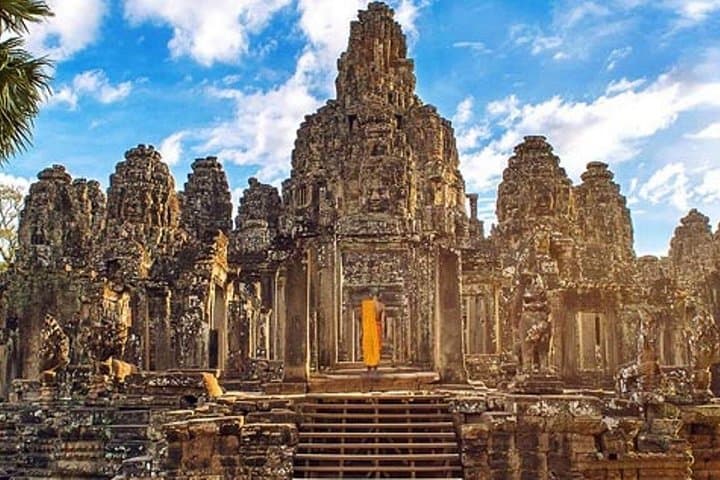
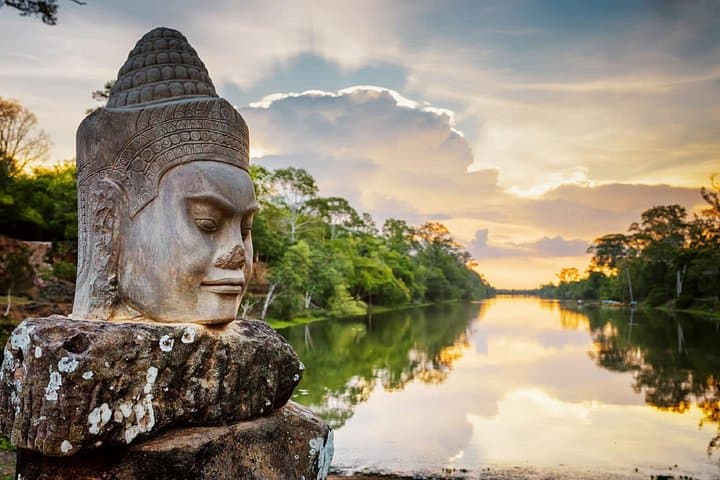
This full-day small-group tour navigates the core of the Angkor Archaeological Park: the soaring galleries of Angkor Wat, the enigmatic smiling faces of Bayon, the tree-clad corridors of Ta Prohm, and the reflective pools of Sras Srang, finishing with sunset over Phnom Bakheng (a common evening pick). These monuments span the Khmer Empire’s high period (9th–15th centuries); Angkor Wat itself dates to the early 12th century under King Suryavarman II.
Geologically, the sandstone blocks sit atop an ancient alluvial plain fed by the Tonle Sap system, which shaped settlement and temple logistics. Culturally, the temples are both Hindu and Buddhist palimpsests—layers of devotion carved in bas-relief and towered sanctuaries.
Practical guide: the day involves several hours on foot across uneven stone, steps, and shaded dirt paths. Start early to avoid midday heat, carry water, and wear temple-appropriate clothing (shoulders and knees covered). The tour includes hotel pickup, air-conditioned transport, a Japanese-speaking guide, and bottled water, but the Angkor Park entrance fee is separate.
Timing matters: mornings bring softer light at Angkor Wat and fewer crowds at Bayon; late afternoon draws golden light and cooler air for sunset viewpoints. Respect rope lines and carvings, keep to marked paths, and avoid feeding macaques. With steady pacing and basic hydration, the day reads like a concentrated history walk—ancient stone moving around you as the sun shifts toward the horizon.
No; the tour price covers guide and transport but Angkor Archaeological Park passes are sold separately at the official ticket center.
The tour is suitable for most fitness levels but involves several hours of walking and stair climbs—plan for frequent rests and bring water.
Yes—the tour provides a Japanese-speaking guide for the full day, plus hotel pickup and drop-off in Siem Reap.
Sunset is commonly viewed from Phnom Bakheng (Bakeng) for broad panoramas; operators may adjust to Pre Rup or similar sites depending on timing and crowding.
Bayon Tabi Tour operates guided outdoor trips and adventures with an emphasis on safety, stewardship, and memorable experiences.
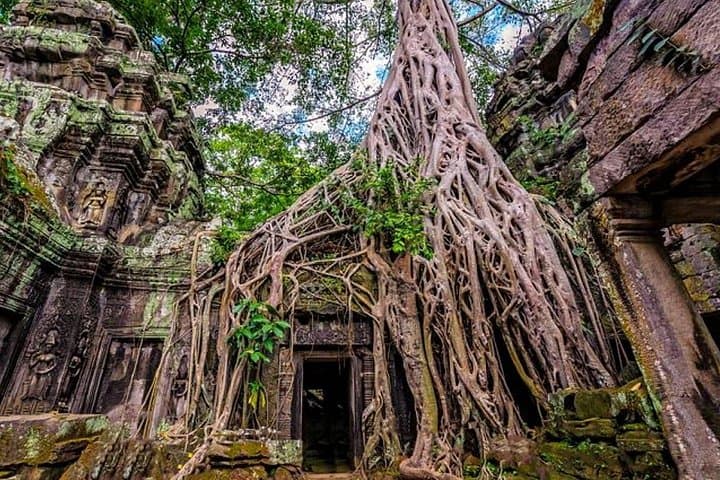
You step through a stone doorway and the humid Cambodian air seems to usher you deeper into a living ruin—columns worn smooth by centuries, roots threading like veins through collapsed roofs, temple faces watching with quiet indifference.
You step through a stone doorway and the humid Cambodian air seems to usher you deeper into a living ruin—columns worn smooth by centuries, roots threading like veins through collapsed roofs, temple faces watching with quiet indifference.
This full-day small-group tour navigates the core of the Angkor Archaeological Park: the soaring galleries of Angkor Wat, the enigmatic smiling faces of Bayon, the tree-clad corridors of Ta Prohm, and the reflective pools of Sras Srang, finishing with sunset over Phnom Bakheng (a common evening pick). These monuments span the Khmer Empire’s high period (9th–15th centuries); Angkor Wat itself dates to the early 12th century under King Suryavarman II.
Geologically, the sandstone blocks sit atop an ancient alluvial plain fed by the Tonle Sap system, which shaped settlement and temple logistics. Culturally, the temples are both Hindu and Buddhist palimpsests—layers of devotion carved in bas-relief and towered sanctuaries.
Practical guide: the day involves several hours on foot across uneven stone, steps, and shaded dirt paths. Start early to avoid midday heat, carry water, and wear temple-appropriate clothing (shoulders and knees covered). The tour includes hotel pickup, air-conditioned transport, a Japanese-speaking guide, and bottled water, but the Angkor Park entrance fee is separate.
Timing matters: mornings bring softer light at Angkor Wat and fewer crowds at Bayon; late afternoon draws golden light and cooler air for sunset viewpoints. Respect rope lines and carvings, keep to marked paths, and avoid feeding macaques. With steady pacing and basic hydration, the day reads like a concentrated history walk—ancient stone moving around you as the sun shifts toward the horizon.