THE ADVENTURE COLLECTIVE® · Independent discovery and booking for outdoor travel

A single-day high-altitude hike around Ausangate’s seven colorful lagoons offers dramatic glacial landscapes, close encounters with llamas and a view of one of the Andes’ most sacred peaks. This guide covers what to expect, how to prepare, and key local insights.
A single-day high-altitude hike around Ausangate’s seven colorful lagoons offers dramatic glacial landscapes, close encounters with llamas and a view of one of the Andes’ most sacred peaks. This guide covers what to expect, how to prepare, and key local insights.
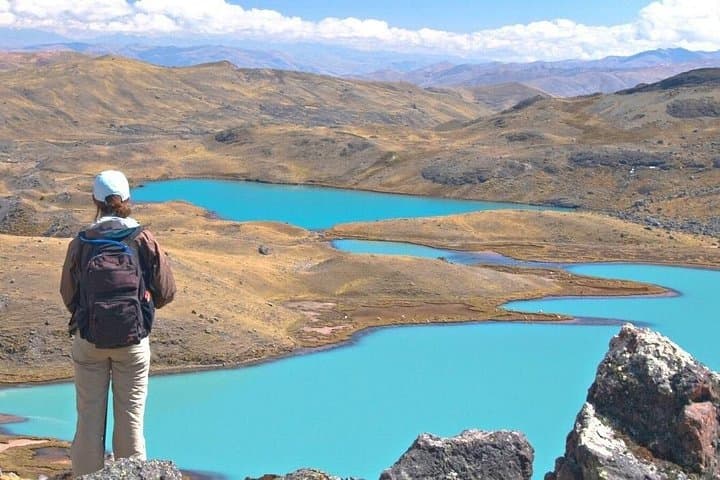
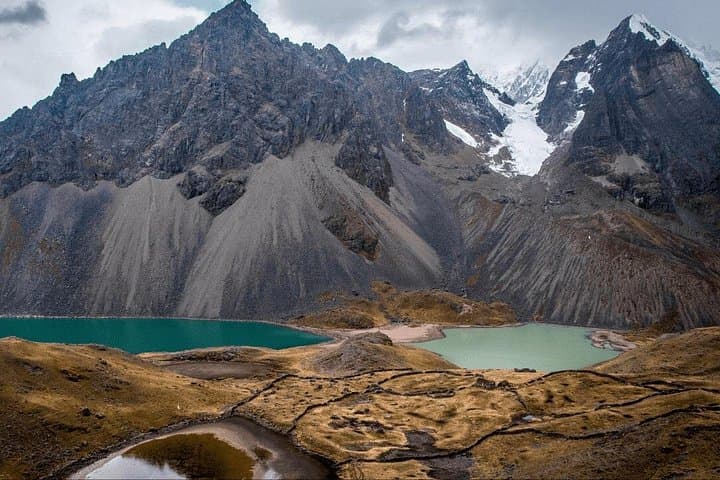
You step out of the minivan before dawn onto thin, cold air. The Andes open like a flat, hard sea, and a string of high lakes sits like spilled jewels below Ausangate’s black flanks. Llamas graze on wind-sheared grass while local herders move between stone corrals; the trail climbs steadily, each breath a reminder that you’re above 4,000 meters.
Verified experiences and guided adventures in the surrounding area.
Operated by Palccoyo Rainbow Mountain · Cusco, Cusco
You step out of the minivan before dawn onto thin, cold air. The Andes open like a flat, hard sea, and a string of high lakes sits like spilled jewels below Ausangate’s black flanks. Llamas graze on wind-sheared grass while local herders move between stone corrals; the trail climbs steadily, each breath a reminder that you’re above 4,000 meters.
Geology here is blunt and honest: glacial-polished rock, mineral-rich soils and iron-stained moraines create ponds that range from bright turquoise to dark green and rusty orange. Ausangate itself is one of the most venerated mountains in Andean cosmology — an apu, or sacred mountain — and the human presence on this route blends campesino life with centuries-old reverence.
The standard one-day itinerary includes breakfast near a high-altitude village, a 3-hour ascent to the colorful lagoons (and roughly 3 hours back), and views of the snow-capped summit. Expect roughly 10 km round-trip with 400–700 m of elevation gain, though footing varies from compacted trail to loose scree. Wildlife is subdued but present: alpacas, sometimes vicuña and highland birds. Weather changes fast; clear mornings can become wind-scoured by afternoon.
Practical guidance: start early to avoid weather and give your body time to acclimatize in Cusco or Ocongate for 24–48 hours. Carry layered insulation, a windproof shell, sun protection and 2–3 liters of water. Altitude is the real technical challenge — move steadily, use poles, and heed guides if anyone shows severe symptoms. The route is rewarding for prepared hikers: raw alpine scenery, tactile color in the lakes, and a chance to stand beneath a mountain locals still consider sacred.
It’s challenging mainly because of altitude rather than technical terrain; acclimatize for 24–48 hours and go slowly—many operators require good fitness.
Not recommended for young children, pregnant people, or those with serious cardiovascular or spinal conditions due to altitude and long day length.
Clear, cold mornings are common in the dry season (May–September); afternoons can bring wind and sudden clouds—wet season has more rain and limited visibility.
Day visits typically require no special permits beyond entrance and guide arrangements handled by tour operators; confirm with your provider.
Palccoyo Rainbow Mountain operates guided outdoor trips and adventures with an emphasis on safety, stewardship, and memorable experiences.


You step out of the minivan before dawn onto thin, cold air. The Andes open like a flat, hard sea, and a string of high lakes sits like spilled jewels below Ausangate’s black flanks. Llamas graze on wind-sheared grass while local herders move between stone corrals; the trail climbs steadily, each breath a reminder that you’re above 4,000 meters.
You step out of the minivan before dawn onto thin, cold air. The Andes open like a flat, hard sea, and a string of high lakes sits like spilled jewels below Ausangate’s black flanks. Llamas graze on wind-sheared grass while local herders move between stone corrals; the trail climbs steadily, each breath a reminder that you’re above 4,000 meters.
Geology here is blunt and honest: glacial-polished rock, mineral-rich soils and iron-stained moraines create ponds that range from bright turquoise to dark green and rusty orange. Ausangate itself is one of the most venerated mountains in Andean cosmology — an apu, or sacred mountain — and the human presence on this route blends campesino life with centuries-old reverence.
The standard one-day itinerary includes breakfast near a high-altitude village, a 3-hour ascent to the colorful lagoons (and roughly 3 hours back), and views of the snow-capped summit. Expect roughly 10 km round-trip with 400–700 m of elevation gain, though footing varies from compacted trail to loose scree. Wildlife is subdued but present: alpacas, sometimes vicuña and highland birds. Weather changes fast; clear mornings can become wind-scoured by afternoon.
Practical guidance: start early to avoid weather and give your body time to acclimatize in Cusco or Ocongate for 24–48 hours. Carry layered insulation, a windproof shell, sun protection and 2–3 liters of water. Altitude is the real technical challenge — move steadily, use poles, and heed guides if anyone shows severe symptoms. The route is rewarding for prepared hikers: raw alpine scenery, tactile color in the lakes, and a chance to stand beneath a mountain locals still consider sacred.