THE ADVENTURE COLLECTIVE® · Independent discovery and booking for outdoor travel

Explore seven high-Andean lagoons on a full-day hike from Cusco with dramatic views of Ausangate and a restorative soak in Pacchanta hot springs. This long, high-altitude circuit mixes glacial geology, living Quechua culture, and bright alpine lakes.
Explore seven high-Andean lagoons on a full-day hike from Cusco with dramatic views of Ausangate and a restorative soak in Pacchanta hot springs. This long, high-altitude circuit mixes glacial geology, living Quechua culture, and bright alpine lakes.
A thin, cold light cuts across the Vilcanota peaks as the minibus leaves Cusco and the road climbs toward Pacchanta. By the time hikers step out for breakfast the air is already crisper; the mountains loom large and the first lagoons shimmer like cut glass. The trail to the seven lakes winds over wind-scoured tundra, past herds of llamas and scattered rock cairns marking routes older than modern maps.
Verified experiences and guided adventures in the surrounding area.
Operated by IZI PERU · Cusco, Cusco
A thin, cold light cuts across the Vilcanota peaks as the minibus leaves Cusco and the road climbs toward Pacchanta. By the time hikers step out for breakfast the air is already crisper; the mountains loom large and the first lagoons shimmer like cut glass. The trail to the seven lakes winds over wind-scoured tundra, past herds of llamas and scattered rock cairns marking routes older than modern maps.
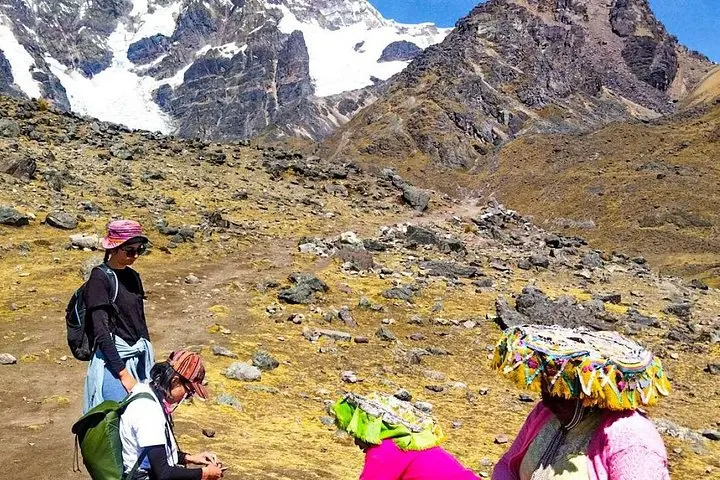
Geologically the lakes are glacial basins carved during the last ice age and fed by seasonal melt from Ausangate and surrounding summits. Culturally the range is still an Apu — a sacred mountain — where Quechua and Aymara communities maintain pastoral traditions and ceremonial offerings. Expect to see traditional textiles and grazing alpacas, and, if luck favors, an Andean condor circling thermals.
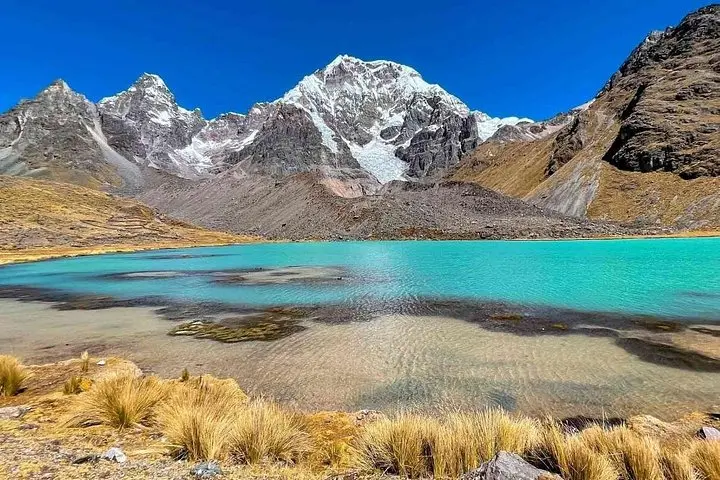
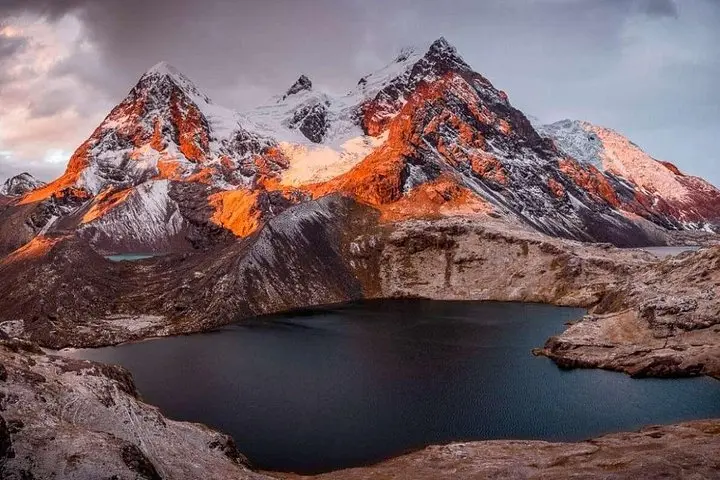
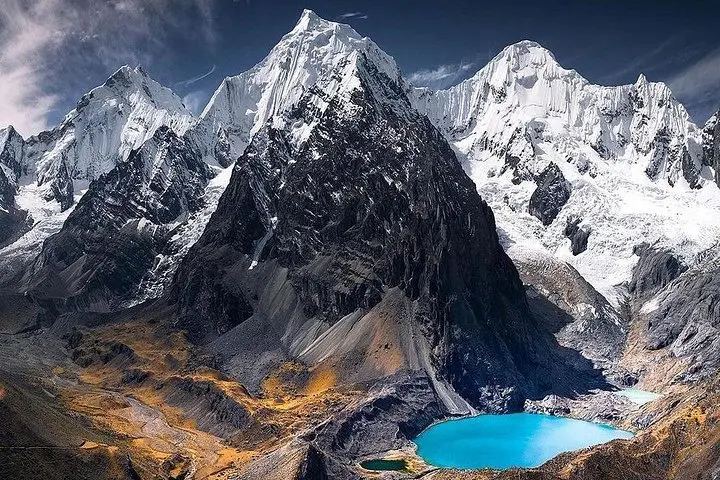
The route covers roughly 7.5 km of walking (about five hours on the circuit) at high altitude — commonly above 4,000 m — so the day includes long transfers from Cusco and a dip in Pacchanta’s hot springs to restore tired legs. Terrain is variable: compacted dirt, rocky switchbacks, and occasional muddy sections after rain. Weather changes quickly — sun one moment, wind and snow squalls the next — and the landscape rewards steady attention with bright turquoise, green, and deep-blue lagoons framed by serrated peaks.
Practical tips: acclimatize in Cusco for at least 24–48 hours, carry layered insulation and water, use sun protection, and pace yourself on ascents. Guides typically include breakfast, a local lunch, round-trip transport and hot-springs access — making this a long but achievable high-Andean day trip for prepared hikers.
The lagoon circuit itself is about 7.5 km and takes around five hours; the full day includes long road transfers, totaling roughly 13–14 hours door-to-door.
Physically possible for many first-timers if acclimatized, but altitude makes it more demanding than distance alone suggests—plan rest and go slow.
Yes; most itineraries include a post-hike soak in Pacchanta’s thermal baths before the return to Cusco.
Common sightings include alpacas and llamas, vizcachas on rocks, and occasionally Andean condors soaring above the peaks.
IZI PERU operates guided outdoor trips and adventures with an emphasis on safety, stewardship, and memorable experiences.
A thin, cold light cuts across the Vilcanota peaks as the minibus leaves Cusco and the road climbs toward Pacchanta. By the time hikers step out for breakfast the air is already crisper; the mountains loom large and the first lagoons shimmer like cut glass. The trail to the seven lakes winds over wind-scoured tundra, past herds of llamas and scattered rock cairns marking routes older than modern maps.
A thin, cold light cuts across the Vilcanota peaks as the minibus leaves Cusco and the road climbs toward Pacchanta. By the time hikers step out for breakfast the air is already crisper; the mountains loom large and the first lagoons shimmer like cut glass. The trail to the seven lakes winds over wind-scoured tundra, past herds of llamas and scattered rock cairns marking routes older than modern maps.
Geologically the lakes are glacial basins carved during the last ice age and fed by seasonal melt from Ausangate and surrounding summits. Culturally the range is still an Apu — a sacred mountain — where Quechua and Aymara communities maintain pastoral traditions and ceremonial offerings. Expect to see traditional textiles and grazing alpacas, and, if luck favors, an Andean condor circling thermals.
The route covers roughly 7.5 km of walking (about five hours on the circuit) at high altitude — commonly above 4,000 m — so the day includes long transfers from Cusco and a dip in Pacchanta’s hot springs to restore tired legs. Terrain is variable: compacted dirt, rocky switchbacks, and occasional muddy sections after rain. Weather changes quickly — sun one moment, wind and snow squalls the next — and the landscape rewards steady attention with bright turquoise, green, and deep-blue lagoons framed by serrated peaks.
Practical tips: acclimatize in Cusco for at least 24–48 hours, carry layered insulation and water, use sun protection, and pace yourself on ascents. Guides typically include breakfast, a local lunch, round-trip transport and hot-springs access — making this a long but achievable high-Andean day trip for prepared hikers.