THE ADVENTURE COLLECTIVE® · Independent discovery and booking for outdoor travel

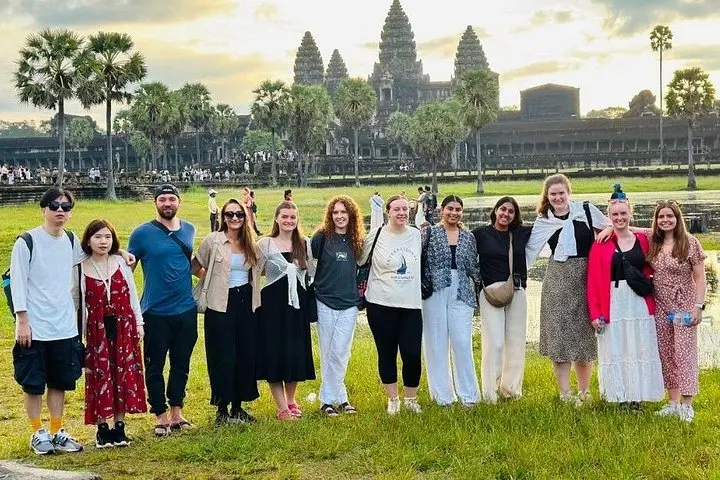
A compact full-day circuit from Siem Reap that highlights Banteay Srei’s exquisite carvings plus five other notable temples in the Angkor region. Expect flat walking, short drives between sites, and rich Khmer history from sandstone shrines to engineered island pools.
A compact full-day circuit from Siem Reap that highlights Banteay Srei’s exquisite carvings plus five other notable temples in the Angkor region. Expect flat walking, short drives between sites, and rich Khmer history from sandstone shrines to engineered island pools.
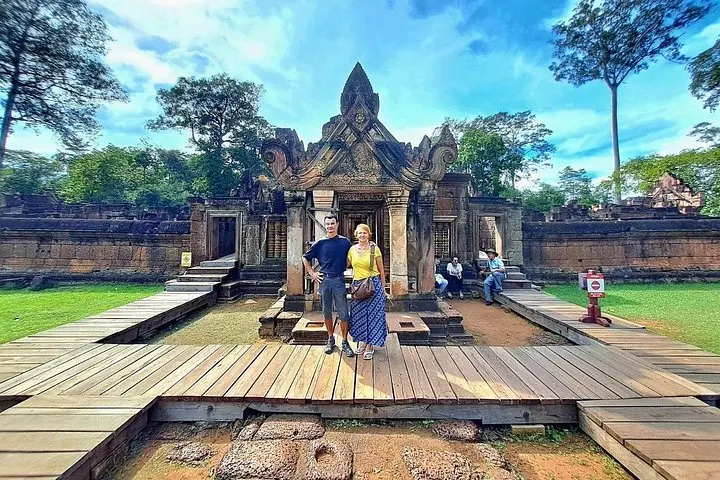
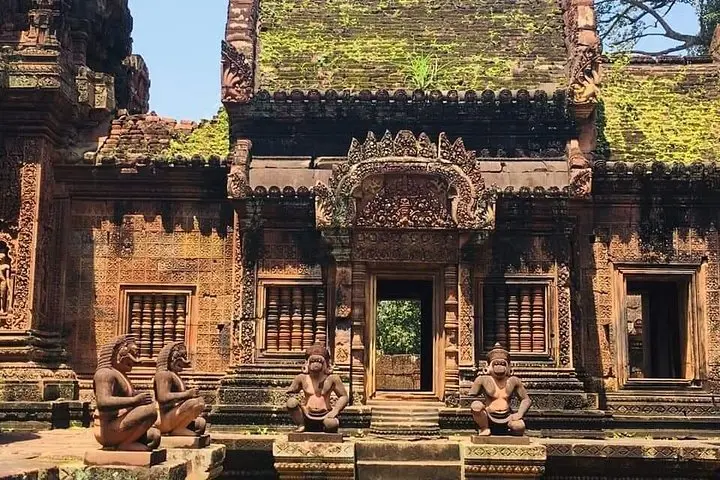
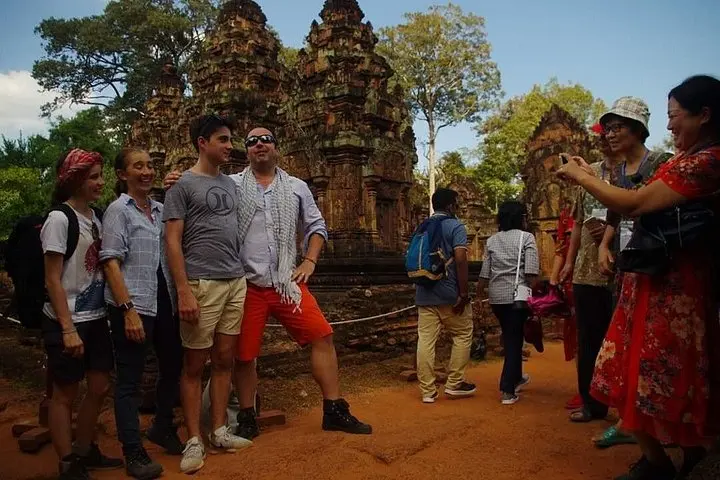
You step out of the air-conditioned minivan into heat that presses like a thoughtful hand; the road dust smells faintly of jasmine and diesel. The first temple—Banteay Srei—stands smaller than Angkor Wat but carved with an intimacy that forces you close: bas-reliefs of gods and garudas so finely incised they feel almost modern. Trees lean over laterite walls and the landscape, surprisingly flat, opens into rice paddies that seem to watch as you move between stones.
Verified experiences and guided adventures in the surrounding area.
Operated by Angkor Elephant Tour · Siem Reap, Siem Reap Province
You step out of the air-conditioned minivan into heat that presses like a thoughtful hand; the road dust smells faintly of jasmine and diesel. The first temple—Banteay Srei—stands smaller than Angkor Wat but carved with an intimacy that forces you close: bas-reliefs of gods and garudas so finely incised they feel almost modern. Trees lean over laterite walls and the landscape, surprisingly flat, opens into rice paddies that seem to watch as you move between stones.
This full-day loop visits sites from different phases of the Khmer empire: Banteay Srei’s 10th-century sandstone finesse, Preah Khan’s sprawling monastery-complex with lion statues and Buddhist reworkings, Ta Som’s iconic strangler fig embracing a gopura, the river-island East Mebon and the stepped spire of Pre Rup used for royal cremations. Neak Pean, built as an artificial island and healing pool, offers an unusual hydraulic concept tied to Angkor’s water management.
Geology here is simple—sandstone and laterite laid over a low-lying plain—so expect flat walking, short stair climbs and uneven flagged stones. Cultural norms are direct: dress modestly, remove shoes where requested, and be prepared to barter lightly at small vendors. The guide will pace the day—short drives of 20–50 minutes separate sites—so carry water, a hat and sun protection.
Practical notes: temple entry tickets (Angkor Pass) are required separately; mornings are cooler and less crowded; aim to arrive early at Banteay Srei for the best light. Keep movements measured around fragile carvings, and leave no trace—these monuments are both archaeological sites and local spiritual places.
No; Angkor temple passes are purchased separately at the official ticket center and should be arranged before the tour.
Expect 20–50 minute drives between most temples depending on traffic; the full tour runs roughly seven hours including stops.
Vehicles and pickup/drop-off are listed as wheelchair accessible, but individual temples have uneven ground and limited ramp access—some areas may be difficult to reach.
Bottled water and wet wipes are included; lunch is typically an independent stop—bring cash if you plan to buy food.
Angkor Elephant Tour operates guided outdoor trips and adventures with an emphasis on safety, stewardship, and memorable experiences.
You step out of the air-conditioned minivan into heat that presses like a thoughtful hand; the road dust smells faintly of jasmine and diesel. The first temple—Banteay Srei—stands smaller than Angkor Wat but carved with an intimacy that forces you close: bas-reliefs of gods and garudas so finely incised they feel almost modern. Trees lean over laterite walls and the landscape, surprisingly flat, opens into rice paddies that seem to watch as you move between stones.
You step out of the air-conditioned minivan into heat that presses like a thoughtful hand; the road dust smells faintly of jasmine and diesel. The first temple—Banteay Srei—stands smaller than Angkor Wat but carved with an intimacy that forces you close: bas-reliefs of gods and garudas so finely incised they feel almost modern. Trees lean over laterite walls and the landscape, surprisingly flat, opens into rice paddies that seem to watch as you move between stones.
This full-day loop visits sites from different phases of the Khmer empire: Banteay Srei’s 10th-century sandstone finesse, Preah Khan’s sprawling monastery-complex with lion statues and Buddhist reworkings, Ta Som’s iconic strangler fig embracing a gopura, the river-island East Mebon and the stepped spire of Pre Rup used for royal cremations. Neak Pean, built as an artificial island and healing pool, offers an unusual hydraulic concept tied to Angkor’s water management.
Geology here is simple—sandstone and laterite laid over a low-lying plain—so expect flat walking, short stair climbs and uneven flagged stones. Cultural norms are direct: dress modestly, remove shoes where requested, and be prepared to barter lightly at small vendors. The guide will pace the day—short drives of 20–50 minutes separate sites—so carry water, a hat and sun protection.
Practical notes: temple entry tickets (Angkor Pass) are required separately; mornings are cooler and less crowded; aim to arrive early at Banteay Srei for the best light. Keep movements measured around fragile carvings, and leave no trace—these monuments are both archaeological sites and local spiritual places.