THE ADVENTURE COLLECTIVE® · Independent discovery and booking for outdoor travel

Spend a day moving from the wind-swept Giza plateau to the Egyptian Museum’s troves and the colorful alleys of Khan el‑Khalili. Ride a camel by the pyramids, inspect the Sphinx up close, then explore pharaonic treasures and bustling bazaars.
Spend a day moving from the wind-swept Giza plateau to the Egyptian Museum’s troves and the colorful alleys of Khan el‑Khalili. Ride a camel by the pyramids, inspect the Sphinx up close, then explore pharaonic treasures and bustling bazaars.
Sand prickles beneath boots and the horizon tightens into three colossal silhouettes: the Great Pyramid, its neighbors, and the Sphinx guarding the plateau. This full‑day Cairo circuit moves from the wind-scoured open of Giza to the cool, artifact-packed halls of the Egyptian Museum and the narrow lanes of Khan el‑Khalili bazaar, mixing open-air exploration with museum immersion and market energy.
Verified experiences and guided adventures in the surrounding area.
Sand prickles beneath boots and the horizon tightens into three colossal silhouettes: the Great Pyramid, its neighbors, and the Sphinx guarding the plateau. This full‑day Cairo circuit moves from the wind-scoured open of Giza to the cool, artifact-packed halls of the Egyptian Museum and the narrow lanes of Khan el‑Khalili bazaar, mixing open-air exploration with museum immersion and market energy.
The Giza plateau records 4,500 years of funerary architecture: limestone blocks hewn from the Mokattam quarries, mortarless construction lines, and the Valley Temple’s worn red granite flooring. Geology explains the gentle slope of the plateau and why water routes once shaped settlement nearby. In the museum, gilded coffins and funerary masks illuminate pharaonic power; in the bazaar, Mamluk and Ottoman-era alleys still trade spices, brass, and coffee. Local guides often point out small conservation markers and talk about ongoing restoration efforts.
Practical guidance: expect uneven sand and limestone footing around the pyramids, limited shade, and close-up photo opportunities with camels. Wear breathable layers, sun protection, and closed shoes. Hydrate before and during the day; plan for roughly eight hours including museum lines and a relaxed lunch. Carry small Egyptian pounds for bazaar purchases and bargaining. Timed for early morning or late afternoon at the plateau to avoid peak heat, the route is manageable for walkers comfortable with repeated short climbs and standing periods. The trip blends outdoor spectacle, deep history, and urban color—an efficient primer on Cairo’s most iconic sites.
Yes—camel rides are typically included as a short photo opportunity along the plateau edge, lasting about 10–20 minutes depending on the operator.
Photography rules can change; flash and tripod use are often restricted in some rooms—confirm with your guide on arrival.
Expect moderate walking across sand and stone with short climbs to viewpoints; most people cover a few kilometers at a relaxed pace during the visit.
Yes—bargaining is common for souvenirs; start lower than your target price and be polite but firm.
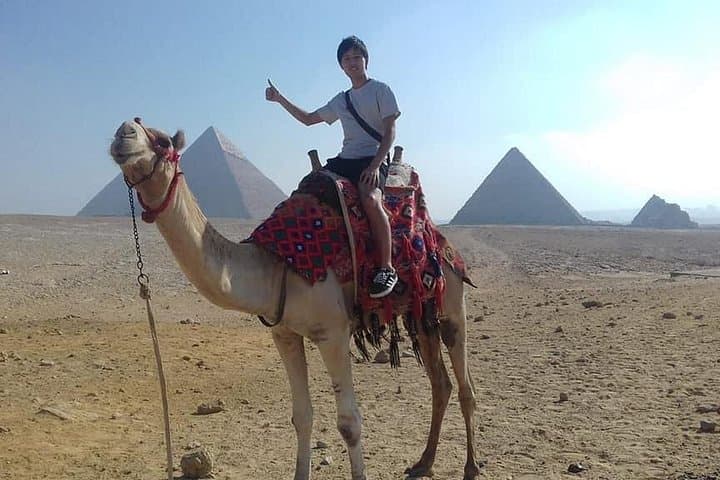
Sand prickles beneath boots and the horizon tightens into three colossal silhouettes: the Great Pyramid, its neighbors, and the Sphinx guarding the plateau. This full‑day Cairo circuit moves from the wind-scoured open of Giza to the cool, artifact-packed halls of the Egyptian Museum and the narrow lanes of Khan el‑Khalili bazaar, mixing open-air exploration with museum immersion and market energy.
Sand prickles beneath boots and the horizon tightens into three colossal silhouettes: the Great Pyramid, its neighbors, and the Sphinx guarding the plateau. This full‑day Cairo circuit moves from the wind-scoured open of Giza to the cool, artifact-packed halls of the Egyptian Museum and the narrow lanes of Khan el‑Khalili bazaar, mixing open-air exploration with museum immersion and market energy.
The Giza plateau records 4,500 years of funerary architecture: limestone blocks hewn from the Mokattam quarries, mortarless construction lines, and the Valley Temple’s worn red granite flooring. Geology explains the gentle slope of the plateau and why water routes once shaped settlement nearby. In the museum, gilded coffins and funerary masks illuminate pharaonic power; in the bazaar, Mamluk and Ottoman-era alleys still trade spices, brass, and coffee. Local guides often point out small conservation markers and talk about ongoing restoration efforts.
Practical guidance: expect uneven sand and limestone footing around the pyramids, limited shade, and close-up photo opportunities with camels. Wear breathable layers, sun protection, and closed shoes. Hydrate before and during the day; plan for roughly eight hours including museum lines and a relaxed lunch. Carry small Egyptian pounds for bazaar purchases and bargaining. Timed for early morning or late afternoon at the plateau to avoid peak heat, the route is manageable for walkers comfortable with repeated short climbs and standing periods. The trip blends outdoor spectacle, deep history, and urban color—an efficient primer on Cairo’s most iconic sites.