THE ADVENTURE COLLECTIVE® · Independent discovery and booking for outdoor travel

Snake Canyon delivers a full‑day canyoning loop of swims, narrow gorges and two abseils (8 m and 30 m). This private tour from Muscat pairs certified guides and safety kit with an Omani mountain lunch—ideal for fit adventurers seeking a technical, water‑filled challenge.
Snake Canyon delivers a full‑day canyoning loop of swims, narrow gorges and two abseils (8 m and 30 m). This private tour from Muscat pairs certified guides and safety kit with an Omani mountain lunch—ideal for fit adventurers seeking a technical, water‑filled challenge.
The canyon narrows and the light thins as you step from sunlit scree into a slot that smells faintly of wet stone and wild thyme. Cliff faces loom overhead, their layered surfaces telling a slow geological story, while the pool below dares you to drop in. By midmorning the group moves as a single unit—ropes clipped, guides calling clear commands, water pushing the tempo.
Verified experiences and guided adventures in the surrounding area.
Operated by WikiTours Adventures · Muscat, Muscat Governorate
The canyon narrows and the light thins as you step from sunlit scree into a slot that smells faintly of wet stone and wild thyme. Cliff faces loom overhead, their layered surfaces telling a slow geological story, while the pool below dares you to drop in. By midmorning the group moves as a single unit—ropes clipped, guides calling clear commands, water pushing the tempo.
Snake Canyon is a carved wadi in Oman’s mountain foothills where flash floods and seepage over millennia scoured channels through hard rock, producing narrow passages, plunge pools and the two main abseils offered on this route: an 8‑meter and a 30‑meter descent. The area has long been used by local communities as seasonal grazing and as a route between villages; today it’s an adrenaline draw that still reflects Oman’s desert‑mountain culture—simple lunches shared in shade, and guides who read the light and the water like locals reading a map.
Expect a mixed day of trekking across rocky benches, swims across turquoise pools, and technical rope work; the operator supplies helmets, harnesses, life jackets and first‑aid. Practical planning matters: start early to avoid afternoon heat, wear grippy canyon shoes and quick‑dry layers, and carry at least 2 liters of water. Be mindful of weather—wadis respond fast to rain—and listen closely during the safety briefing; comfortable swimming ability and basic rope familiarity make the day smoother.
Finish with a shaded Omani rice and chicken lunch before the drive back to Muscat, muscles tired but charged by the canyon’s blunt, elemental rhythm.
There are two main abseils—an introductory 8 m and a more exposed 30 m descent; guides provide full instruction and belay support for participants of average rope confidence.
No prior canyoning is required, but you should be physically fit, comfortable in water, and able to follow ropework instructions; the route is guided and equipment is provided.
The season runs best from October through April when temperatures are milder; operators may cancel during or after heavy rains because wadis flood quickly.
The tour typically includes certified guides, abseiling gear, helmets, life jackets, snacks, a shaded Omani rice and chicken lunch, and air‑conditioned return transport to Muscat.
WikiTours Adventures operates guided outdoor trips and adventures with an emphasis on safety, stewardship, and memorable experiences.
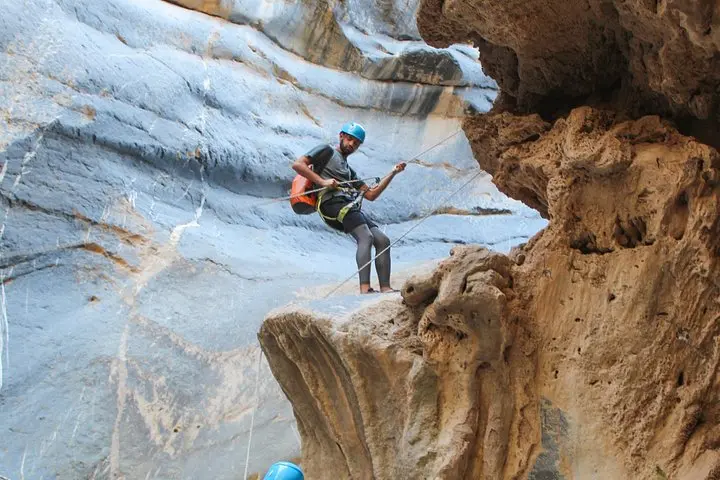
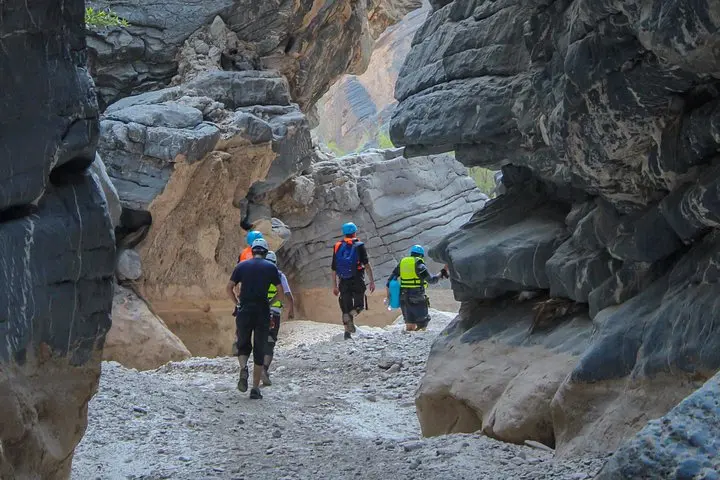
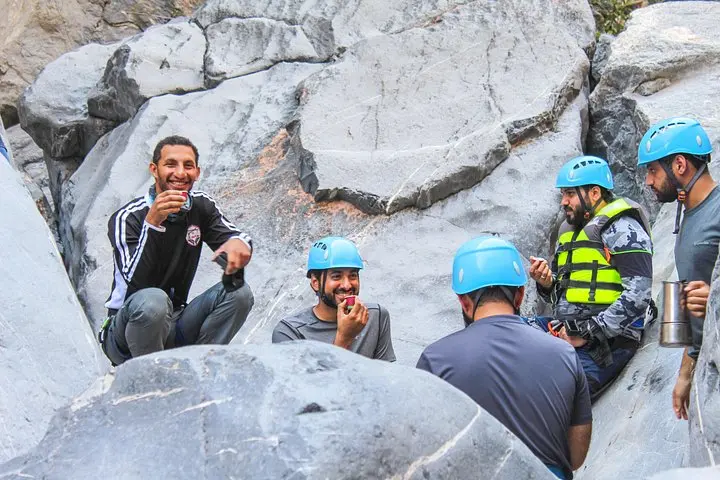
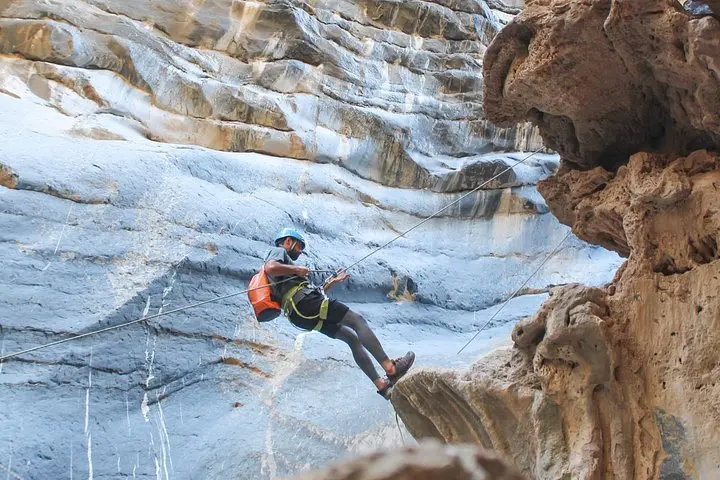
The canyon narrows and the light thins as you step from sunlit scree into a slot that smells faintly of wet stone and wild thyme. Cliff faces loom overhead, their layered surfaces telling a slow geological story, while the pool below dares you to drop in. By midmorning the group moves as a single unit—ropes clipped, guides calling clear commands, water pushing the tempo.
The canyon narrows and the light thins as you step from sunlit scree into a slot that smells faintly of wet stone and wild thyme. Cliff faces loom overhead, their layered surfaces telling a slow geological story, while the pool below dares you to drop in. By midmorning the group moves as a single unit—ropes clipped, guides calling clear commands, water pushing the tempo.
Snake Canyon is a carved wadi in Oman’s mountain foothills where flash floods and seepage over millennia scoured channels through hard rock, producing narrow passages, plunge pools and the two main abseils offered on this route: an 8‑meter and a 30‑meter descent. The area has long been used by local communities as seasonal grazing and as a route between villages; today it’s an adrenaline draw that still reflects Oman’s desert‑mountain culture—simple lunches shared in shade, and guides who read the light and the water like locals reading a map.
Expect a mixed day of trekking across rocky benches, swims across turquoise pools, and technical rope work; the operator supplies helmets, harnesses, life jackets and first‑aid. Practical planning matters: start early to avoid afternoon heat, wear grippy canyon shoes and quick‑dry layers, and carry at least 2 liters of water. Be mindful of weather—wadis respond fast to rain—and listen closely during the safety briefing; comfortable swimming ability and basic rope familiarity make the day smoother.
Finish with a shaded Omani rice and chicken lunch before the drive back to Muscat, muscles tired but charged by the canyon’s blunt, elemental rhythm.